
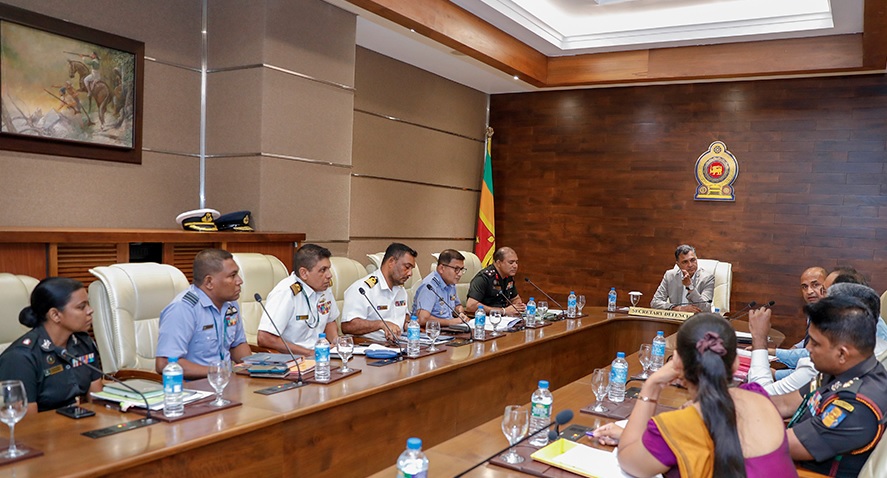
The Sri Lankan Ministry of Defence held a meeting this week to discuss ongoing concerns around retired Sri Lankan soldiers who are going to fight in Russia and Ukraine, as they continue to struggle economically in the wake of the island’s financial crisis.
The discussion, chaired by Defence Secretary Air Vice Marshal Sampath Thuyacontha focused on the issue of former Sri Lankan military personnel being recruited on a paid basis to serve in the Russo-Ukrainian conflict and pensions for the retired soldiers.
Hundreds of Sri Lankans have been killed or captured, fighting for both sides.
Discussions revolved around a pension scheme for the soldiers, in order to prevent them going to fight as mercenaries in other conflicts around the world.
Despite being over 16 years since the end of the armed conflict, which saw tens of thousands of Tamils massacred, Sri Lanka continues to maintain one of the world’s largest armies per capita. According to the World Bank, Sri Lanka had over 317,000 service personnel in 2018 - more than double the size of the UK’s regular military. Across the Tamil homeland, militarisation remains rampant.
With the country entrenched in a deep economic crisis, the oversize military apparatus has become increasingly unsustainable. Many retired soldiers, receiving meagre pensions, some as low as Rs. 20,000 (USD 92), are being lured into foreign wars by promises of lucrative salaries and fast-tracked citizenship.
At the Defence Ministry meeting, officials discussed the possibility of introducing pensions or financial aid schemes specifically for Sri Lankan mercenaries injured or killed in Ukraine and Russia. The Defence Secretary ordered authorities to gather accurate data on those involved in the conflict, including those reported missing, dead, or held as prisoners of war.
The lack of military downsizing has not only strained public finances but is also contributing to a new wave of militarised migration, as former soldiers seek more stable futures abroad.
