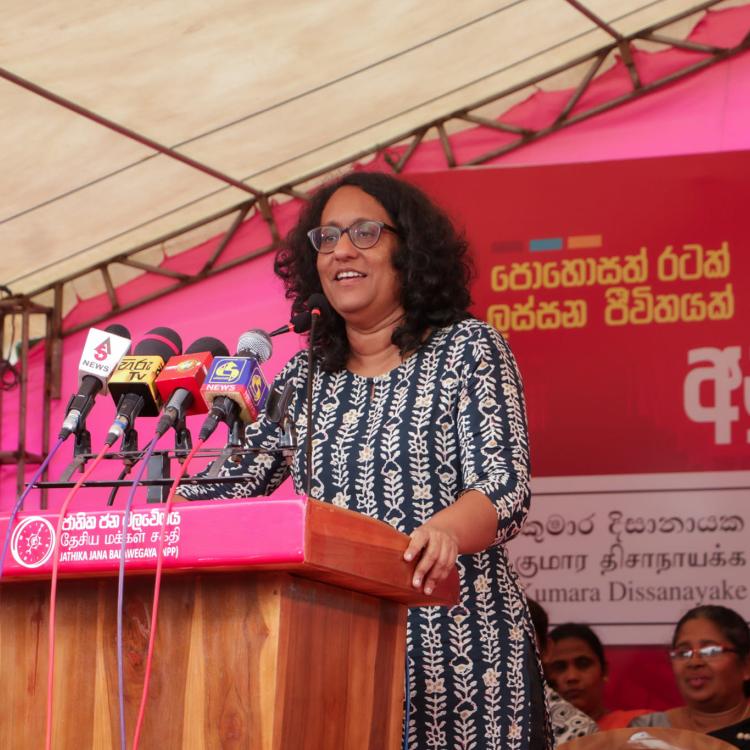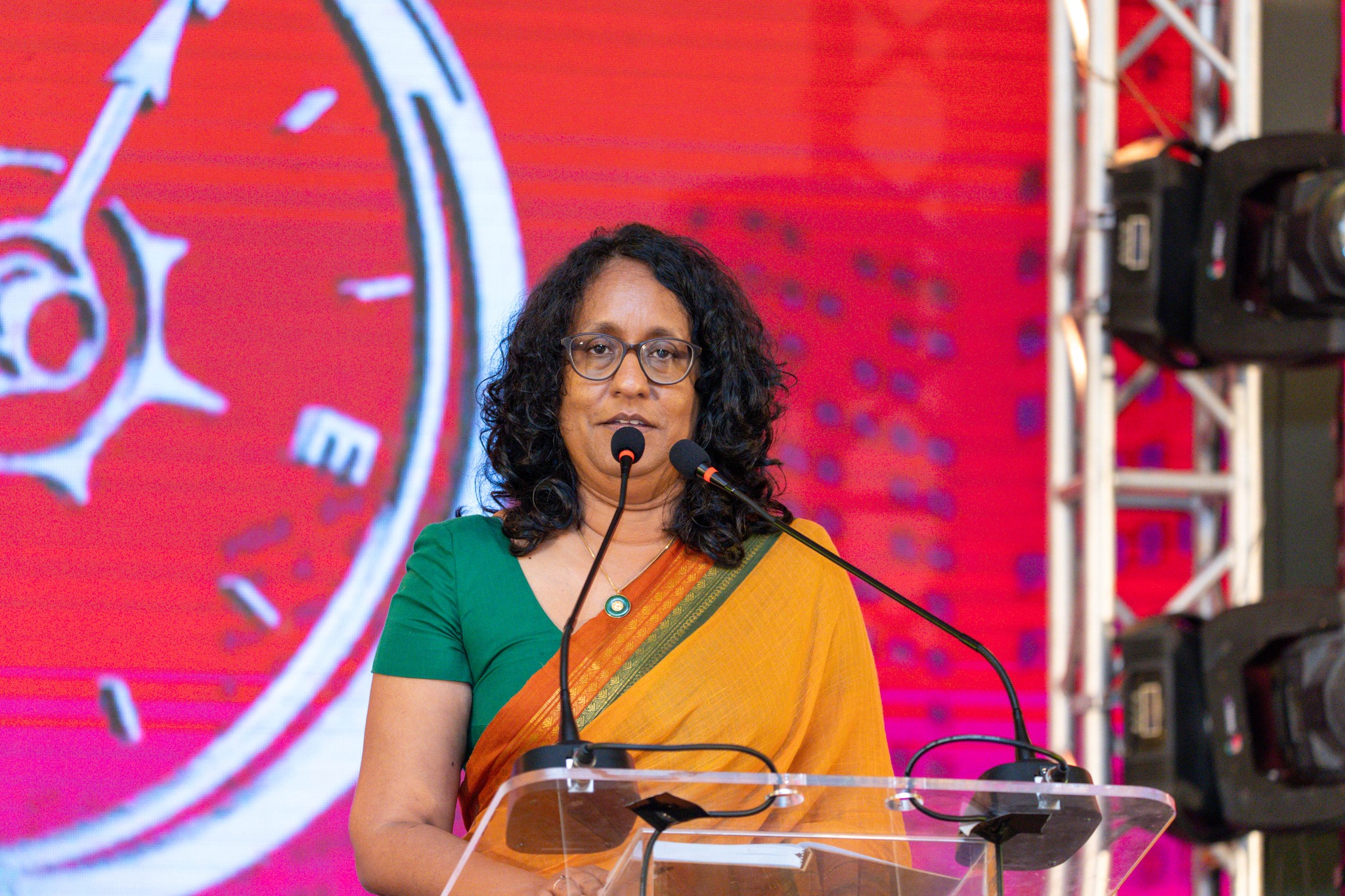
When Harini Amarasuriya first entered Sri Lankan politics, she was hailed as a different kind of politician — a feminist academic, a human rights advocate, and a rare progressive voice willing to challenge entrenched power. Her early writings spoke about systemic discrimination, the “implicit exclusions and violence” that underpin the Sri Lankan state, and the need to confront Sinhala-Buddhist nationalism head-on.
Yet, within months of assuming the premiership, Amarasuriya has transformed from critic to defender of that same system. Once seen as a potential voice for accountability, she now stands as a spokesperson for the Sinhala state’s culture of impunity. Her government’s rejection of international investigations into war crimes and its renewed endorsement of discredited domestic mechanisms have made one thing clear - the rhetoric of reform has given way to the familiar realities of denial and appeasement.
It is a fundamental betrayal of the ideals she once represented.
From watchdog to defender of the status quo
In Sri Lanka’s Parliament last week, Amarasuriya reaffirmed her government’s position that Sri Lanka does not support international investigations into wartime atrocities, claiming instead that her administration would pursue what she described as a “homegrown process” to address human rights concerns.
Her statement was a near verbatim repetition of every Sri Lankan government position since 2009. It marks the complete abandonment of the progressive ideals she once espoused.
For years, Amarasuriya positioned herself as a critic of impunity, calling for truth, reconciliation, and justice for the families of the disappeared. Today, she has become the face of the very denial that has defined Colombo’s post-war politics. In dismissing the United Nations Human Rights Council’s resolutions and labelling international accountability as “foreign interference”, she now echoes the same arguments once wielded by Mahinda Rajapaksa and Gotabaya Rajapaksa – war criminals responsible for some of the island’s gravest atrocities.
The shift reveals is that of a politician absorbed by the machinery of the Sinhala-Buddhist state, willing to parrot its justifications.
Accountability sacrificed for politics
Perhaps most striking is Amarasuriya’s continued defence of the Office on Missing Persons (OMP), an institution so discredited that even the families of the disappeared have boycotted its hearings. When the OMP was created, it was condemned by Tamil civil society as a façade designed to appease the international community while shielding the Sri Lankan military from genuine scrutiny.
Yet Amarasuriya insists that the OMP remains central to her government’s domestic approach. In doing so, she has aligned herself with decades of failed “mechanisms” that were never intended to deliver justice, but to delay and deflect it.
The hypocrisy is glaring. Before assuming power, Amarasuriya publicly empathised with Tamil mothers still searching for their disappeared children. Today, she dismisses their demand for an international process, telling them instead to place their trust in the very state that abducted and murdered their loved ones.
It is a cruel irony: a self-styled human rights advocate now telling victims to rely on their perpetrators for justice.
By attempting to repackage Colombo’s long-discredited domestic mechanism”, she provides the veneer of reform that allows the state to continue evading accountability.
A new tone but, same old substance
It is not just on the issue of accountability for the genocide where Amarasuriya is faltering. When she assumed office, many Tamils cautiously hoped she would bring a measure of sincerity to Colombo’s handling of land occupation and militarisation in the North-East. Those hopes have now evaporated.
Earlier this year, she travelled to Jaffna, where she was directly confronted by Tamil landowners who demanded the return of property still occupied by the Sri Lankan military. Rather than pledging action, she regurgitated the same broken promises which have become indistinguishable from that of every government before hers.
To the dispossessed Tamil families it was a familiar performance. Pledges of empathy in tone, but obstruction in practice.
Meanwhile, militarisation across the Tamil homeland continues unabated. Soldiers still occupy homes and farmlands. Military-run businesses continue to stifle local livelihoods. Sinhala settlements continue under state sponsorship. And Amarasuriya’s government remains a complicit partner, pandering to the military establishment that sustains the state’s grip over the Tamil nation.
What began as a promise of justice has devolved into collusion.
What changed?
Many now ask: what has happened to Harini Amarasuriya?
Was the transformation inevitable? Is this the price of proximity to power? Or has she always been a follower of the same Sinhala-Buddhist political order she once critiqued?
Her trajectory mirrors that of countless “progressive” Sinhala politicians before her who are seemingly articulate, reform-minded, critical in opposition. Yet once in office they fall compliant to majoritarian and chauvinistic politics. From Chandrika Kumaratunga to Ranil Wickremesinghe, every so-called reformer has lost their ideals when elected, deliberately choosing to fortify a racist state structure that denies the Tamil nation of its basic rights.
Amarasuriya’s silence on militarisation, her rejection of international justice, and her defence of failed institutions reveal how the National People’ Power government’s progressive rhetoric is a thin veneer to the toxic and deep-rooted with the realities of Sinhala nationalism.
In power, she has chosen the comfort of continuity over the courage of confrontation.
Amarasuriya’s evolution from critic to custodian shows how quickly liberal ideals can be co-opted by power. The woman who once stood beside the mothers of the disappeared now stands beside the generals who made them disappear.
Her fall is not merely personal; it is political. It marks the end of yet another illusion that a Sinhala-led administration, no matter how progressive it claims to be, can deliver justice to the Tamil nation.
For Tamil families still searching for the disappeared, for displaced villagers fighting to reclaim their land, and for a nation still living under military occupation, Amarasuriya’s actions symbolise a broader truth. The Sri Lankan state cannot be reformed from within. The structures and institutions are rotten to the core and must be dismantled entirely.
The message is clear: Colombo’s reformers will not save the Tamil people.
A stable future of true accountability and lasting peace, as ever, will come from external forces. It will be forged by the international community, from global institutions, and from the unwavering demands of the Tamil nation itself.
_____
Theepan is a staff writer at the Tamil Guardian.