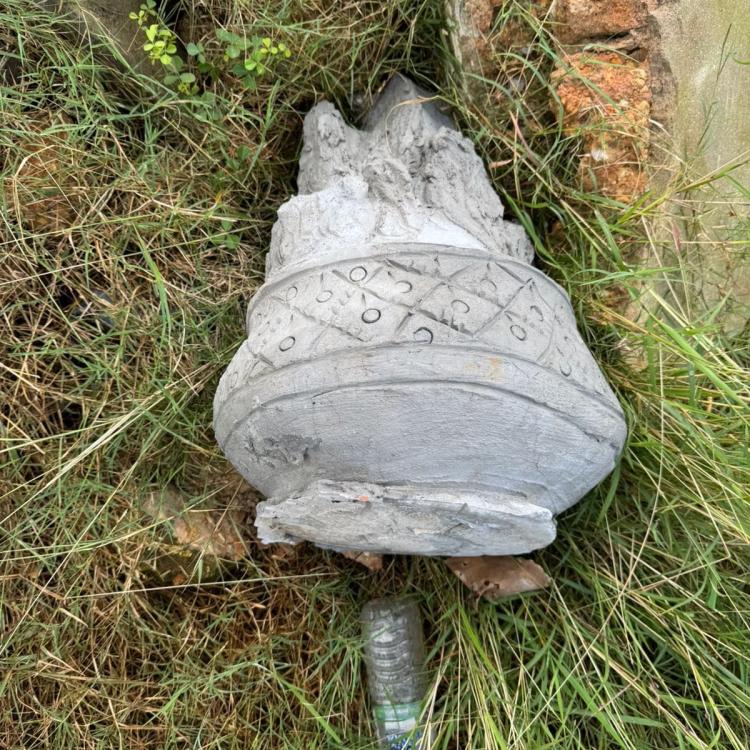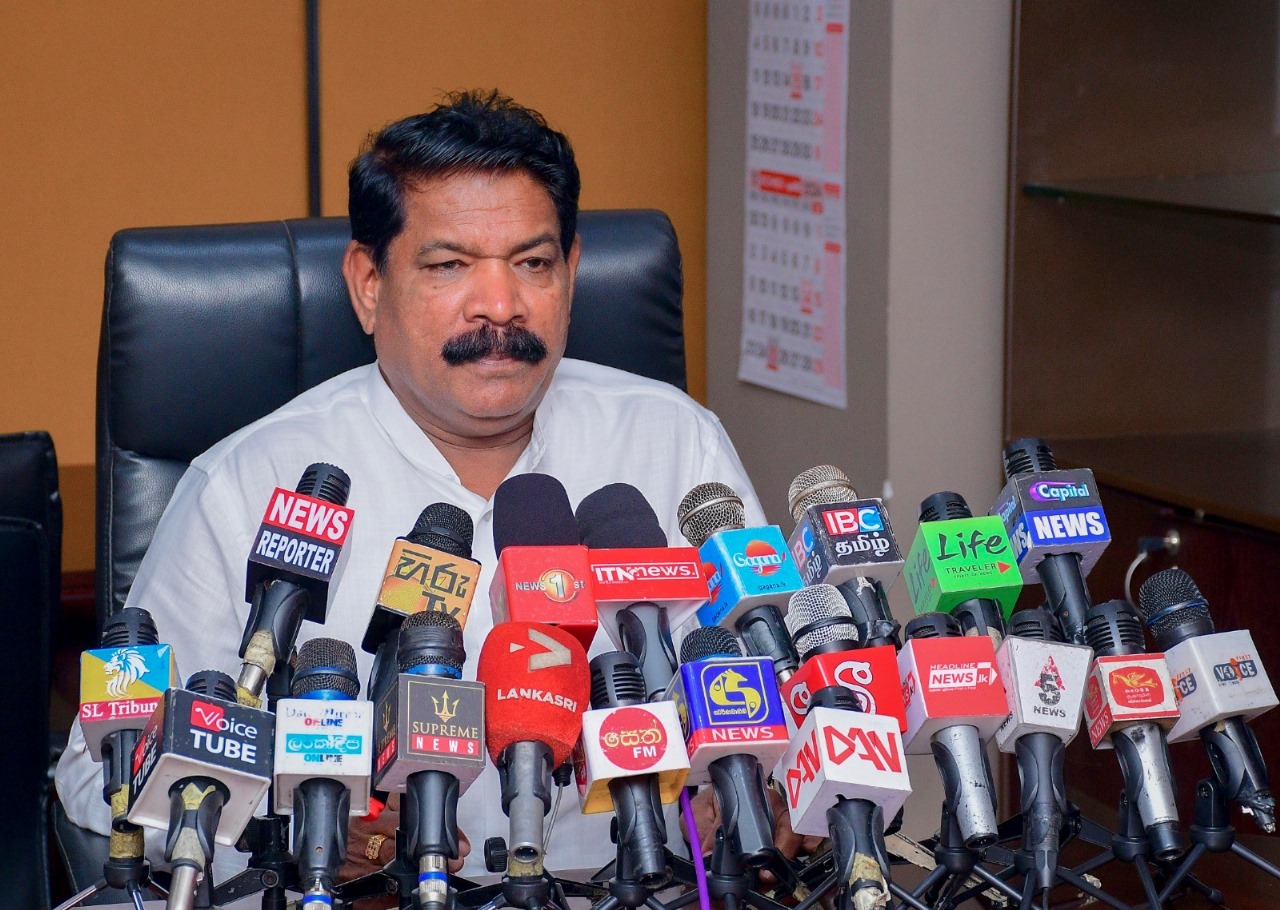
Sri Lanka’s Fisheries and Aquatic Marine Resources Minister Ramalingam Chandrasekar has issued a condemnation of the latest act of vandalism targeting the unextinguished lamp memorial at Chemmani.
His remarks come as Tamil civil society continues to warn that repeated attacks on sites of memory are enabled by the state’s failure to ensure accountability.
The memorial, erected as part of the ‘Unextinguished Lamp’ protest calling for international justice for the Chemmani mass grave, was once again destroyed by unidentified perpetrators earlier this week. The site has now been vandalised multiple times since it was first erected in June.
In a statement responding to the latest attack, Chandrasekar said the memorial “stands as a significant symbol reflecting the emotions and historical memories of the affected people” and added that it had been deliberately targeted in a manner that “runs counter to social harmony and democratic values.”
He further stated that “it is imperative that those responsible for this crime be identified without delay,” and that he had advised the relevant authorities to take appropriate action. Chandrasekar also claimed that “the government of Sri Lanka will not permit any destructive forces to disrupt the peace and social cohesion prevailing in Jaffna,” while stressing that community cooperation was essential to prevent such actions.
Tamil activists have pointed out that previous statements of condemnation from politicians have failed to translate into arrests, prosecutions, or sustained protection of the site. The Chemmani memorial was previously destroyed in October, rebuilt the same day by local residents, and has now been attacked again with apparent impunity.
The Chemmani mass grave is among the most significant sites linked to allegations of enforced disappearances and extrajudicial killings carried out by the Sri Lankan army during its occupation of Jaffna in the mid-1990s. In 1998, a Sri Lankan soldier testified in court that hundreds of Tamils had been secretly buried at the site. Recent excavations have since uncovered at least 240 human skeletons, including children and infants, with bodies found in overlapping positions.