
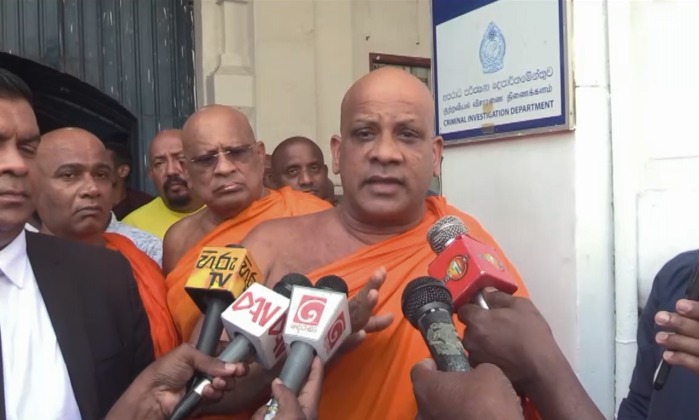
The chief incumbent of the Mihintale Rajamaha Viharaya, Walawahangunawewe Dhammarathana, appeared before the Criminal Investigation Department (CID) this week, amid a growing political dispute over public remarks made against him.
Speaking to the media outside the CID, the Sinhala Buddhist monk’s lawyer said the appearance was to lodge a formal complaint alleging that K. D. Lal Kantha, the Minister of Agriculture, Livestock, Lands and Irrigation, had carried out a “strategic and well-planned attack” against the monk through online and social media platforms.
The lawyer said the monk is a widely respected public figure and that such statements were unethical. He added that authorities were provided with the names of those responsible for the alleged campaign, along with relevant social media links, and stated that the police have the power to take immediate steps to halt such statements.
He further said the complaint was aimed at preventing harm to the Buddha Sasana, adding that this marked only the beginning of legal action and that the clergy was prepared to pursue the matter through due process.
Addressing reporters separately, Dhammarathana said he was not discouraged by videos or statements made against him and could not be deterred by such actions. He said his decision to approach the CID was not personal, even if others chose to interpret it that way, and stressed that he and his supporters were acting in what they believed to be their duty to the country.
The monk also said that if the minister were to offer an apology, he would be willing to grant forgiveness. However, he said the minister must act responsibly, noting that as a public official paid by taxpayers, he is accountable to the public.
The issue has since taken on a broader political dimension with Sri Lanka Podujana Peramuna parliamentarian Namal Rajapaksa issuing a statement accusing Lal Kantha of violating the International Covenant on Civil and Political Rights Act No. 56 of 2007 (ICCPR Act) by allegedly insulting Buddhism and the Maha Sangha.
Rajapaksa said Lal Kantha had insulted Dhammarathana by referring to him as a “forest dweller” and strongly condemned what he described as the disparagement of a senior Buddhist leader.
Pointing to provisions of the ICCPR Act, Rajapaksa noted that “no person shall propagate war or advocate national, racial, or religious hatred that constitutes incitement to discrimination, hostility, or violence,” and argued that the minister’s remarks amounted to spreading religious hatred.