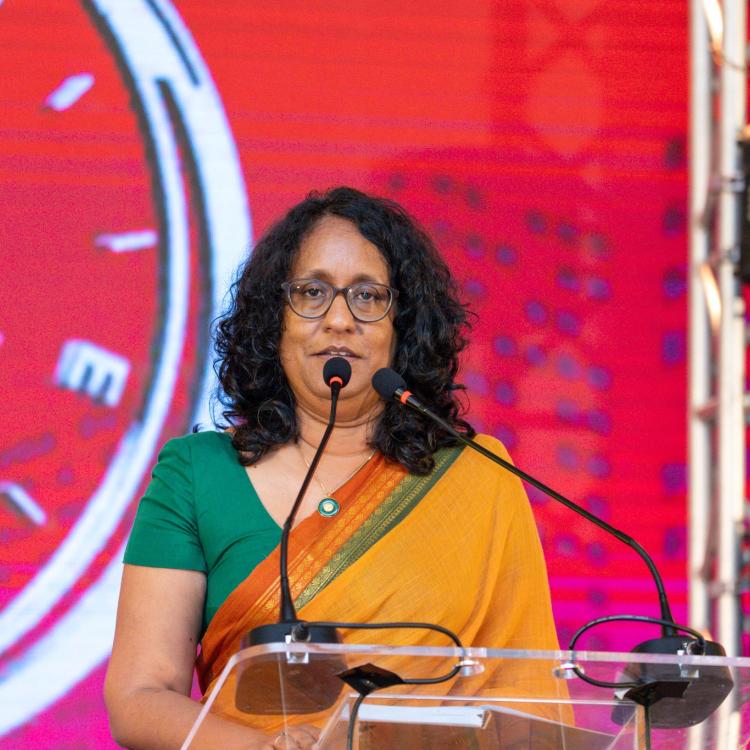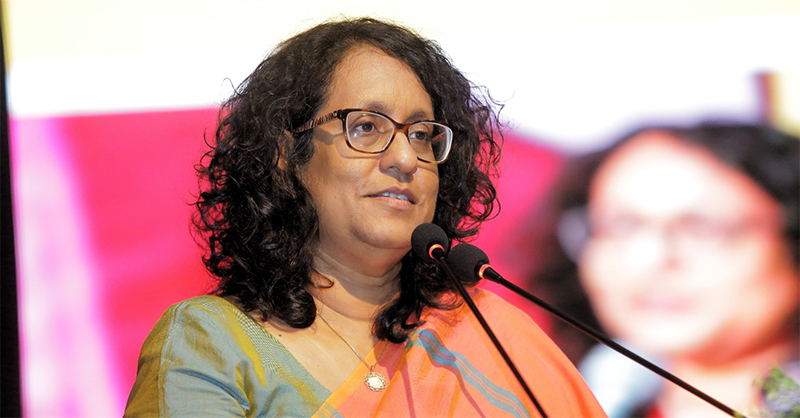
The National People’s Power (NPP) government has reiterated its opposition to an international investigation into war crimes in Sri Lanka, with Sri Lankan Prime Minister Harini Amarasuriya reaffirming the state’s position in parliament last week.
Responding to oral questions in Parliament, Amarasuriya declared that the Sri Lankan government does not agree with the United Nations Human Rights Council (UNHRC) resolutions concerning Sri Lanka and will instead focus on what she described as a “homegrown process” to deal with human rights concerns.
Amarasuriya insisted that external interventions would only “deepen divisions” within the country and hinder reconciliation, dismissing international calls for accountability.
“We will cooperate with international organisations, but our focus will remain on a homegrown process to deal with human rights violations,” she said. “The government is ready to work with international organisations but will be focusing on a domestic mechanism to handle human rights violation issues that have taken place in the country that remain unaddressed.”
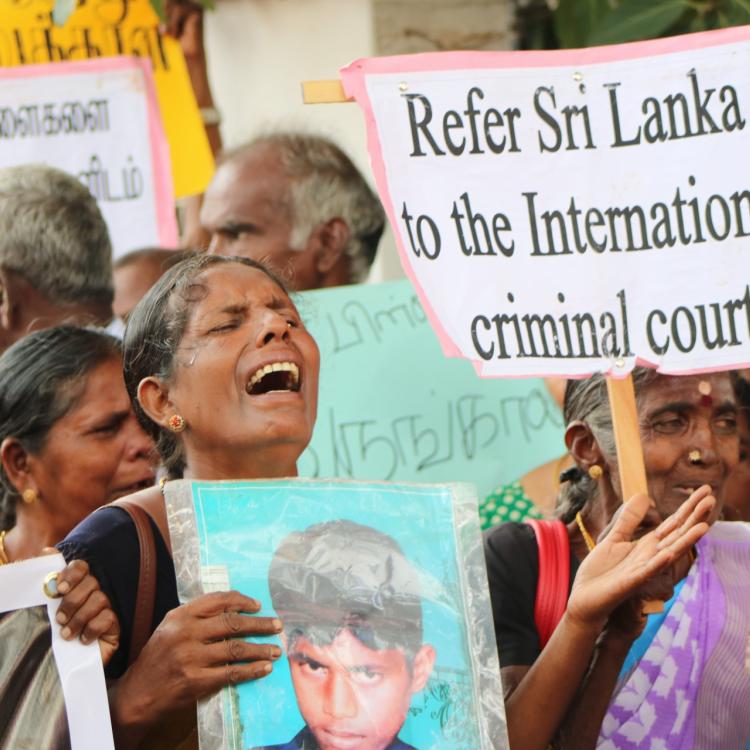
Her remarks echo a familiar pattern of state denial and evasion, continuing Sri Lanka’s decades-long resistance to international accountability. Successive governments have repeatedly rejected UN-led investigations into wartime crimes, despite mounting evidence of grave violations committed by the Sri Lankan military.
The Sri Lankan Prime Minister’s statement follows the adoption of a new UNHRC resolution on Sri Lanka earlier this month.
In Parliament, Illankai Tamil Arasu Kachchi (ITAK) MP Shanakyan Rasamanickam questioned the government’s stance, highlighting the lack of trust among Tamils toward domestic accountability efforts.
“As a member of the victim community,” he said, “we reject the domestic mechanism offer, as we have no faith in it.”
Opposition parties have also called for a parliamentary debate on the government’s decision not to request a vote on the UNHRC resolution. However, Foreign Minister Vijitha Herath announced that the debate, initially proposed for 4 November, would be postponed due to the upcoming visit of Archbishop Paul Gallagher, the Vatican’s Secretary for Relations with States, who is expected to sign several agreements with the Sri Lankan government.