
Sri Lanka’s cabinet has approved the creation of a new “Rebuilding Sri Lanka” Fund in the wake of Cyclone Ditwah, but drawn criticism for not including women, Tamil representatives from the North-East or the hill-country community, and having no independent technical experts.
Instead, the leadership is dominated by senior figures from Colombo’s corporate sector.
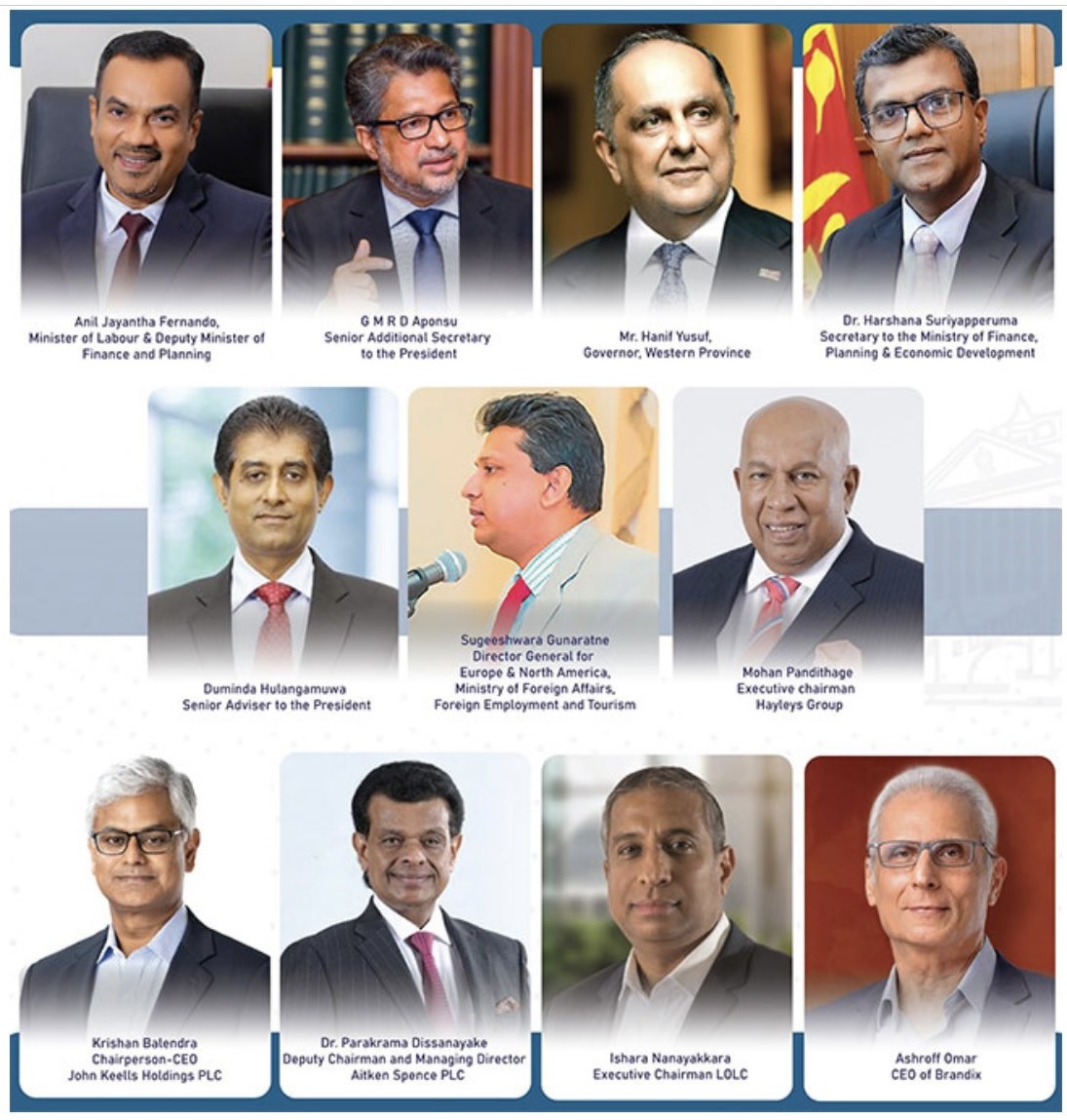
According to the government, the fund will be established as a statutory body under the Presidential Secretariat. Labour Minister and Deputy Finance Minister Anil Jayantha Fernando will serve as its chair, while Senior Additional Secretary to the President G. M. R. D. Aponsu will act as convener.
The remaining committee members comprise:
• Hanif Yusuf, Western Province Governor and Special Representative for Foreign Investments
• Harshana Suriyapperuma, Secretary, Ministry of Finance
• Duminda Hulangamuwa, Senior Economic Adviser to the President
• Sugeeshwara Gunawadhana, Director General, Ministry of Foreign Affairs
• Mohan Pandithage, Chairman, Hayleys Group
• Krishan Balendra, Chairman, John Keells
• Parakrama Dissanayake, Deputy Chairman and Managing Director, Aitken Spence
• Ashroff Omar, CEO, Brandix
• Ishara Nanayakkara, Executive Chairman, LOLC Holdings
The President’s Media Division stated that the committee will be tasked with assessing disaster recovery needs, prioritising interventions and allocating resources for reconstruction.
Yet the composition of the fund has prompted concern. Alongside the lack of Eelam or Malayagaha Tamil representation., there are also no experts in hydrology, disaster science, climate adaptation or public health, even though these fields are critical to rebuilding damaged regions and strengthening resilience. The complete absence of women from the committee has further fuelled criticism that the initiative reflects the long-standing centralisation and exclusion entrenched within Sri Lankan state structures.
“Why is private sector part of [a committee] to decide how funds should be spent?” tweeted Ambika Satkunanathan, a former commissioner with the Human Rights Commission of Sri Lanka.
“For profit entities, i.e. private sector, deciding on priorities likely to exacerbate the disaster. Why are there no sector experts? Why are there no MPs, [including] opposition, other than one minister? And why are there no women? It’s 2025 and we are still asking “where are the women”?”
“Those who are part of such initiatives should be those committed to public interest not profit/self interest. Involving private sector can also create conflict of interest when determining priorities. Most importantly, during crisis inclusion and representation are imperative.”