
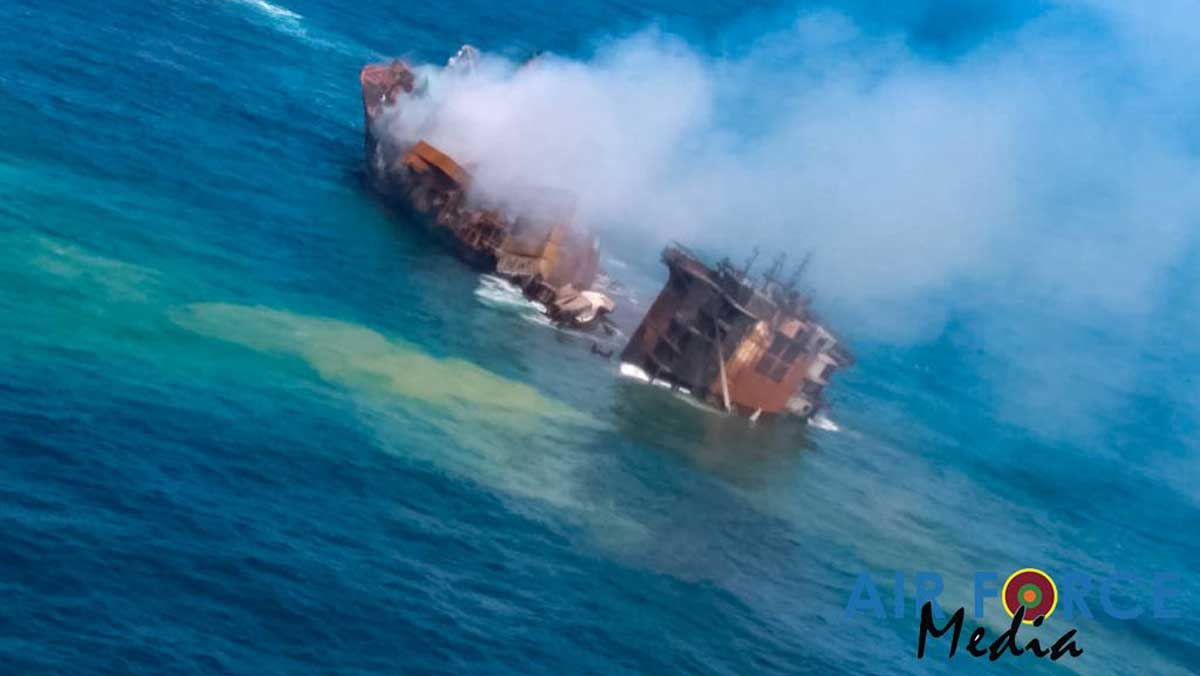
In a landmark ruling, Sri Lanka’s Supreme Court has ordered the owners and affiliated companies of the X-Press Pearl cargo vessel to pay USD 1 billion in compensation for the environmental devastation and economic losses caused by the catastrophic maritime disaster that unfolded off the island’s western coast in 2021.
The Singapore-flagged vessel, carrying hazardous chemicals including 25 tonnes of nitric acid and over 1,500 containers, caught fire on 20 May 2021 and burned for nearly two weeks before sinking near the Colombo coastline. The MV X-Press Pearl disaster is widely regarded as Sri Lanka’s worst marine environmental catastrophe.
“The first requirement to be imposed on the non-state party respondents... is for the payment of an initial sum of USD 1 billion,” the court said in its verdict, delivered on 24 July 2025.
The judgment follows years of mounting pressure from environmental and fishing groups calling for accountability over the damage inflicted on marine life, livelihoods, and coastal communities.
The court acknowledged the severe harm to the marine ecosystem and fishing communities, stating that the polluter must be held financially responsible even in the absence of a counter-valuation from the ship’s owners. The court added that the X-Press Pearl group had conceded significant environmental damage had occurred but failed to quantify it.
Despite the ruling, international legal hurdles remain. X-Press Feeders Ltd, the vessel’s owner headquartered in Singapore, is not under the Sri Lankan court’s jurisdiction. The company expressed disappointment with the decision and stated it would review the ruling alongside its insurers and legal team.
Environmental and human toll
The impact of the X-Press Pearl disaster continues to ripple through Sri Lanka’s ecosystem, according to a report in the BBC.
Billions of plastic nurdles, lentil-sized microplastics used in manufacturing, spilled into the ocean and blanketed beaches along the western coastline. These were accompanied by leaked chemicals, including engine fuel, caustic soda, and toxic metals.
In the weeks following the disaster, dead turtles, dolphins, and fish began washing ashore. Environmental groups described the scene as apocalyptic. “The nurdles on the beaches were like snow... it was horrifying,” said Muditha Katuwawala, founder of the local NGO Pearl Protectors.
Though volunteers initially helped collect hundreds of kilograms of nurdles daily, efforts have since slowed. The pellets, now buried deep in sand and increasingly contaminated, continue to pose a long-term environmental risk. Forensic chemists have found that these burnt nurdles leach heavy metals such as lead, cadmium, and arsenic, posing toxic threats to aquatic life and humans.
Research conducted by Manchester Metropolitan University suggests that these microplastics are acting like “chemical sponges,” absorbing additional pollutants from the marine environment over time.
Displacement and economic fallout
For Sri Lanka’s fishing communities, the damage has been catastrophic. “There’s no fish since then,” said local fisherman Jude Sulanta. “Our lives have turned upside down... you don’t get many new, young fish at all.” Some fishermen are now selling their boats and attempting to migrate.
Though X-Press Feeders claims to have paid USD 130 million to cover wreck removal and an additional USD 20 million to the Sri Lankan government for coastal clean-up and compensation, local experts argue this is insufficient. Professor Prasanthi Gunawardena, who led a scientific assessment of the disaster, estimates the true cost is closer to USD 6 billion, accounting for the loss of biodiversity, the fishing economy, tourism, and the potential long-term health impacts from toxic emissions.
“Large quantities of dioxin and furan have been added to the atmosphere, and these are carcinogens,” she warned, estimating that the toxic cloud alone could cause around 70 deaths in Sri Lanka.
Gaps in accountability
The Supreme Court verdict comes amid wider criticism of the Sri Lankan government’s handling of the disaster and its slow legal response. The court noted that while the ship’s owners claimed to have followed standard emergency protocols, they failed to provide expert evidence countering the claims brought forward by petitioners.
The MV X-Press Pearl had requested emergency berthing upon arrival in Sri Lankan waters after having been denied offloading by ports in Qatar and India. By the time it reached Colombo, a leaking nitric acid container had already been emitting fumes for over a week. The fire broke out shortly after anchoring, triggering the disaster.
The incident highlighted significant failings in Sri Lanka’s maritime preparedness and regulatory mechanisms. The Ports Authority has denied prior knowledge of the chemical leak, and no senior Sri Lankan official has been held accountable for failing to prevent the incident.
Read more from the BBC here.