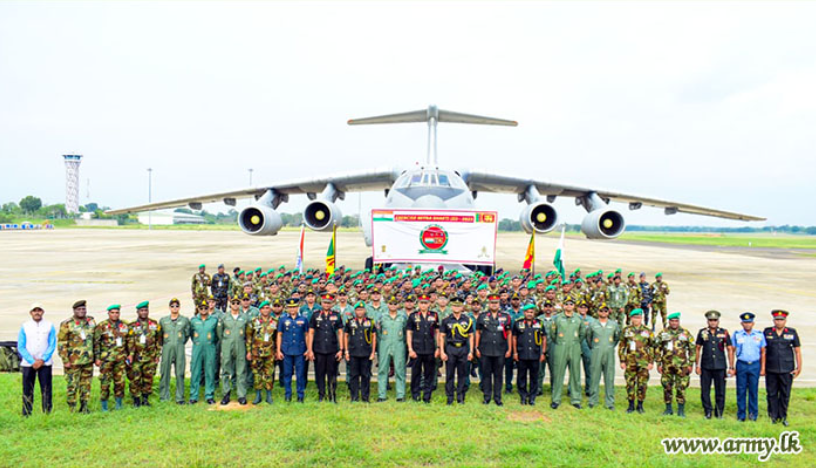
Sri Lanka and India commenced the 11th edition of bilateral military training, also known as “Exercise Mithra Shakti”, a two-week training scheduled to take place between November 10 and 23 in Belagavi, Karnataka, India.
According to a statement by the Sri Lankan Army, the exercise aims to enhance interoperability, mutual understanding and cooperation between the armed forces. The Sri Lankan contingent will comprise 125 army personnel, primarily from the Gajaba Regiment, as well as 10 air force personnel. The Indian contingent consists of 170 army personnel, represented mainly by troops from the Rajput Regiment, and 20 air force personnel.
A statement by the Indian Ministry of Defence further added that the scope of training includes synergising joint responses during “counter-terrorist operations” through "practice tactical actions such as raids, search and destroy missions, and heliborne operations". The training will also include combat reflex shooting, the employment of drones and counter-unmanned aerial systems, drills to secure helipads and undertake casualty evacuation during counter-terrorist operations, and even other elements such as martial arts training and yoga.
The training aims to “reduce the risk of life and property while keeping the interests and agenda of the UN at the forefront during peacekeeping operations.”
The Indian government noted that both nations will mutually learn from each other and exchange views and best practices to “further enhance the level of defence cooperation” and “foster strong bilateral relations between the two neighbouring nations.”
In a post on X, Mahishini Colonné, the High Commissioner of Sri Lanka to India, underlined that the training was “a reflection of trust, partnership & shared commitment to peace, stability & cooperation between our two nations.”
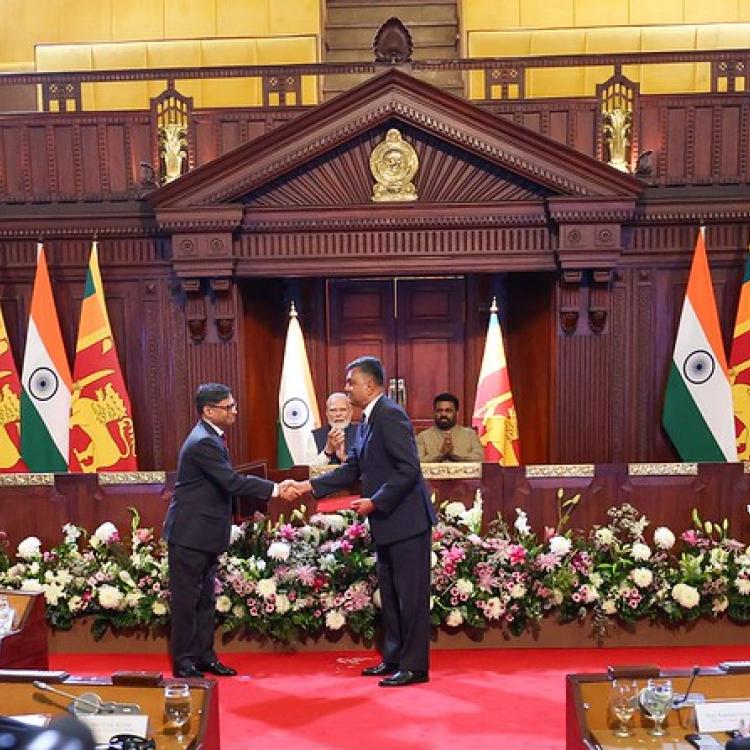
These training exercises mark the expansion of military cooperation between the two countries. In April, Sri Lanka and India signed a new Memorandum of Understanding on Defence Cooperation during Prime Minister Narendra Modi’s state visit to Colombo.
The agreement aims to enhance and institutionalise defence cooperation through high-level military exchanges, joint exercises, capacity building, humanitarian assistance and disaster relief, naval port calls, and exploratory discussions on defence industry cooperation.
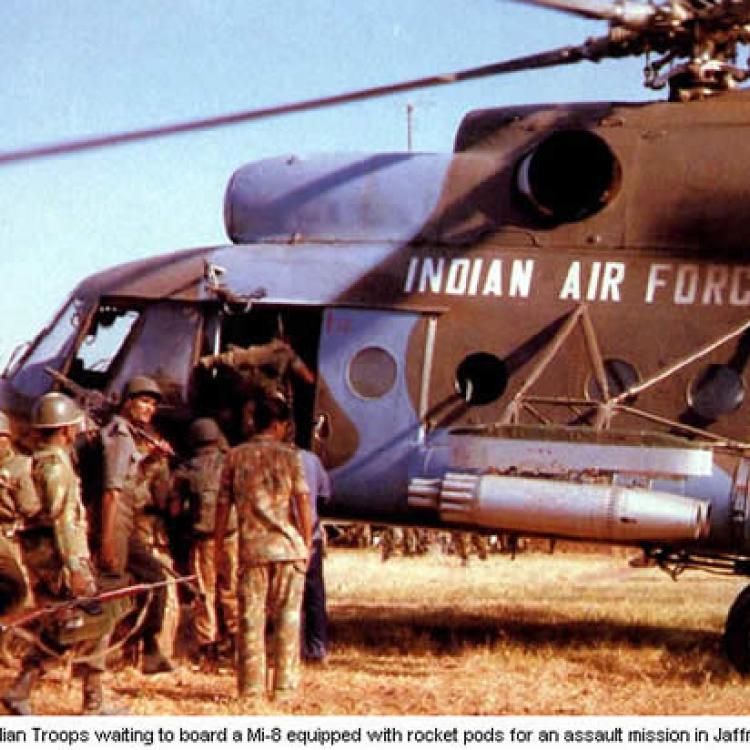
The continued cooperation between the two countries occurs nearly four decades after the 1987 Indo-Sri Lanka Accord, which led to the deployment of the Indian Peace Keeping Force (IPKF) in the North-East of the island. The agreement resulted in a bloody and controversial intervention during which Indian troops killed thousands of Tamils and committed major human rights violations.
In February, Sri Lanka further expanded its defence spending to a staggering LKR 437 billion - an increase of LKR 12 billion from the 2024 revised estimates. The Sri Lankan Army continues to be one of the largest militaries in the world per capita, occupying vast swathes of the Tamil homeland.