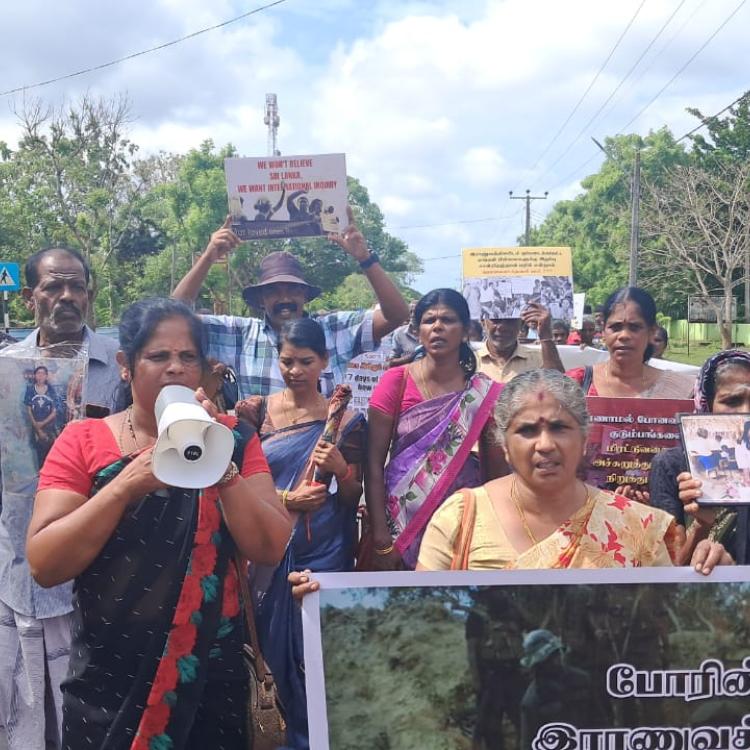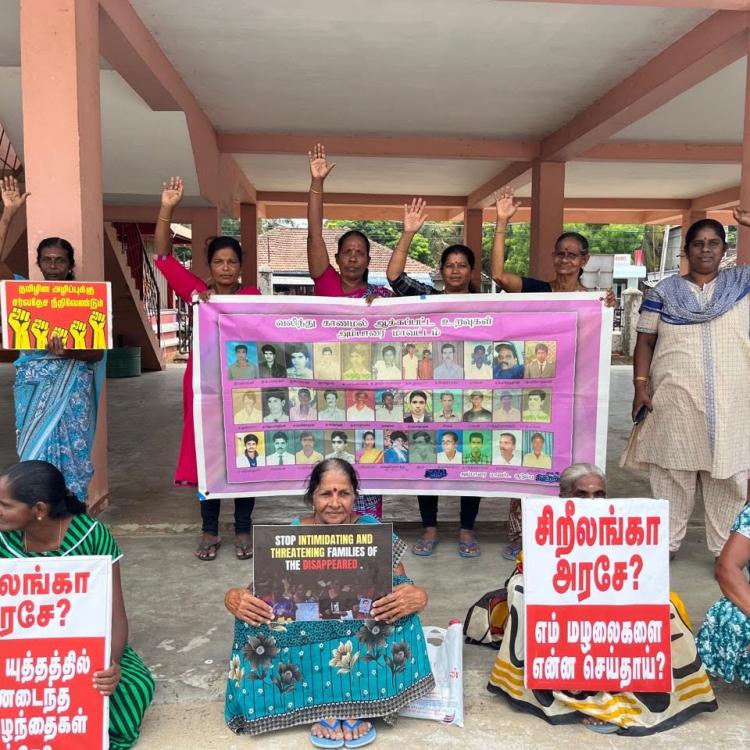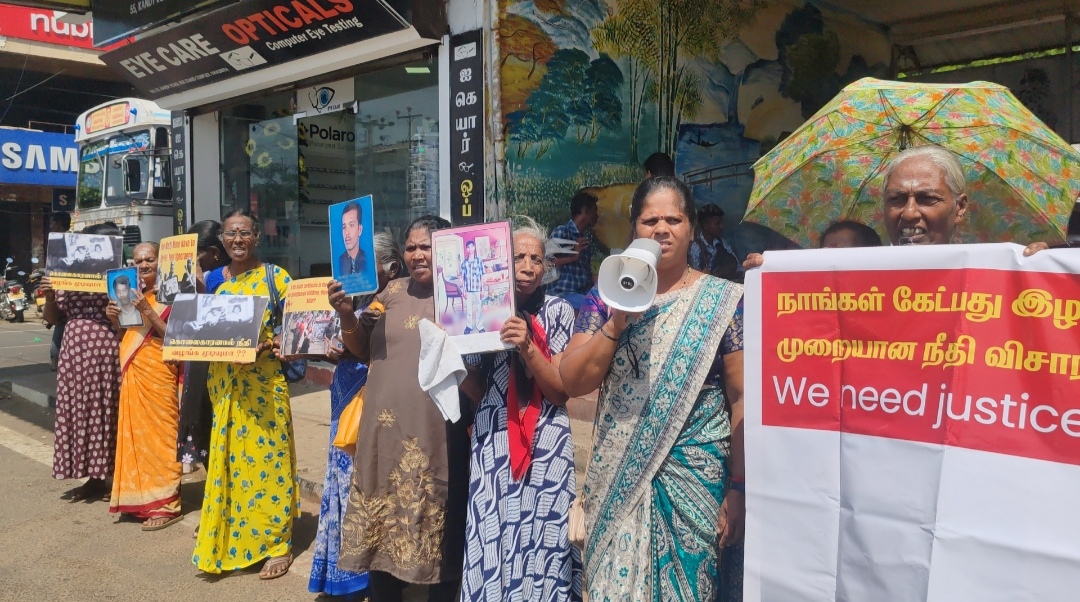
Families of the forcibly disappeared in Sri Lanka have reiterated their rejection of domestic accountability mechanisms, warning that justice cannot be achieved within a system that has repeatedly failed Tamil victims and continues to shield alleged perpetrators of war crimes and genocide.
Speaking to the media during a protest held near the old bus stand in Vavuniya, the Association of Relatives of the Forcibly Disappeared expressed strong dismay over recent comments made by the United Nations High Commissioner for Human Rights, Volker Türk, during his visit to the island last month. Türk encouraged the use of domestic mechanisms alongside international assistance, despite repeated opposition from Tamil families and victims' groups.
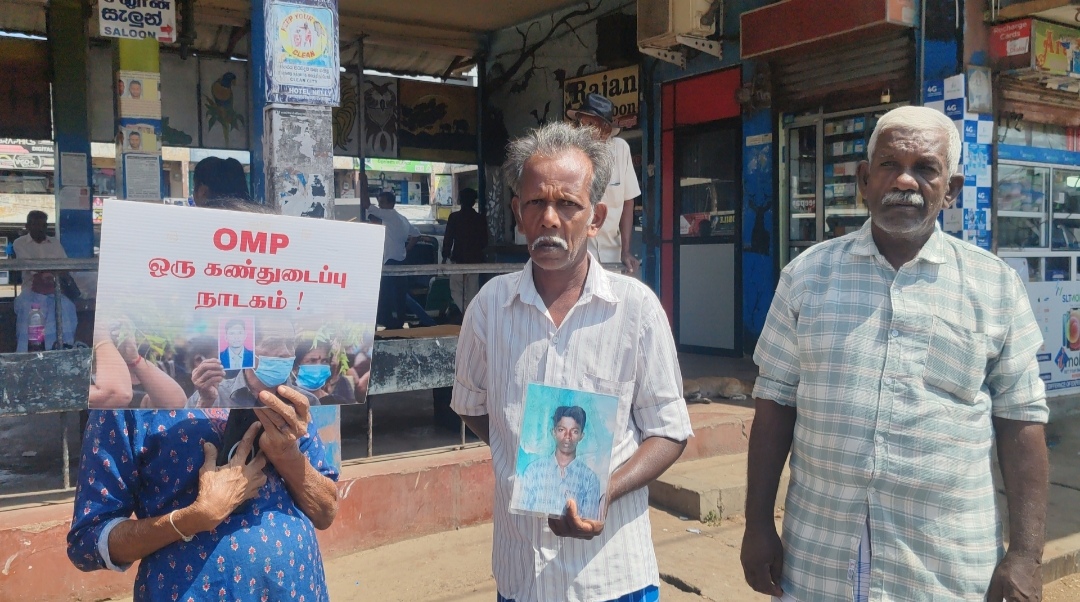
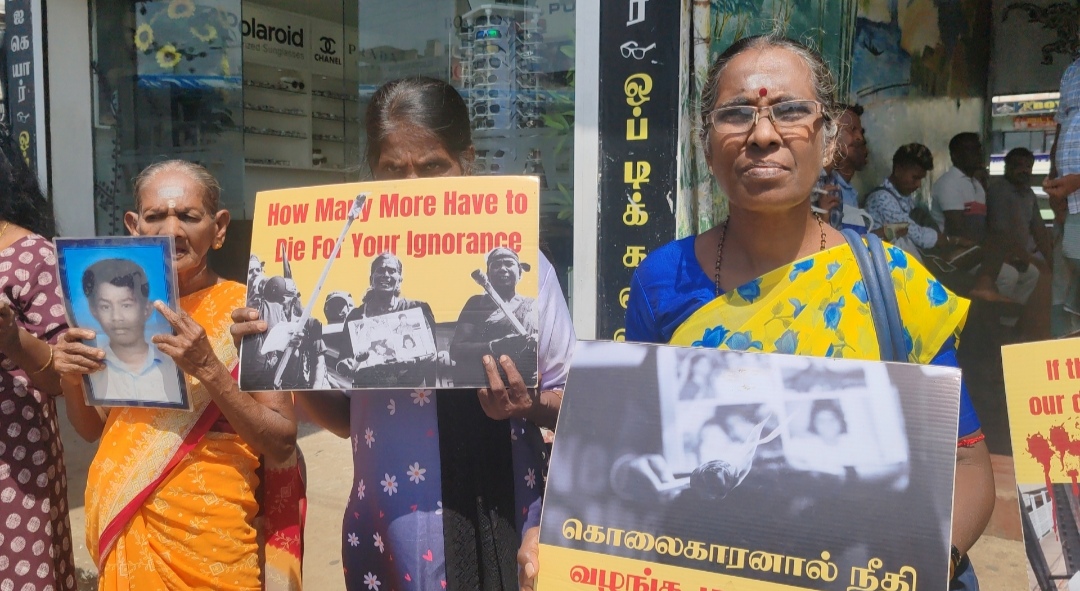
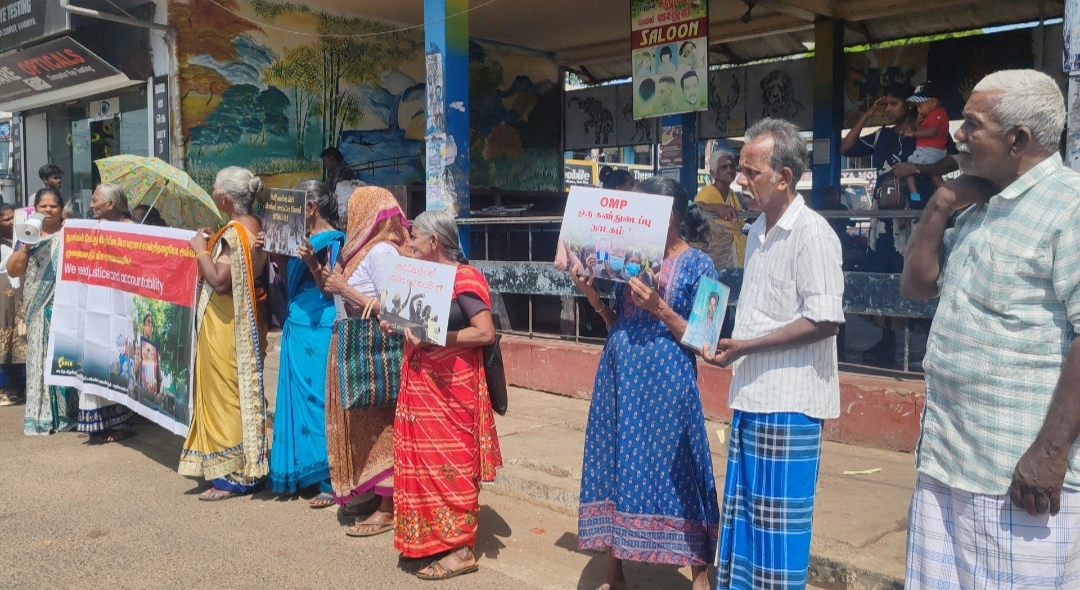
The association stressed that there can be no meaningful accountability through Sri Lanka’s domestic systems, pointing to decades of impunity and the continued political elevation of individuals accused of serious human rights abuses, including enforced disappearances and mass killings.
They questioned how, in a country where genocide has occurred, domestic mechanisms could possibly ensure accountability or prosecute the perpetrators.
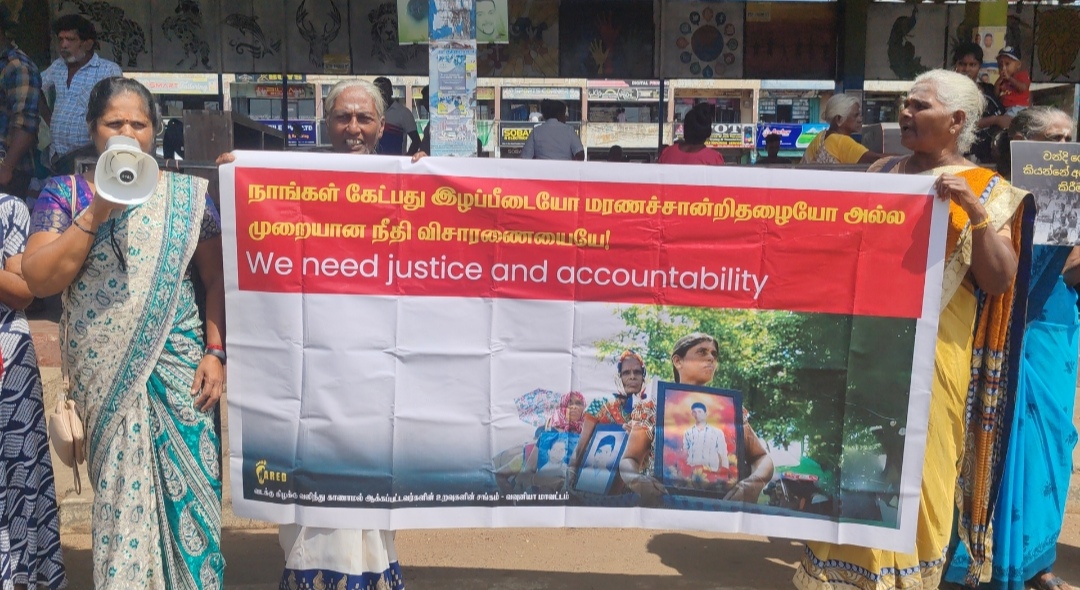
The association pointed out that, rather than facing justice, those responsible for grave crimes continued to be rewarded with promotions and honoured with high-ranking positions by successive Sri Lankan governments.
They further emphasised that the mass graves now emerging across the homeland are clear evidence that genocide had taken place.
Reaffirming their ongoing struggle for justice, the association announced plans for a large-scale protest to mark the upcoming International Day of the Victims of Enforced Disappearances on 30 August. Demonstrations will be held across the North and East, with Tamil families once again demanding an international inquiry into the disappearances and mass atrocities committed during and after the armed conflict.
Tamil families of the disappeared have maintained daily roadside protests since 2017, highlighting the lack of progress on accountability and drawing attention to Sri Lanka’s persistent refusal to cooperate with international justice mechanisms. Despite repeated calls from UN bodies and human rights organisations, Colombo has continued to deny the genocide of Tamils and refused to allow international prosecutions or independent investigations.