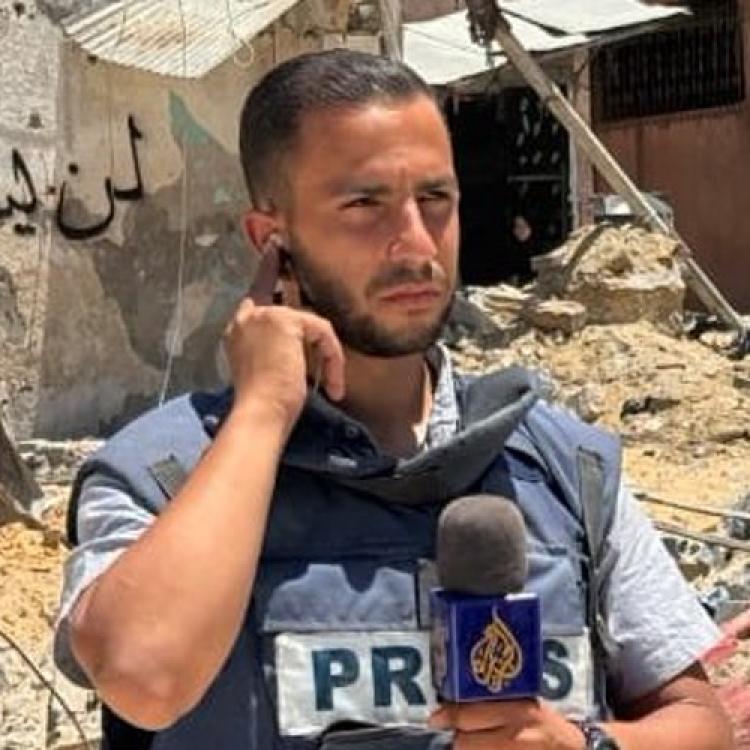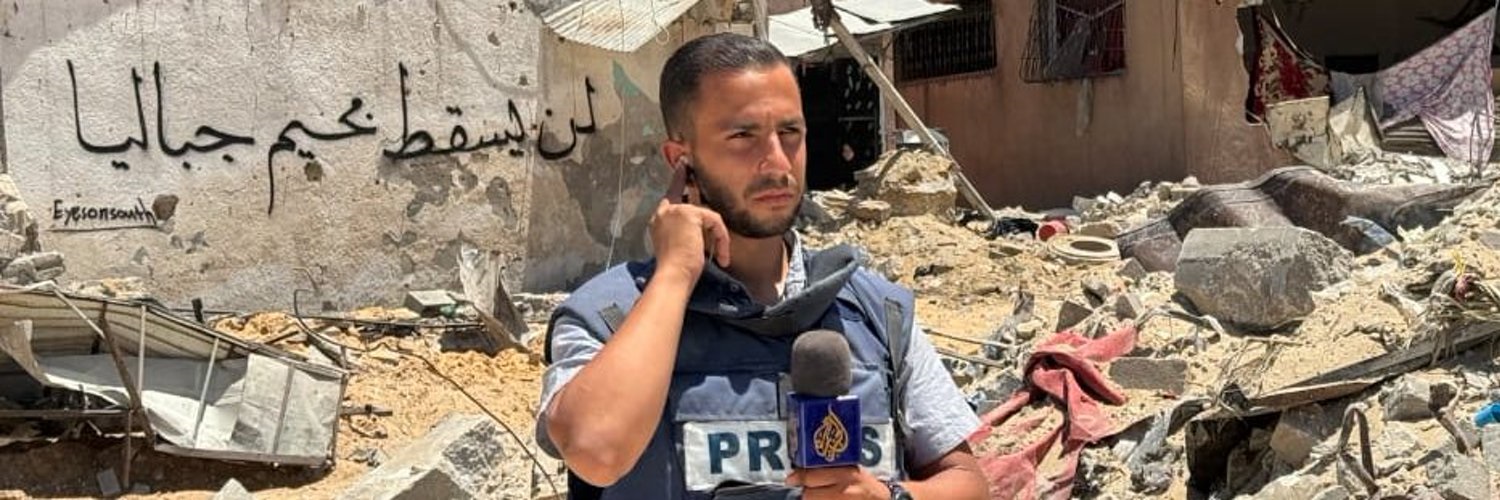
Sri Lankan opposition leader Sajith Premadasa has condemned Israel’s killing of Al Jazeera journalist Anas Al Sharif and his colleagues in Gaza, calling it “an absolute crime against humanity and press freedom.”
“The deliberate killing of journalists is an attack on truth,” Premadasa wrote on X. “Silencing those who risk their lives to report from the frontlines is an absolute crime against humanity and press freedom. All democratic nations that stand for press freedom must demand accountability.”
The deliberate killing of journalists is an attack on truth. Silencing those who risk their lives to report from the frontlines is an absolute crime against humanity and press freedom. All democratic nations that stand for press freedom must demand accountability. https://t.co/potwjkMfJX
— Sajith Premadasa (@sajithpremadasa) August 11, 2025
Premadasa’s remarks have also drawn attention to Sri Lanka’s own long and bloody history of targeting journalists, including during the presidency of his late father, Ranasinghe Premadasa. From 1989 to 1993, his father’s regime was accused of “disappearing” political opponents and dissidents, among them the prominent journalist Richard de Zoysa, abducted from his home and killed in 1990.
“The word was out that De Zoysa had helped produce a satirical play that was savagely critical of Premadasa, who has been so sensitive to personal criticism that he has barred at least two foreign journalists from Sri Lanka simply for writing about his low-caste roots,” wrote the LA Times in March 1990.
The controversial play was called “Who Is He and What Is He Doing?” But the curtain never went up. The night before its February debut, producer Lakshman Perera, an openly critical member of Premadasa’s ruling party, disappeared and is now believed to have been murdered.”
“It was the next morning that the armed men appeared at De Zoysa’s mother’s front door, demanding to see her son.”
Read more here.
Sri Lanka has long ranked among the most dangerous countries in the world for media workers. Journalists for Democracy in Sri Lanka (JDS) recorded that at least 44 journalists were killed or disappeared between 2004 and 2010 alone — 41 of them Tamil and from the North-East. The true number is believed to be far higher.
At a 2021 event, former Sri Lankan MP Karu Jayasuriya admitted that as many as 117 journalists had been killed or disappeared in Sri Lanka.