Journalists in Mullaitivu commemorated Black January last week, with a remembrance ceremony and the distribution of leaflets, honouring media workers who were killed or forcibly disappeared by the Sri Lankan state.
The event was organised by the Mullaitivu Press Club as part of the annual observance of Black January, a month-long commemoration marked by journalists across the Tamil homeland to remember those targeted for exposing state violence, repression, and injustice.
January has come to be recognised as Black January due to the disproportionate number of attacks on journalists that occurred during this period. Nearly 50 journalists are believed to have been killed or forcibly disappeared by Sri Lankan state forces over the years, with a significant number of these crimes taking place in January. Numerous media institutions were also attacked during this month.
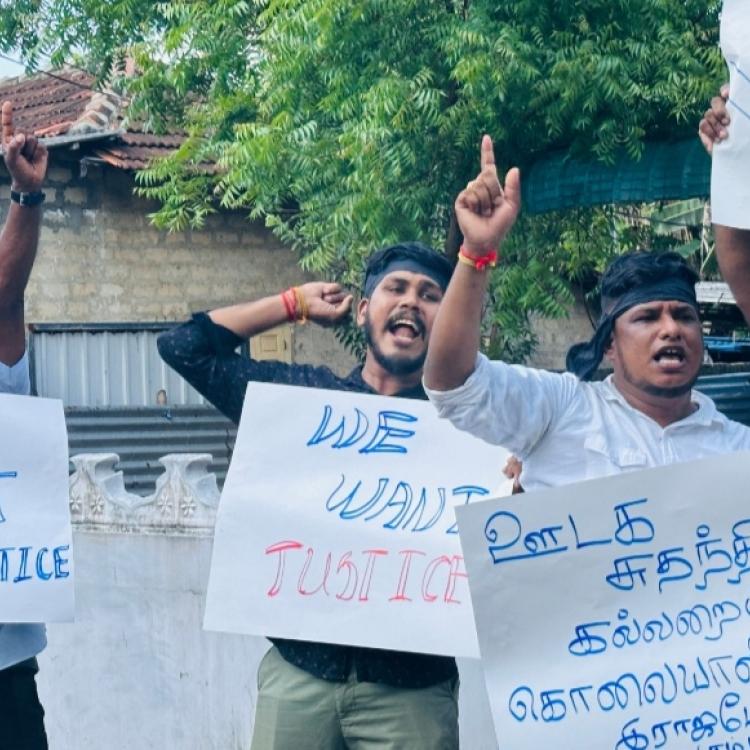
Despite changes in government over successive decades, justice has never been delivered for these crimes. Those responsible continue to enjoy impunity, while families of the victims remain without truth or accountability. As a result, journalists continue to mark January as a dark month of remembrance and resistance.
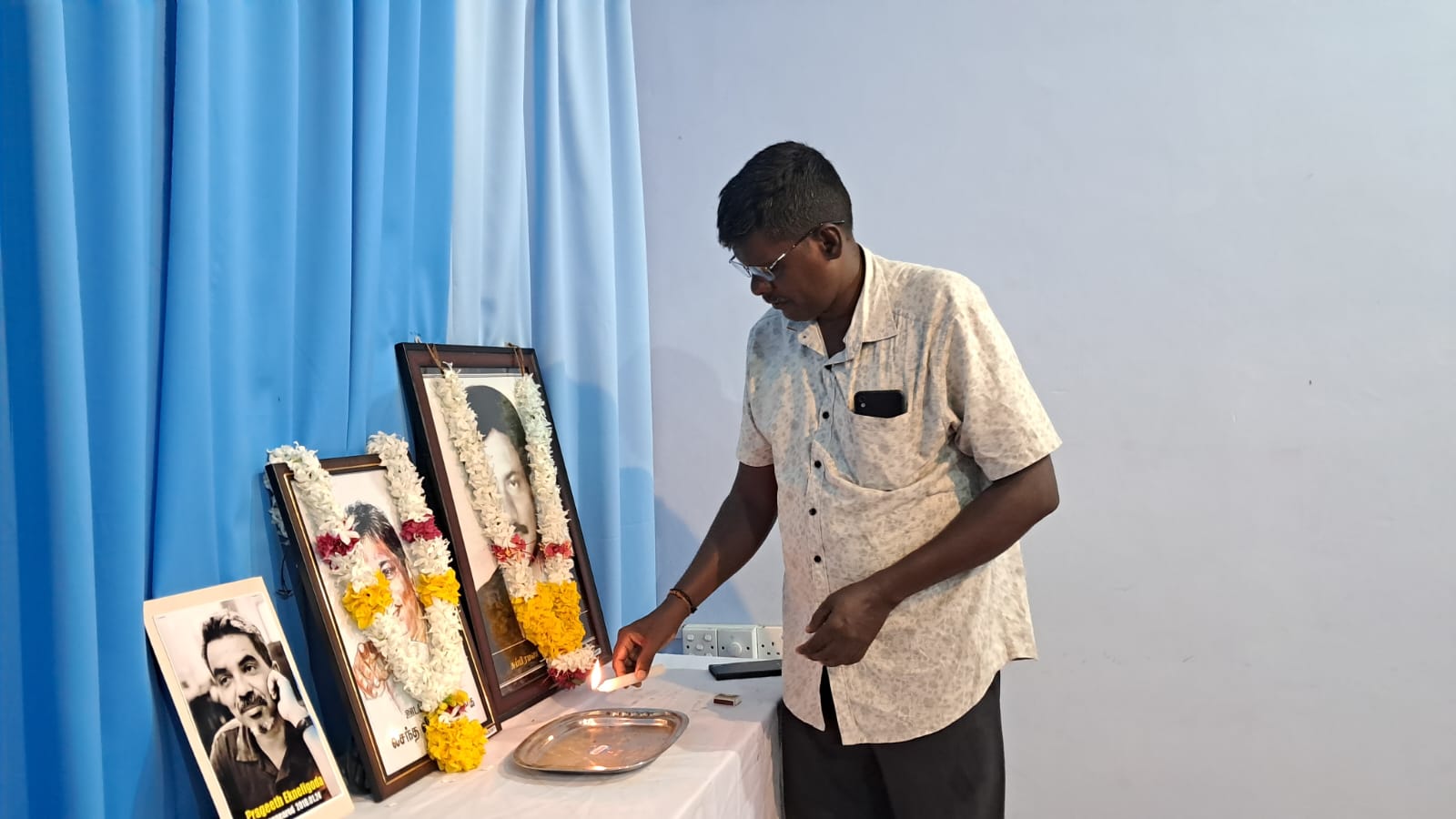
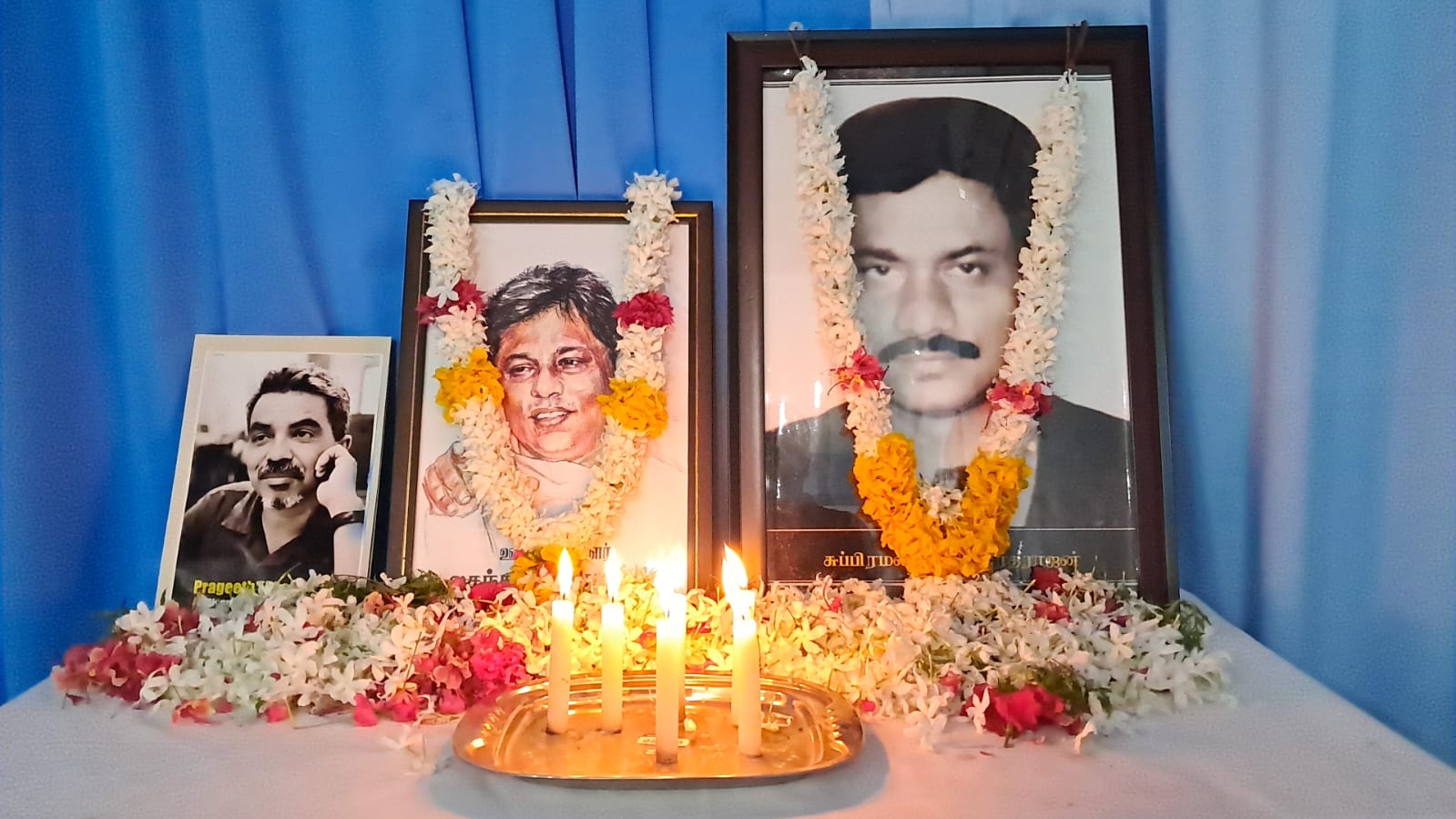
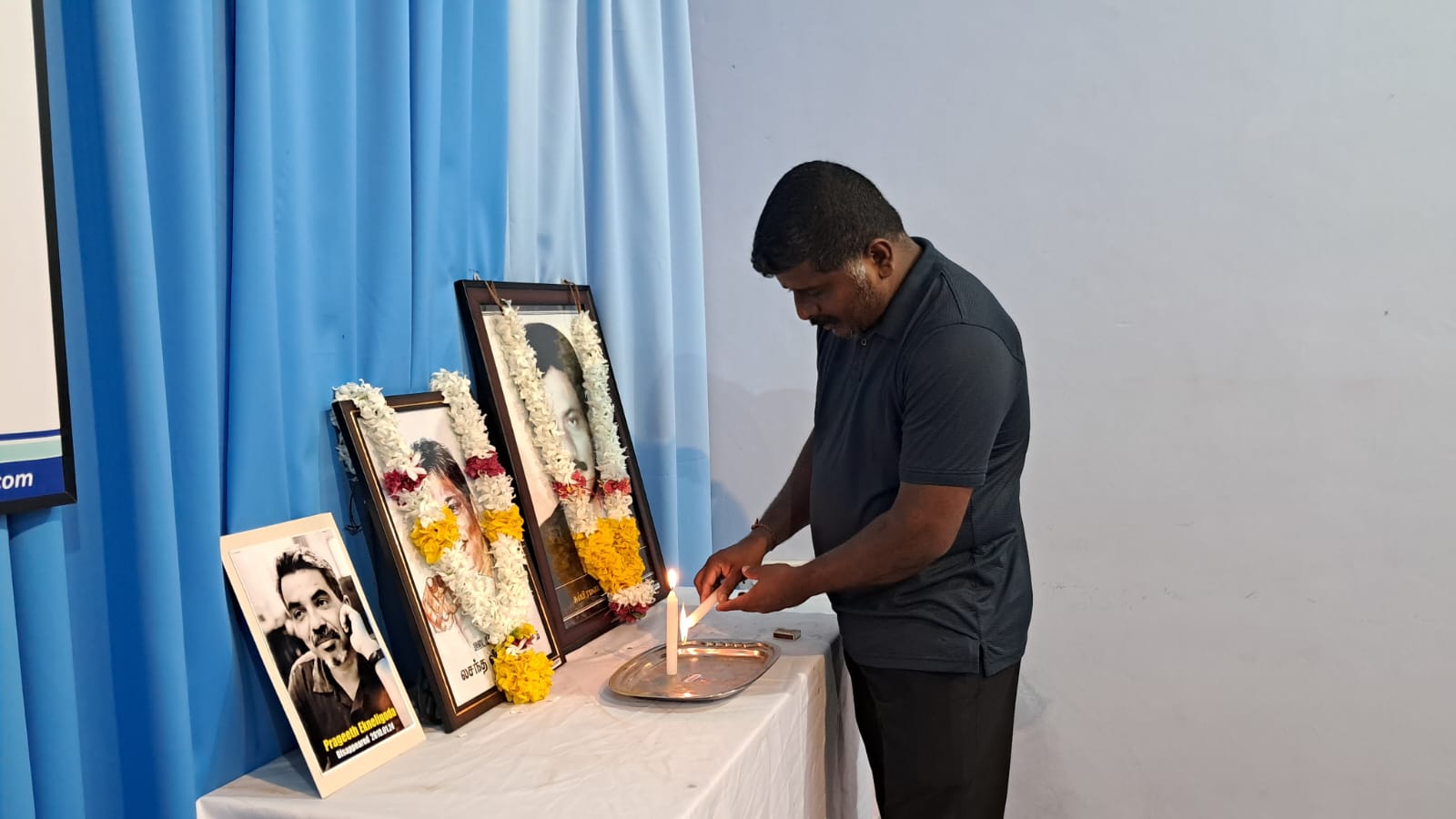
The commemoration was held under the leadership of Mullaitivu Press Club President Shanmugam Thavaseelan. Journalists first gathered at the Mullaitivu Press Club premises, where tributes were paid to Subramaniam Sugirdharajan, Lasantha Wickrematunge, and Prageeth Eknaligoda.
Garlands were placed, lamps were lit, flowers were offered, and a moment of silent homage was observed in memory of the journalists who lost their lives for exposing the truth.
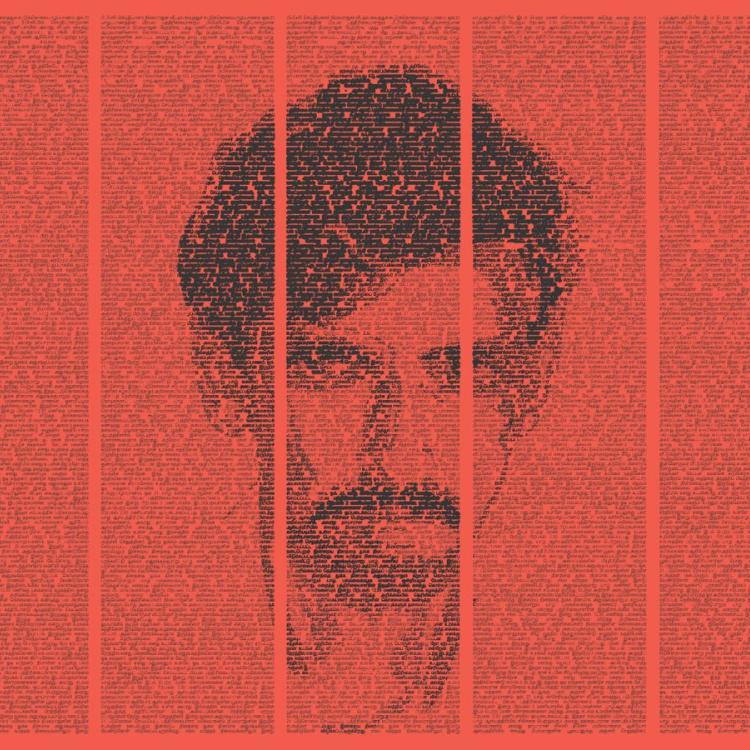
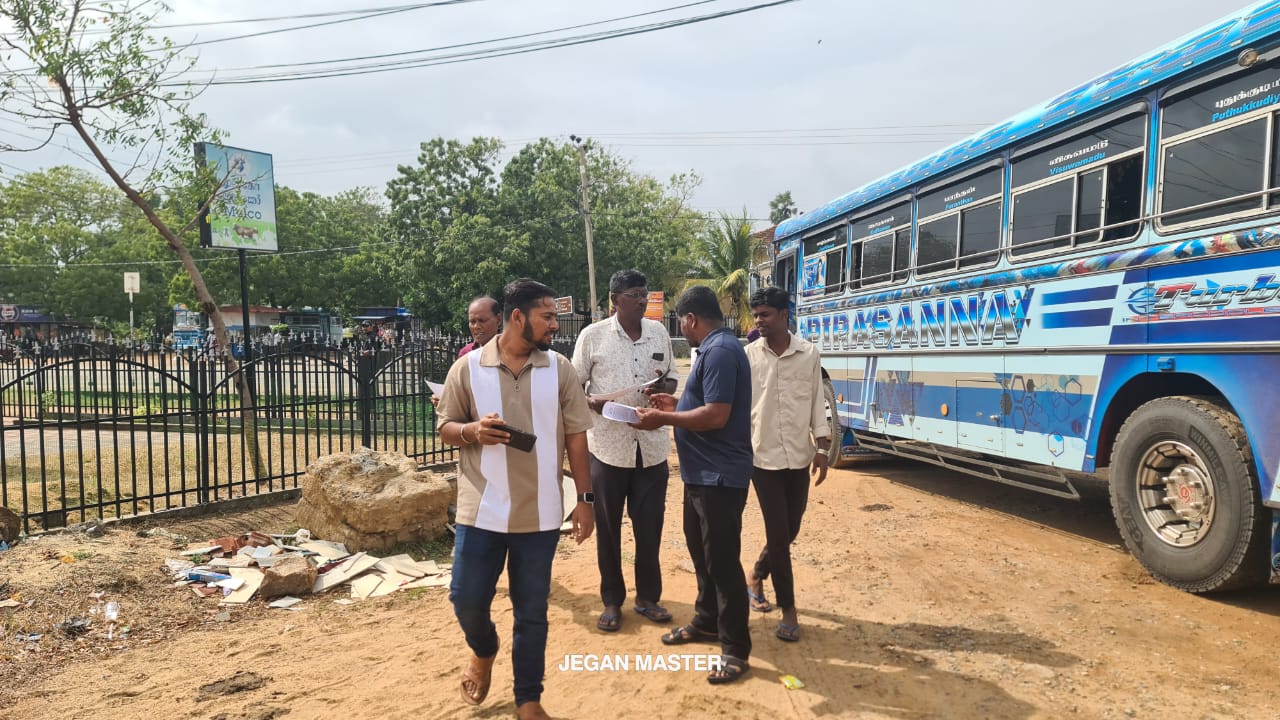
Following the ceremony, journalists distributed Black January leaflets across Mullaitivu town and at the Mullaitivu bus stand, engaging with members of the public and drawing attention to the continued denial of justice.
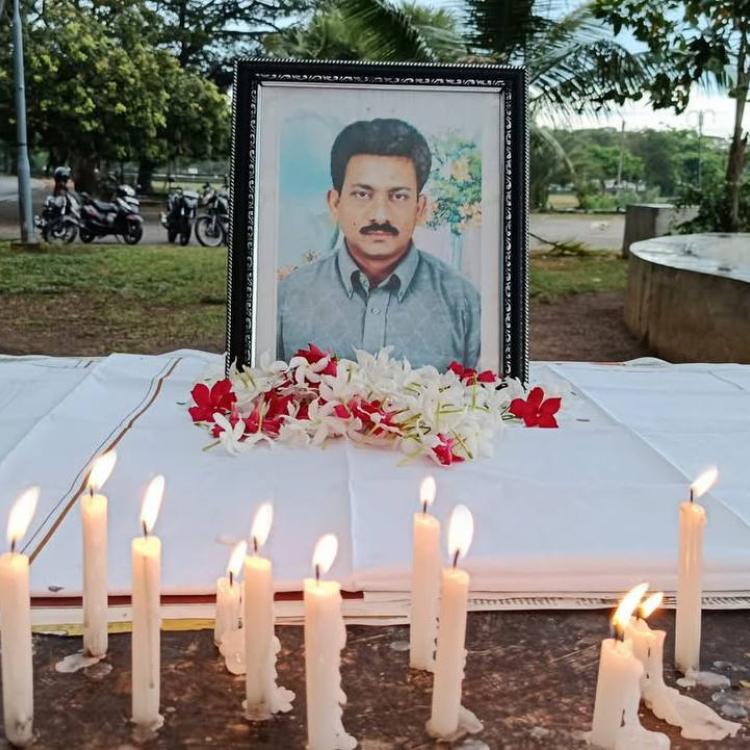
Remembering Sugirdharajan and others
According to the leaflet distributed during the event, Sugirdharajan would have been 56 years old. He was killed twenty years ago at the age of 36.
On 2 January 2006, in the eastern coastal town of Trincomalee, Sugirdharajan exposed the killing of five Tamil students by Sri Lankan security forces. He accompanied the father of one of the victims to the mortuary and published photographic evidence showing that the students had been shot at close range.
At the time, the Sri Lankan government claimed the students had died in a grenade explosion allegedly caused by themselves, a narrative widely criticised as an attempt to conceal the truth. Sugirdharajan’s photographs disproved this claim and brought international attention to the killings. Shortly thereafter, he was shot dead by Sri Lankan state forces.
The leaflet also recalled the abduction and enforced disappearance of Prageeth Eknaligoda in January 2010 in Colombo, noting that many other journalists faced similar fates both before and after Sugirdharajan’s killing.
The leaflet further stated that those responsible for these crimes have never been brought before the courts and continue to live with privilege and protection. Successive Sri Lankan governments have failed to conduct credible investigations or deliver justice, entrenching a culture of impunity and fear.
As a result, journalists continue to observe Black January not only as a period of mourning, but as an ongoing struggle for truth, accountability, and the right to report freely without fear of violence.