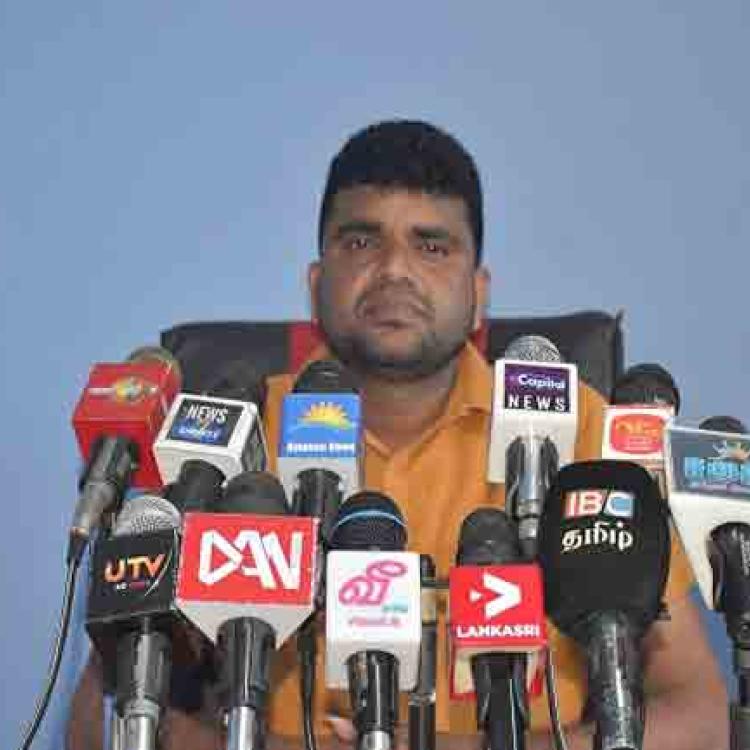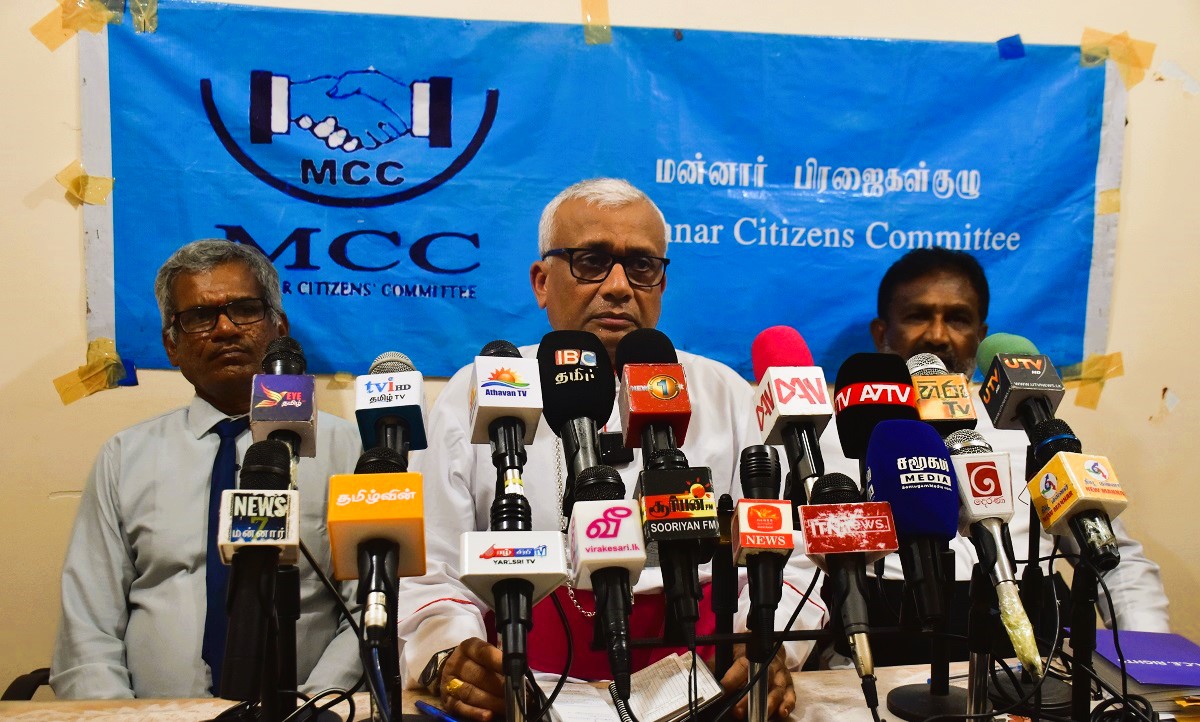
The Bishop of Mannar, Gnanapragasam Anthonypillai spoke out against the controversial wind power project on Mannar Island, stating that the decision to establish 14 wind farms was made unilaterally by Colombo despite local opposition.
Speaking at a meeting on Thursday with representatives from interfaith groups, civil organisations, and protest committees in Mannar, Anthonypillai said he had met with Sri Lankan president Anura Kumara Dissanayake on multiple occasions to convey the public’s objections to the project.
He explained that while he had initially planned to meet the president alongside religious and community leaders, those meetings ultimately did not take place as intended. He met the Sri Lankan president three times — once alone, again with the District Officer Council, and later in follow-up discussions coordinated through the same body, Anthonypillai said.
According to the Bishop, his most recent meeting with the Dissanayake took place two days earlier. Although the plan was to attend with all stakeholders, that did not happen, he said. “During our discussion, it became clear that the government is firmly committed to establishing 14 wind farms on Mannar Island.”
Anthonypillai stressed that he has not signed any documents or agreements relating to the project. He said Dissanayake had assured him that once the 14 wind farms were completed, no future sand extraction or additional wind power projects would be permitted on the island.
Dissanayake stated that no granular sand extraction is taking place on Mannar Island and gave assurances, through the Cabinet, that no government would allow it in future, he told the gathering.
The official added that further discussions would take place with protest leaders and local communities before any position is finalised. He also dismissed reports circulating on social media claiming that he had made commitments to the government, describing them as “inaccurate and speculative.”
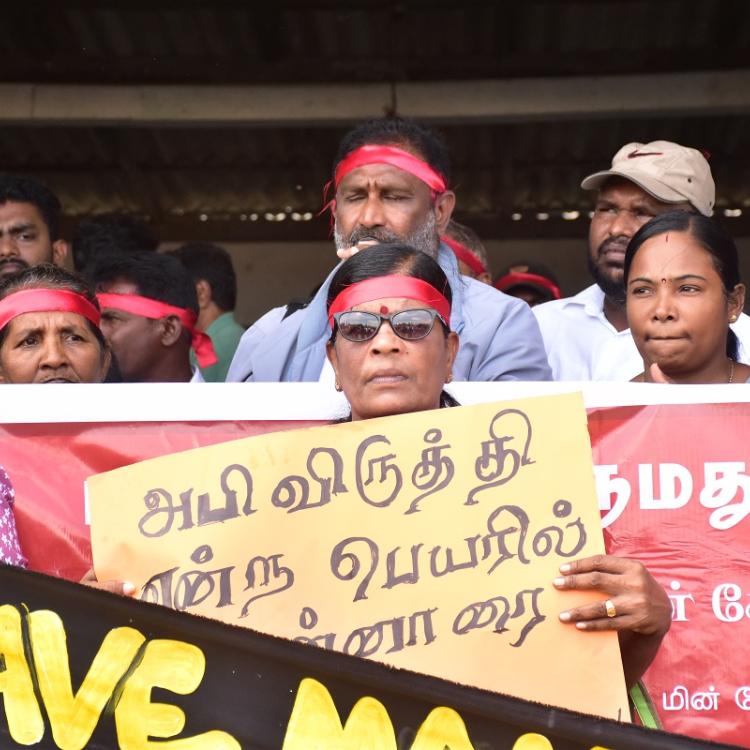
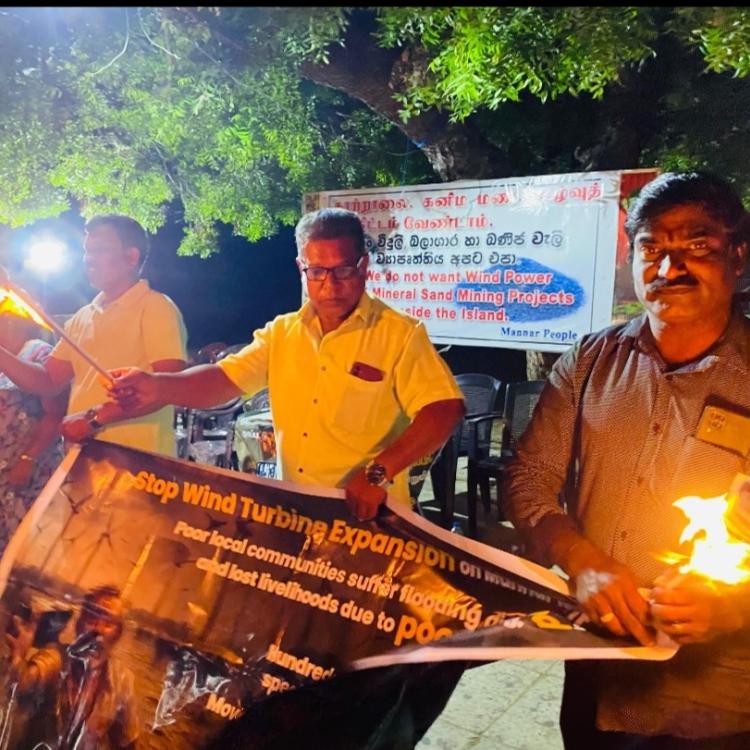
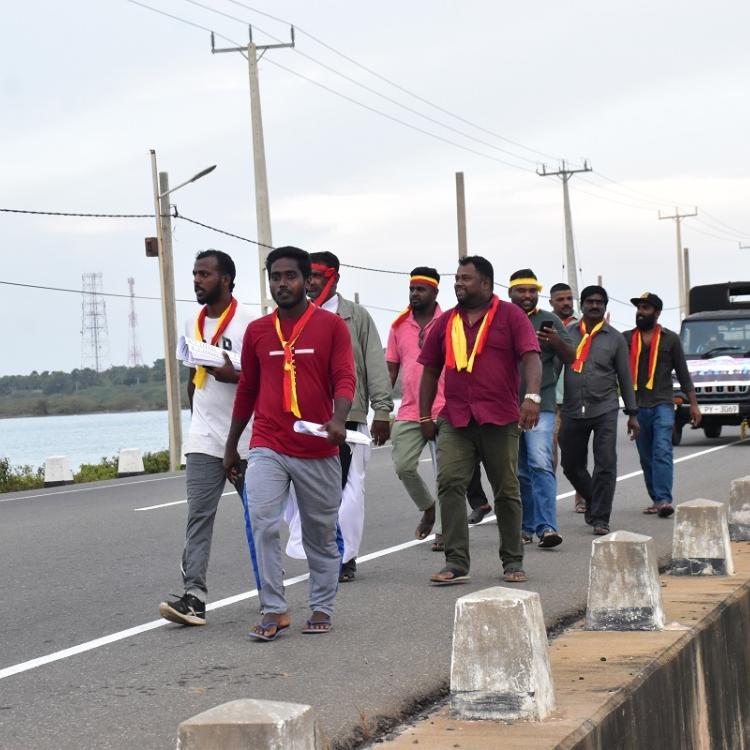
Mannar residents have been staging ongoing protests against the government’s plan to establish large-scale wind farms, which they say threaten both their environment and their livelihoods. Demonstrations have taken place for months across the district, with local fishermen, farmers, and civil society activists warning that the project would lead to displacement and environmental degradation.
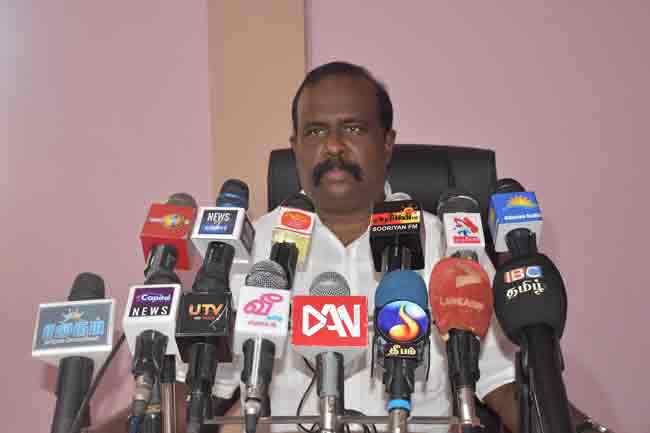
In a separate statement, Vanni Member of Parliament Selvam Adaikalanathan rejected reports that he had participated in the recent meeting between the Sri Lankan president and Antonipillai. The MP clarified that he learned about the discussion through the media and had no involvement in it.
“No discussions regarding the Mannar wind farms or any other issues were conveyed to me,” Adaikalanathan said.
He insisted that the people’s ongoing protests must not be undermined. “No one can weaken the struggle of the people of Mannar for their rights,” he said, recalling his participation in demonstrations, including an incident where he and local residents blocked wind farm equipment from being transported to Mannar Island late at night.
“The people’s movement must continue to grow stronger,” Adaikalanathan said. “The voices of the people of Mannar must never be silenced.”
The government’s wind farm plan, part of its broader renewable energy strategy, has faced mounting backlash across the North, where locals have accused Colombo of pushing forward development projects without consultation and in violation of environmental safeguards.
Mannar’s fishermen and residents have also voiced concerns that the project, backed by Indian firms, reflects a broader trend of resource exploitation in the Tamil homeland under the guise of “green development.”