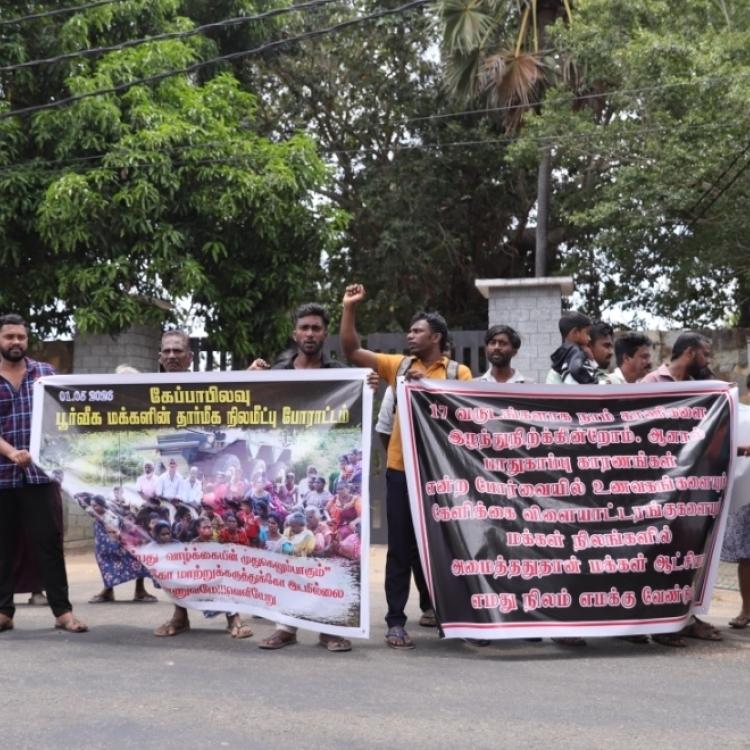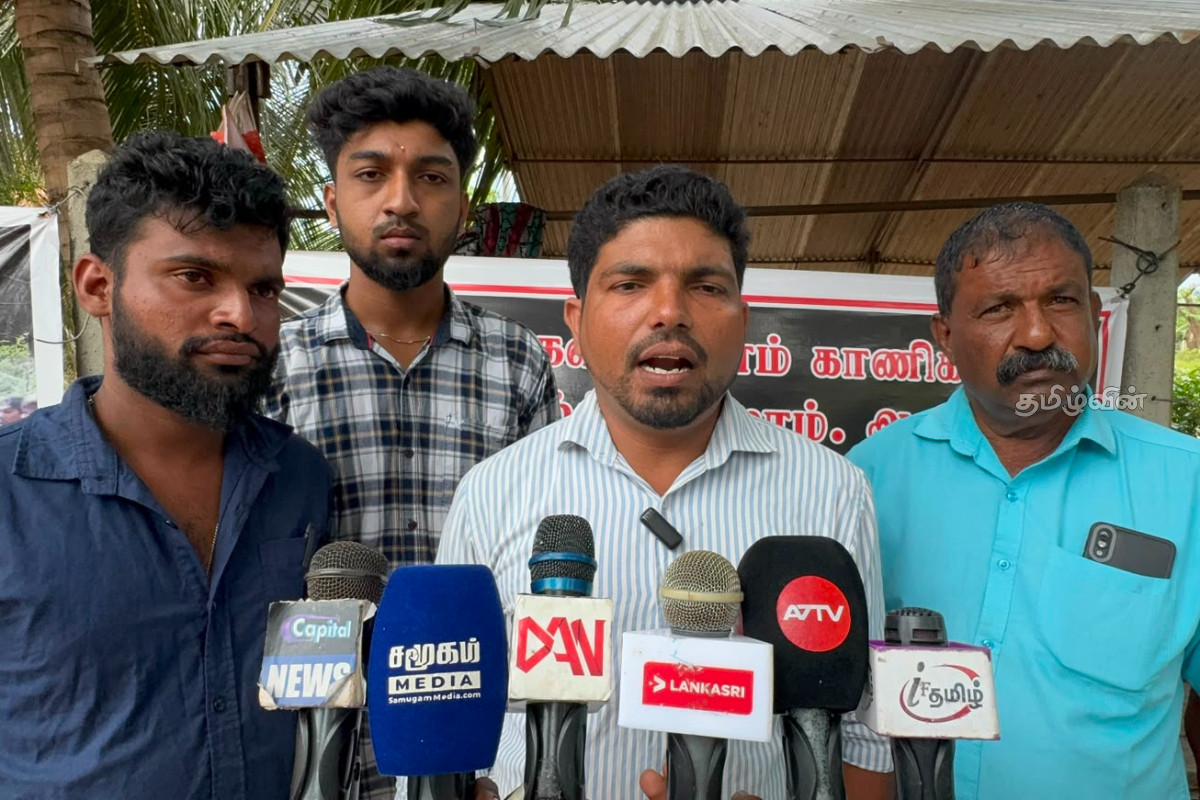
Residents of Kepapilavu in Mullaitivu continued their protest for a ninth consecutive day on Wednesday, demanding the immediate release of 59.5 acres of ancestral residential land that they say remains under Sri Lankan military occupation.
The protest, taking place in the Karaithuraipattu divisional area, is being led by families who have been unable to return to their original lands for more than 17 years.
Protesters said the 59.5 acres belong to 55 families from Kepapilavu and called on the Sri Lankan authorities to release the land without further delay.
Speaking to the media, residents argued that returning the land to its rightful owners would be both just and morally necessary, allowing displaced families to reclaim their homes, rebuild their lives and resume their traditional livelihoods.
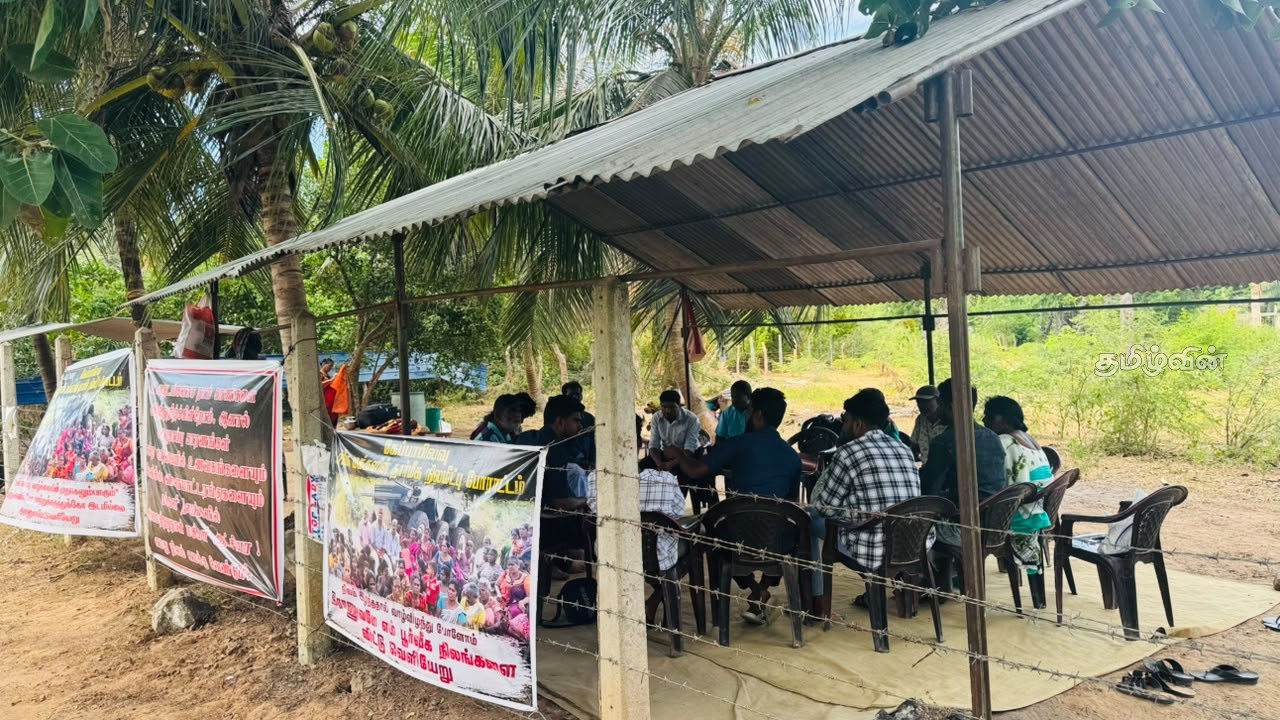
The demonstrators appealed to the media and wider public to ensure that their demands are conveyed accurately and without distortion to Sri Lankan president Anura Kumara Dissanayake.
They said they hoped direct intervention by Dissanayake would lead to a permanent resolution.
The residents noted that they have campaigned for the return of their lands for the past 17 years through repeated protests, petitions and appeals, but no lasting solution has been delivered.
"We no longer need politics built on promises or repeated appeals. What we need now is action. The Sri Lankan President must intervene immediately and take steps to release our lands," the protesters said.
The current protest follows a renewed hunger strike launched last month, when residents gathered outside the Sri Lanka Army’s 59 Division headquarters demanding the release of land still held by the military.
During that protest, soldiers stationed at the camp were seen photographing and filming demonstrators, prompting further concern over the monitoring of land rights activists and displaced families campaigning for the return of occupied land.
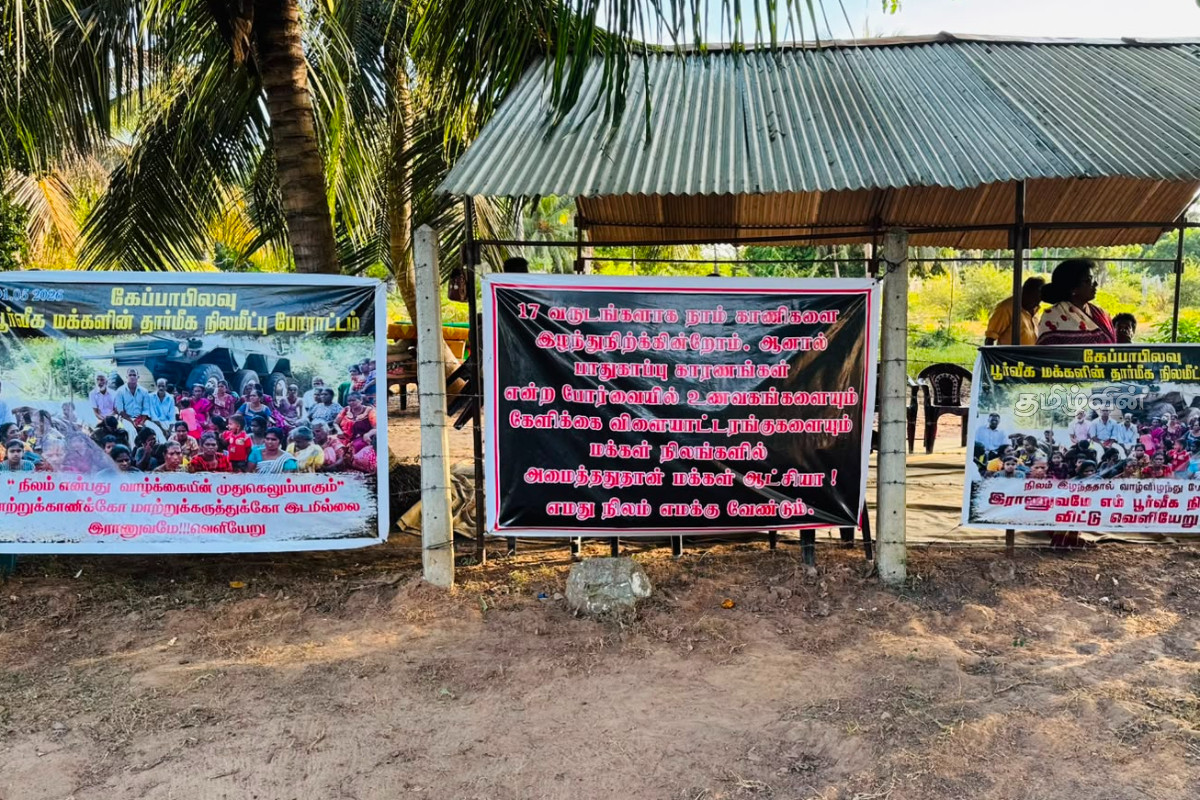
Kepapilavu residents have repeatedly rejected claims that they accepted alternative land allocations in place of their ancestral property. They have insisted that the only acceptable solution is the unconditional return of their original lands.
The wider land dispute in Kepapilavu concerns 171 acres still under military control, including 59.5 acres of residential land and 111 acres of agricultural land.
Residents renewed that demand on International Workers’ Day earlier this year, stressing that the land was seized by the Sri Lankan military in 2009 to establish a large-scale camp. The residential areas once supported more than 55 families and included homes, schools, places of worship and shared community spaces.
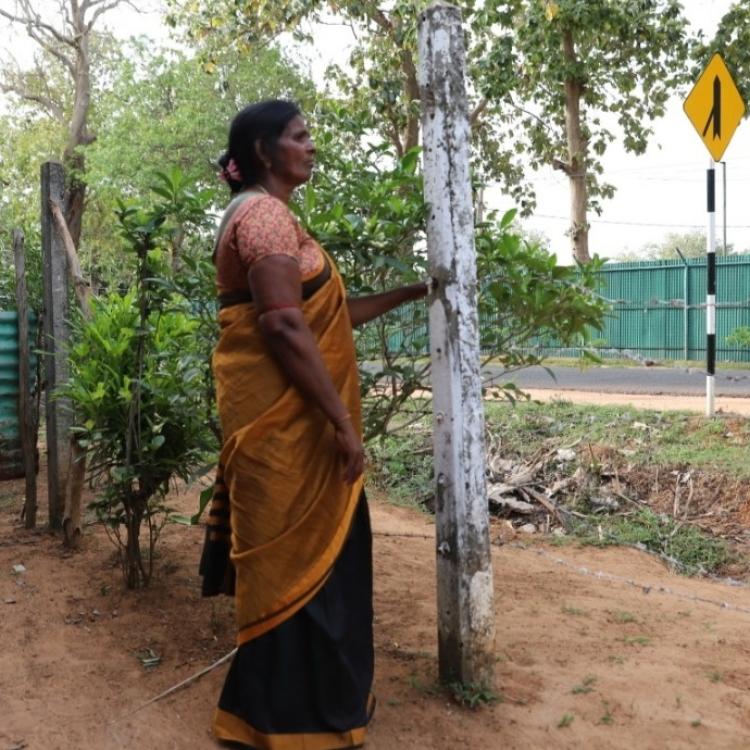
For residents, the continued occupation has prevented them from accessing farmland, fishing grounds and coastal resources on which their families depended for generations.
Protesters have now announced a large-scale demonstration for Sunday, 5 July, from 9am to 12 noon. They have invited political parties, elected representatives, civil society organisations and members of the public to join the protest in support of their demands.
The demonstrators said prolonged military occupation of civilian lands remains a persistent issue across the North-East and argued that their struggle is fundamentally about the right of indigenous residents to return to their ancestral homes, farm freely and live without military control over their land.
Across the Tamil homeland, successive Sri Lankan governments have repeatedly promised land releases while retaining large areas under the control of the military.
In Kepapilavu, residents say those promises have brought little change.