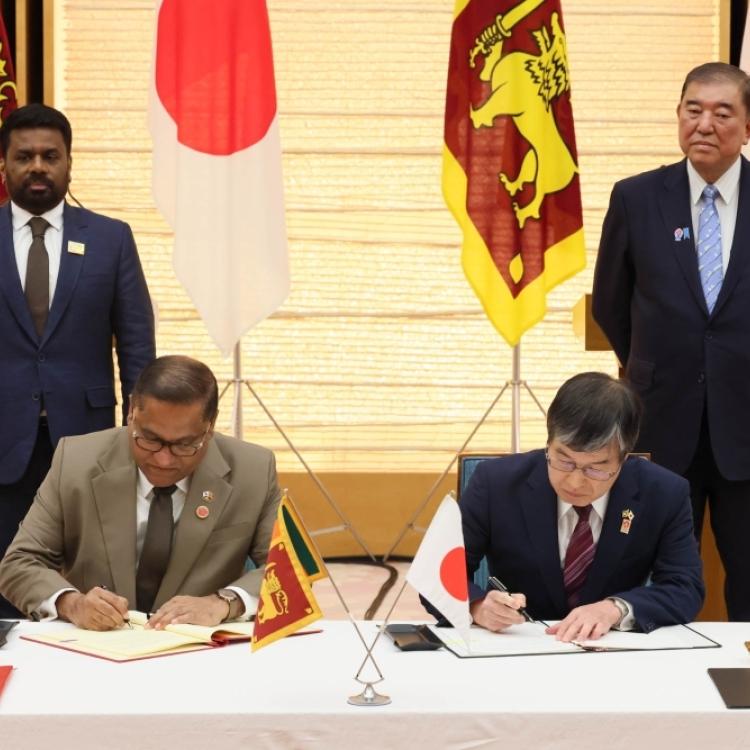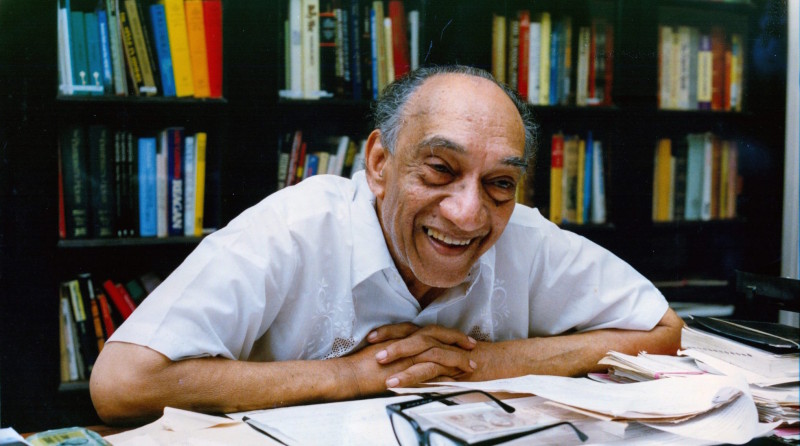
Japanese prime minister Shigeru Ishiba hailed former Sri Lankan president J.R. Jayewardene this week, recalling his 1951 address at the San Francisco Peace Conference and describing it as pivotal to Japan’s postwar reintegration into the international community.
Speaking after talks with president Anura Kumara Dissanayake in Tokyo, Ishiba praised Jayewardene’s call for reconciliation and compassion. At the conference Jayewardene had quoted the Buddha, declaring, “Hatred ceases not by hatred, but by love.” Ishiba said those words “laid the foundation for the prosperity Japan enjoys today.”
Jayewardene’s legacy, however, remains deeply controversial and laced with racism. While he is celebrated in Japan for supporting its return to the global stage after the Second World War, historical records also show his willingness to collaborate with Japan during the war itself. In 1942, following Japanese air raids on Colombo and Trincomalee, rising resentment towards the British among Sinhalese, saw Jayewardene and fellow politician Dudley Senanayake hold discussions with Tokyo.
Decades later, as president of Sri Lanka, Jayewardene presided over some of the worst anti-Tamil violence in the island’s history. During the Black July pogrom of 1983, thousands of Tamils were massacred by Sinhala mobs backed by the state. Instead of intervening to stop the killings, Jayewardene was quoted just days into the violence as saying, “The more you put pressure there (in the north) the happier they (the Sinhalese) will be here... Really, if I starve the Tamils out, the Sinhalese will be happy.”
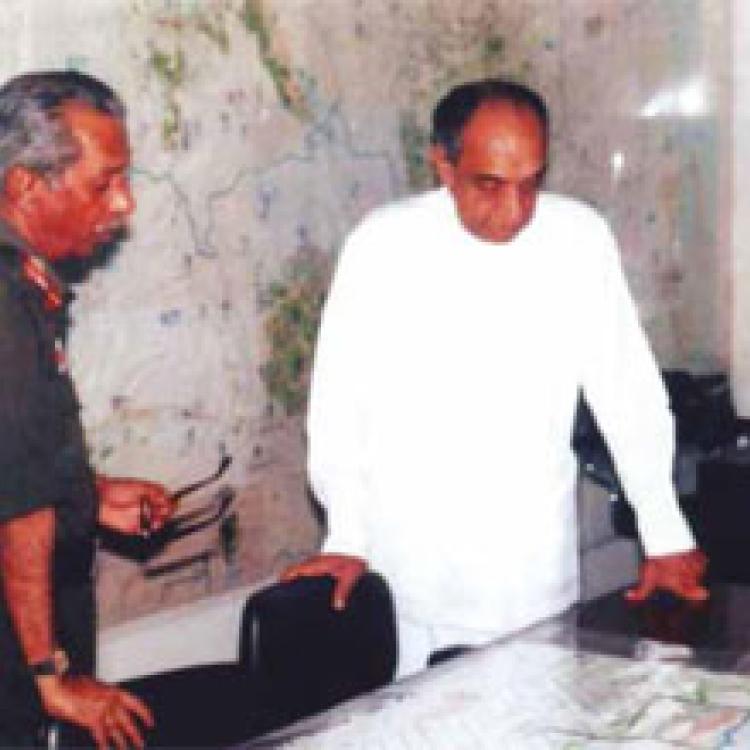
Declassified documents from the CIA also show how despite regarding himself as “South Asia’s elder statesman and a political moderate” the Sri Lankan president “had twice ordered his forces to take Jaffna” as part of a massive military assault on the peninsula.
“Burn the place to the ground,” Mr Jayewardene admitted he had instructed his forces.
For Tamils, Jayewardene is remembered as the head of a government that enabled mass killings, displacement, and the stripping away of basic rights.