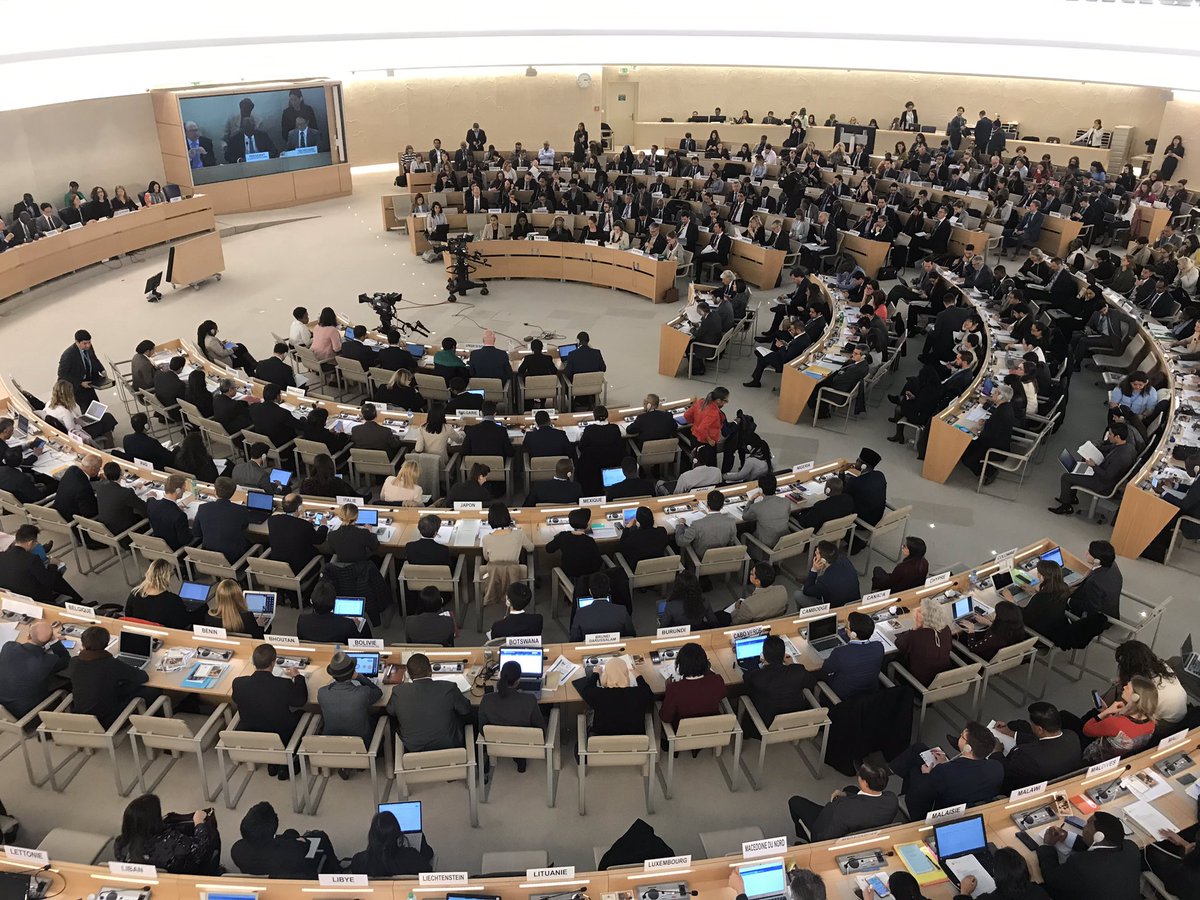
File photograph: UN Human Rights Council in Geneva.
I have only seen Douglas Devandanda in person once in my life. It was in the most unusual of places.
I was standing in line for a coffee after a long morning at the United Nations Human Rights Council in Geneva. It was 2012, just three years after the devastating massacres at Mullivaikkal where tens of thousands of Tamils were slaughtered by the Sri Lankan military. After years of international indifference, and only through relentless pressure from Tamils across the world, accountability for those crimes was finally being discussed on the global stage. The Council was preparing to pass a resolution, which as weak and limited as it may have been, at least acknowledged that justice was owed.
As I grabbed my drink from the counter, I turned around to find myself face to face with Devananda. He stood there, just a few feet away, dressed head to toe in white and flanked on either side by bodyguards. His towering figure and ash white beard were unmistakable. For a split second, I froze.
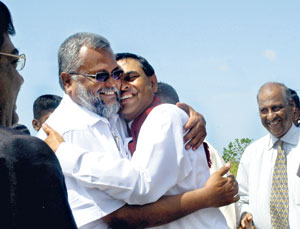
Devananda with Basil Rajapaksa in 2009.
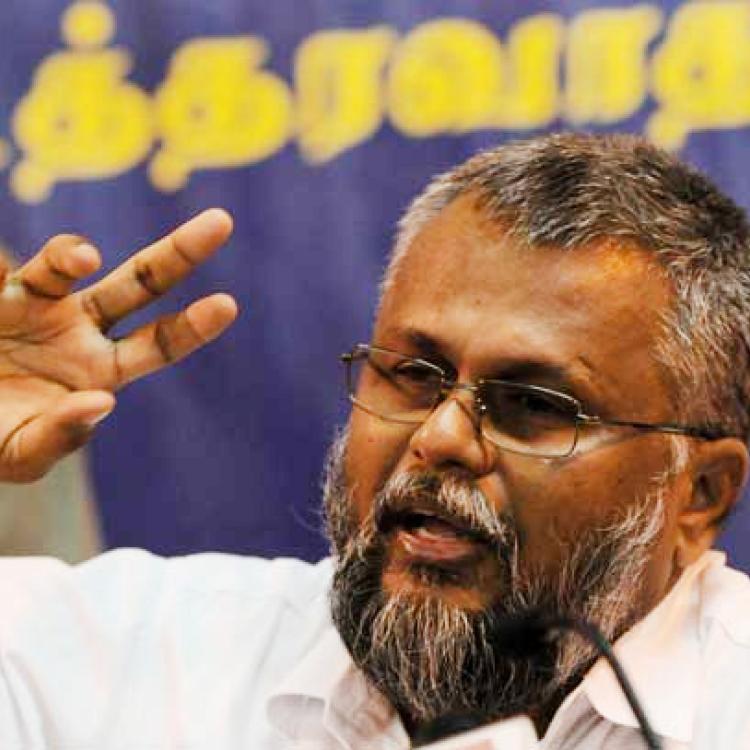
As leader of the Eelam People’s Democratic Party (EPDP), Devananda had cultivated a violent and fearsome reputation. From at least the early 1990s, his organisation functioned as a paramilitary arm of the Sri Lankan state, operating as mercenaries against the Tamil liberation struggle. Any pretence that he represented Tamil political interests had long been abandoned. Acting at the behest of Colombo, the EPDP became a tool of repression in the North-East. Its cadres provided intelligence to the military and engaged in armed confrontation with the Liberation Tigers of Tamil Eelam (LTTE), while carrying out widespread abuses against civilians. In return, Devananda was rewarded with state patronage and protection, amassing vast personal wealth through ministerial posts and illicit enterprise.
Amongst Tamils, he was widely reviled. A leaked US embassy cable from 2007 outlined some of his crimes in meticulously gruesome detail. It noted how for decades, his paramilitary organisation ran death squads across the North-East. In collaboration with the Sri Lankan army, the EPDP would conduct “extortion, abductions, extra-judicial killings and other criminal acts without fear of consequence”. It acted entirely in step with the Sri Lankan military - so much so that assassinations were often co-ordinated. Soldiers at checkpoints would break protocol and all go for a “break” at once, allowing masked EPDP gunmen to race down streets and carry out killings.
In addition, the group also trafficked Tamil girls and boys to prostitution rings and work camps as far as India and Malaysia, with the help of a corrupt officials at the Bandaranaike International Airport in Colombo. For those children who were trafficked across the island instead, the EPDP forced them to work as prostitutes for Sri Lankan soldiers, where they were “forced to have sex with between five and ten soldiers a night”.
This was a man directly responsible for those atrocities, as well as the abduction and killing of countless Tamils – from human rights defender Stephen Sunthararaj to BBC journalist Mylvaganam Nimalarajan.
And yet, there he was, queueing calmly for coffee at the Palais des Nations in Geneva.
This was not his first venture abroad. The Sri Lankan state repeatedly deployed Devandanda to various international fora when required to give some illusion of Tamil representation. In 2009, for example, Devandanda travelled to Durban where he met with then UN High Commissioner for Refugees Antonio Guterres.
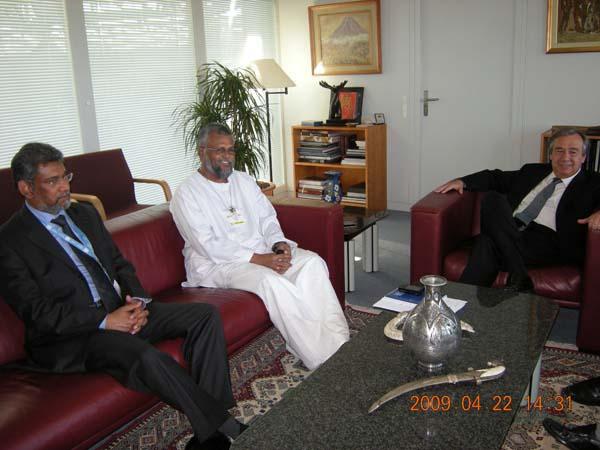
Devananda with Guterres in 2009.
In 2012, he was part of an extraordinary large Sri Lankan delegation, one that had earned public rebuke from the United Nations for its blatant intimidation of human rights defenders during the session.
“During this Human Rights Council session, there has been an unprecedented and totally unacceptable level of threats, harassment and intimidation directed at Sri Lankan activists who had travelled to Geneva to engage in the debate, including by members of the 71-member official Sri Lankan government delegation,” said a United Nations spokesperson at a press briefing in Geneva.
It was no coincidence that Devananda was present.
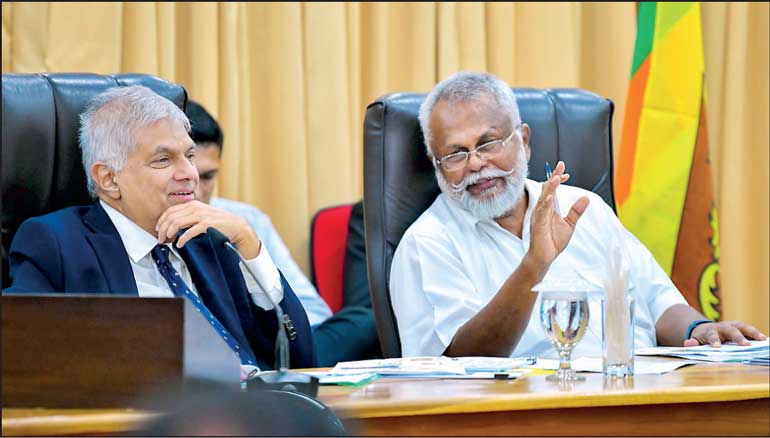
Devananda with Ranil Wickremesinghe in 2024.
For much of his political life, he appeared to operate beyond consequence. He survived successive administrations, from Rajapaksa to Kumaratunga to Wickremesinghe, retaining ministerial office regardless of Sinhala electoral shifts. Even during the mass uprisings of 2022, when an entire cabinet was forced out, Devananda kept his post. He remained a useful tool for the state. Even as senior Sri Lankan military officials began to face sanctions from the United States, Canada and the United Kingdom, his name conspicuously absent from their lists.
That sense of untouchability was punctured only recently, when Devananda was arrested by Sri Lankan police. Even then, it was not for the countless crimes he stands accused of, but for a single charge linked to a pistol that was gifted to him by the state.
I did not speak to him that day in Geneva. Our eyes met briefly, and then I walked away.
That fleeting encounter, and the long arc that followed, is just one illustration of the deep moral failure at the heart of the international system Tamils have been forced to navigate. A man accused of orchestrating abductions and sexual violence could walk freely through the halls of the United Nations, shielded by the Sri Lankan state, while survivors and families of the disappeared were desperately demanding justice for crimes he had partaken in.
Devananda’s recent arrest does little to alter that reality. Though there has been cautious hope in some quarters, there is also an acceptance that this is not a reckoning for the paramilitary leader. Instead, it is a reminder as to how long impunity can endure in Sri Lanka, when the state deems it politically useful.