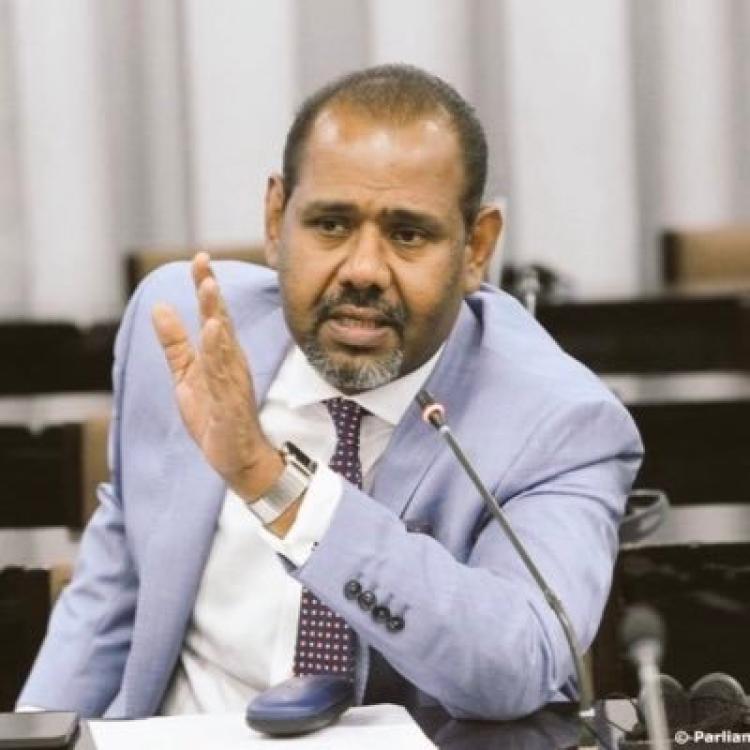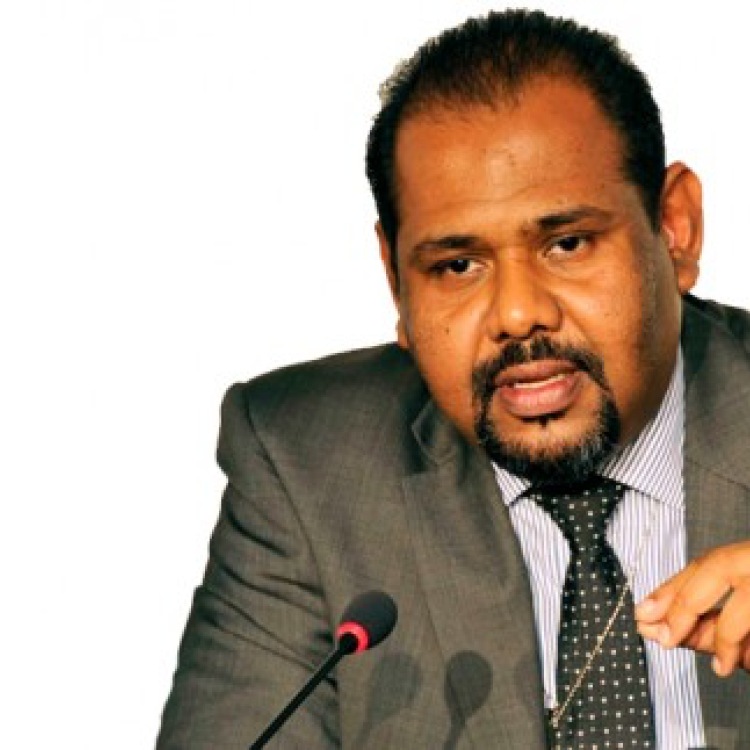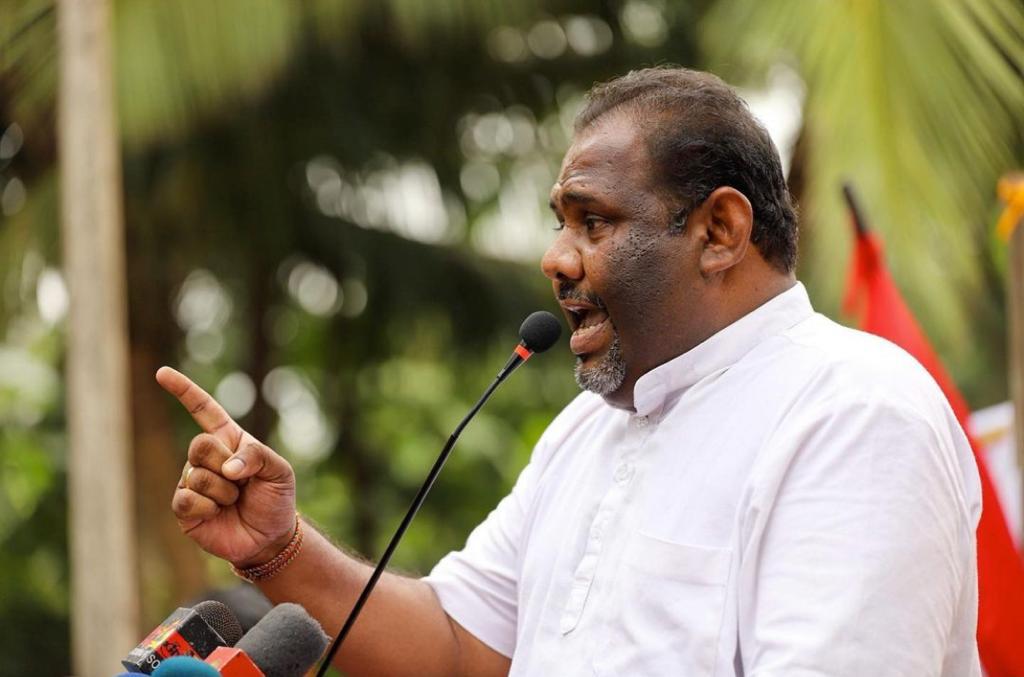
At a press conference in Jaffna last week, Tamil National People’s Front (TNPF) leader and Member of Parliament Gajendrakumar Ponnambalam reiterated calls for a comprehensive international investigation into the long history of injustices and acts of genocide committed against the Tamil people, warning against piecemeal or contradictory approaches that could undermine the struggle for justice.
Ponnambalam argued that isolated investigations, including into the recently unearthed Chemmani mass graves, would not suffice to capture the full extent of state violence and historical oppression faced by Tamils in Sri Lanka. Only a comprehensive inquiry into the long history of injustices and acts of genocide committed against the Tamil people since 1948 would reveal the full truth, he stated.
He recalled that in January 2021, Tamil national political parties, civil society organisations, and activists had jointly signed a letter addressed to the United Nations, calling for accountability through international mechanisms. The letter argued that meaningful justice could not be achieved through the UN Human Rights Council without the consent of the Sri Lankan state, and instead urged a referral to the International Criminal Court (ICC) or the creation of a special international tribunal.
This collective stance was reaffirmed during the recent visit by the UN High Commissioner for Human Rights to Sri Lanka. Tamil leaders, including those from the Ilankai Tamil Arasu Kachchi (ITAK), once again submitted the original joint letter, reinforcing their unified call for international accountability.
However, Ponnambalam expressed deep concern over a subsequent move by ITAK leaders, including the party’s leader and general secretary, who reportedly requested permission from the Sri Lankan government to conduct an investigation into the Chemmani mass graves with international observers. He condemned this approach as contradictory to the Tamil collective position and warned it could enable the state to manipulate or obstruct the discovery of truth.
The Sri Lankan government, which had long attempted to conceal the truth, could now use such appeals for ‘permission’ as opportunities to suppress emerging evidence, he cautioned.
In response, Ponnambalam announced plans to convene a meeting of all Tamil national party leaders, civil society groups, and human rights activists next week to reaffirm the joint position laid out in the 2021 letter. Official invitations would be issued, and media would be engaged to ensure transparency and public awareness.
He underscored that the genocide against the Tamil people did not begin or end with the armed conflict, but instead formed part of a systematic and structural process beginning in 1948. From state-sponsored colonisation and language-based discrimination to anti-Tamil pogroms and mass atrocities, Ponnambalam argued that the trajectory of oppression must be examined in its entirety to reach meaningful justice.
The genocide of the Tamil people did not occur in a single moment, he stated. Rather, it began in 1948 and unfolded as a structural, systematic process, which later escalated into direct and violent acts.
He also emphasised the importance of unity, warning that political backtracking - as he accused ITAK of doing - risked weakening Tamil demands at a crucial time.
No party should deviate from this collective position or take contradictory stances, he said.
While Chemmani remains a focal point of public attention, Ponnambalam stressed that Tamil suffering extended far beyond it. He reiterated that only a holistic investigation covering the full history of genocide and injustice from 1948 to the present could uncover the truth and serve as the foundation for prosecuting each atrocity with the rigour and gravity it deserves.