
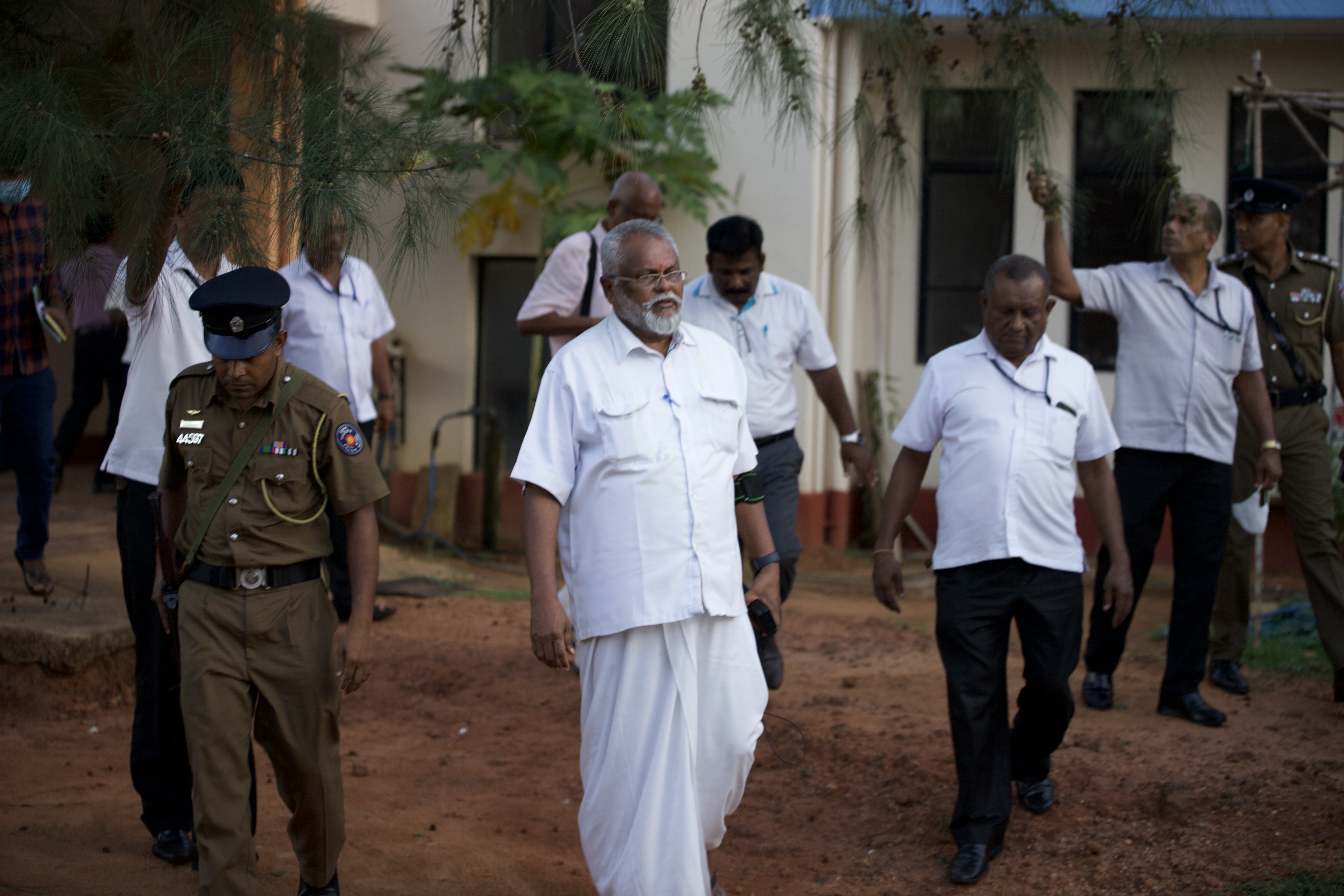
Former Sri Lankan minister and leader of the paramilitary Eelam People’s Democratic Party Douglas Devananda has been granted bail by the Gampaha Magistrate’s Court, following his remand in connection with an investigation into the alleged transfer of a military issued firearm to an organised criminal.
Devananda was produced before the Gampaha Magistrate’s Court on Thursday, where the magistrate ordered his release on bail. He had been taken into custody last month by the Criminal Investigation Department and remanded as part of an ongoing investigation into the discovery of a firearm linked to organised crime networks.
The investigation centres on a weapon that was originally issued to Devananda by the Sri Lankan Army in 2001 for his personal use. According to investigators, the same firearm was later recovered during the 2019 questioning of notorious underworld figure Makandure Madush.
Madush was killed in 2020 during a police shootout after he reportedly took officers to a housing complex to recover a stock of heroin. The recovery of the firearm during his questioning raised serious questions about how a weapon issued to a serving minister and paramilitary leader ended up in the possession of an organised criminal.
Following Devananda’s arrest, the CID obtained a court order allowing them to detain him for 72 hours for further questioning. The bail order does not bring the investigation to a close, with inquiries into the alleged transfer of the firearm continuing.
Devananda heads the EPDP, a paramilitary organisation that was armed and backed by the Sri Lankan state during the armed conflict. Throughout the war, the EPDP operated largely with impunity in the North-East, particularly in Jaffna, and has been widely accused of carrying out serious human rights abuses.
Tamil civil society groups and international organisations have long documented allegations against the EPDP, including abductions, enforced disappearances, child trafficking and trafficking, and targeted killings. Despite these allegations, Devananda remained a central figure in Sri Lankan politics for decades.
A close ally of the Rajapaksa regime, Devananda was repeatedly rewarded with ministerial portfolios over the years, reflecting the Sri Lankan state’s reliance on paramilitary actors to maintain control over the Tamil homeland during and after the armed conflict.