
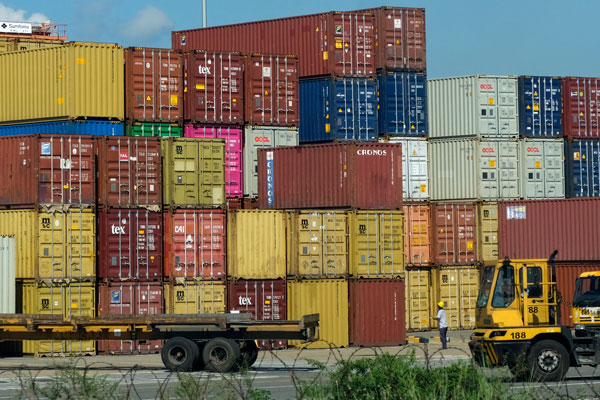
As controversy grew around hundreds of shipping containers that Sri Lankan authorities reportedly allowed into the island without undergoing the usual inspection process, a Tamil lawmaker has claimed that they contained weapons belonging to the Liberation Tigers of Tamil Eelam (LTTE) Velupillai Prabhakaran.
During a recent parliamentary session, Member of Parliament Archchuna Ramanathan said the 323 containers in question included weapons once belonging to the LTTE leader.
“I have been told that the containers carrying the goods belong to Prabhakaran. I may get shot for saying this as I have not been provided with security,” said Ramanathan.
The remarks were met with criticism from the government benches. MP Devananda Suraweera dismissed Ramanathan's comments, saying, “He may be a doctor, but it looks like he has gone insane.”
The Sri Lankan Defence Ministry issued a denial. Defence Secretary Retired Air Vice Marshal Sampath Thuyyakontha labelled the allegations “completely baseless and false,” emphasizing that there was no evidence to support the claims.
Yet questions remain about how such a large quantity of shipping containers was released without undergoing the usual inspections.
MP Dayasiri Jayasekara also admitted that he had been summoned by the Criminal Investigation Department (CID) to provide testimony regarding the release of the containers without security checks. “I have been asked to appear at 1 PM today,” he had told the Daily Mirror.
Adding to the gravity of the issue, the President of the Customs Officers’ Association, Amila Sanjeewa, earlier this year held a press conference confirming that 323 containers were released without inspection. Sanjeewa stated that these containers were originally marked for inspection by three customs officers with the approval of the Director General of Customs on January 18th, yet were subsequently cleared from customs custody without the mandated review.
According to Sanjeewa, many of these containers had been marked “red” - a classification indicating high-risk or sensitive goods - across four pages of official documentation. He warned that bypassing the inspection process undermines the integrity of the entire customs operation and compromises safety.
“It is still not known whether there were medicines unapproved by the National Drug Regulatory Authority, unusable perfumes, cosmetics, harmful things, weapons or drugs among the containers,” Sanjeewa added.