
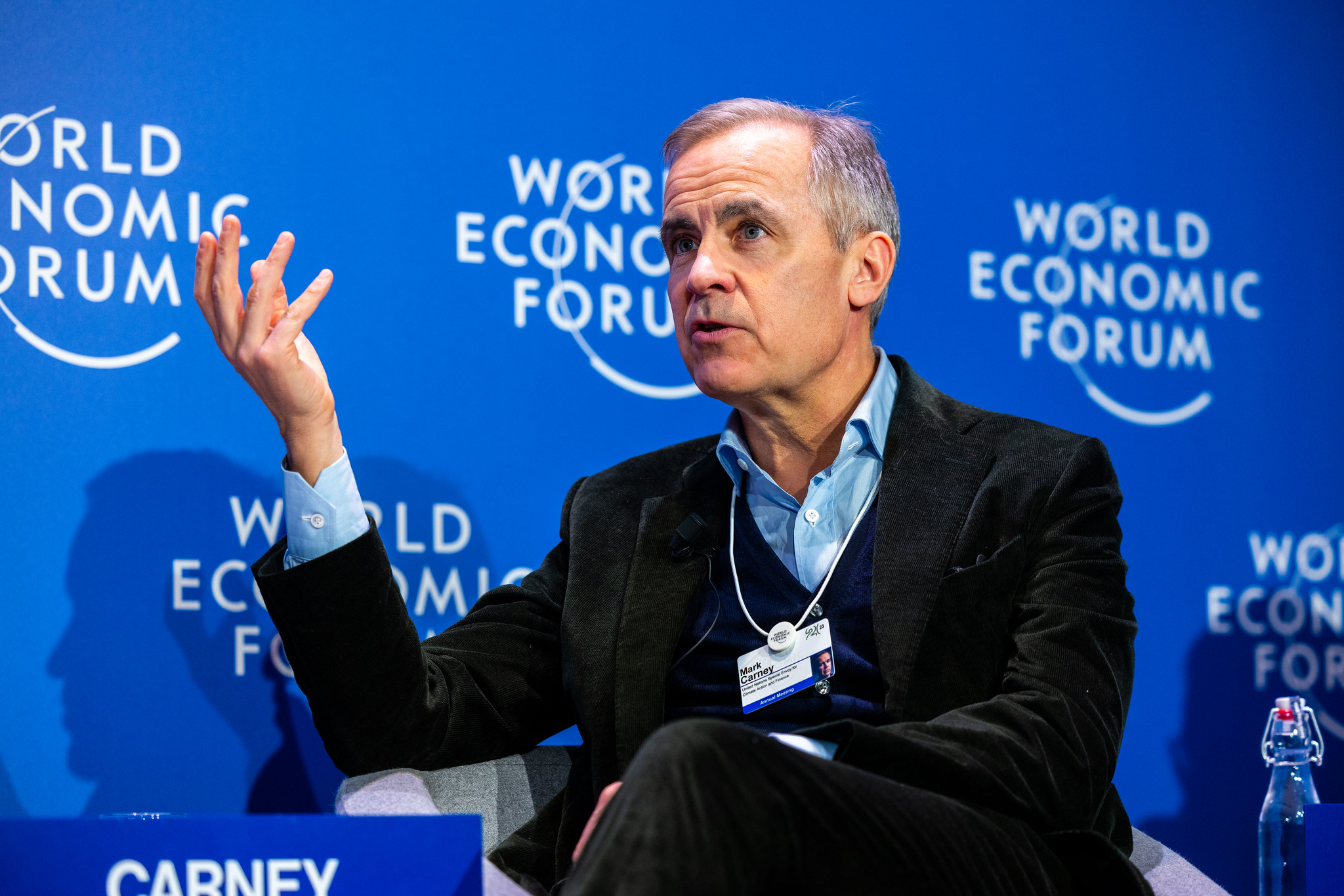
Carney speaking at Davos in 2023.
It has been hailed as one of the most consequential speeches of the past half century, one that will be studied for years to come. Commentators have even described it as an inflection point in global history. They are not wrong.
At the World Economic Forum in Davos last week, Canadian Prime Minister Mark Carney effectively signalled the end of ‘Pax Americana’, declaring that Canada would no longer be a willing participant in propagating an American-led global order. Coming from a country that shares the largest land border in the world with the United States, and whose economic and political architecture remains deeply entwined with Washington, this was not a message to be taken lightly.
For months, Canada and states across Europe have warned of the growing risk to the established American-led systems through which the world has largely functioned for decades. Earlier this month, German President Frank-Walter Steinmeier said there had been a “breakdown of values by our most important partner, the USA.”
Carney’s speech, however, went further. “Let me be direct,” he told the audience of world leaders. “We are in the midst of a rupture, not a transition.”
The frankness in which he described the fall of American hegemony sparked worldwide headlines. Yet, in the Global South, it was not his heralding of the end of the US-led era that drew the most attention.
Instead, it was his admission that the rules-based international order was, in fact, not based on rules at all.
It was at least “partially false,” he said. “[We knew] that the strongest would exempt themselves when convenient. That trade rules were enforced asymmetrically. And we knew that international law applied with varying rigour depending on the identity of the accused or the victim.”
It was an order that has been instrumentalised by Ottawa and other Western powers he admitted. “This fiction was useful,” he adds, noting that those who benefitted “largely avoided calling out the gaps between rhetoric and reality”.
This is a significant confession, not least because of who Carney is. A former Goldman Sachs employee and governor of both the Bank of Canada and Bank of England, he is an institution heavyweight. And as Prime Minister of Canada, a state that has been a stalwart ally of the United States, and a NATO, Five Eyes and G7 member, his words carry particular weight. He is a key player in the very global order he is eulogising.
By labelling it a “fiction” and highlighting the “gaps” that many understood but few dared say out loud, Carney has shattered the illusion that sustained the old global order.
There is no going back.
A broken world order and an age of Trumpism
Many will argue this moment has been long in the making.
When Donald Trump first entered the most powerful office in the world in 2017, he was intent on breaking with the politics that came before him. Though his mission was briefly interrupted by the election of Joe Biden, his second term has been far more deliberate. In Washington, entire institutions have been reshaped, including the US State Department and the newly named Department of War.
His guiding ethos is neatly summarised in two unapologetic words: America First.
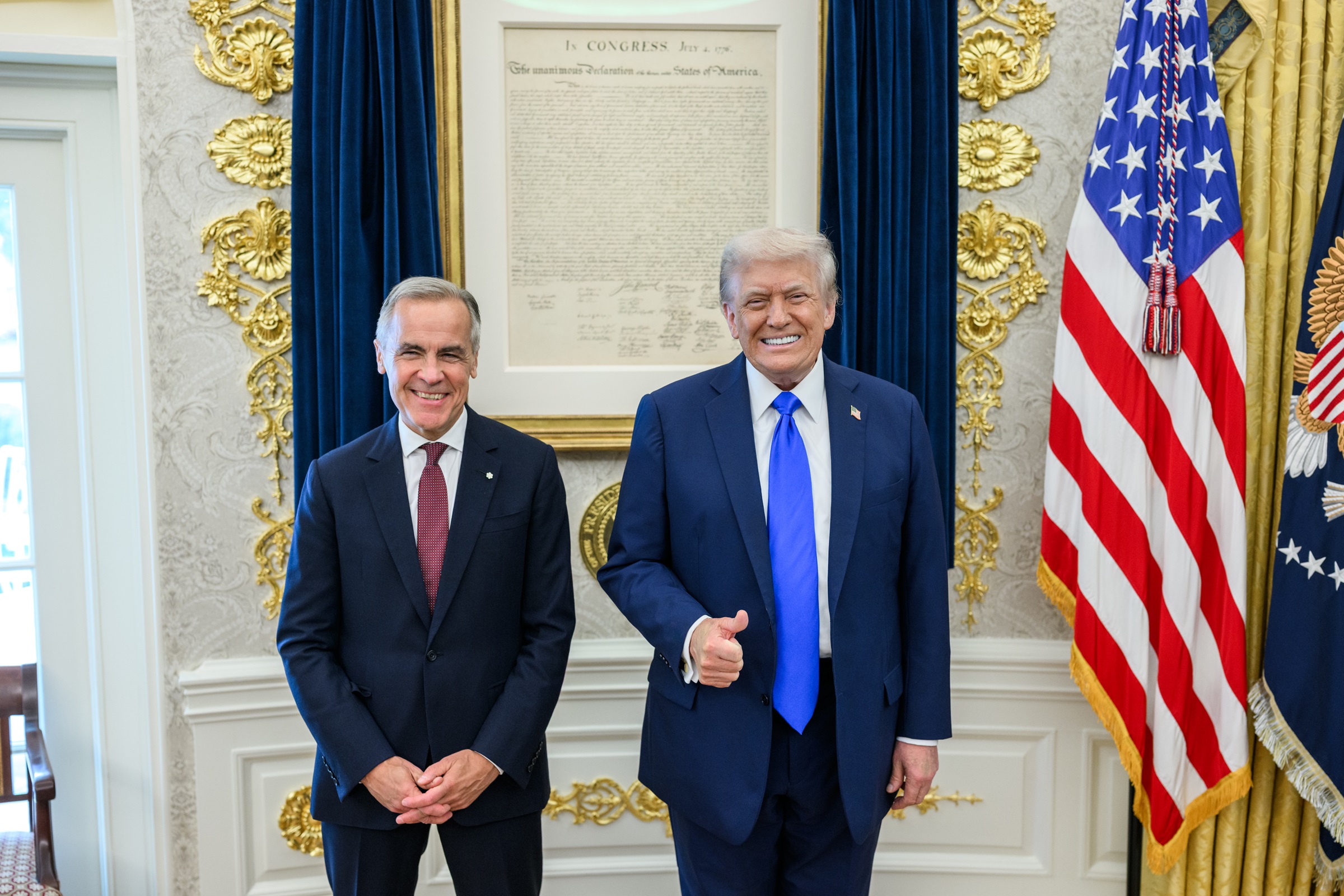
Carney meets with Trump in October 2025.
That is not to say the world in which he inherited was not already structured around America’s primacy. Global institutions such as the IMF, World Bank and UN Security Council were still anchored in the West and built with Western interests firmly in mind. Western states benefited disproportionately from these institutions, often to the detriment of developing nations in the Global South.
They spoke of free trade and open markets, even as trade flows enabled the extraction of capital and resources, with wealth siphoned from local communities into the hands of industrialists in the West. They espoused the rhetoric of liberal peace, human rights and democracy, yet routinely abandoned those principles to support illiberal and authoritarian regimes when convenient. From Latin America to Africa to Asia, not a single continent was left untouched.
Few will have felt this double standard more acutely than some of Carney’s own constituents. The hundreds of thousands of Tamil Canadians, many of whom fled war and repression in Sri Lanka, are intimately familiar with the consequences of decades of Western policy. It led to both tacit and overt support for massacres, and crimes on the island that Carney himself has recognised as a genocide. The scars of those atrocities have not healed.
Nor are the Tamils alone. In countless places, for far too many people, for far too long, the old world order failed.
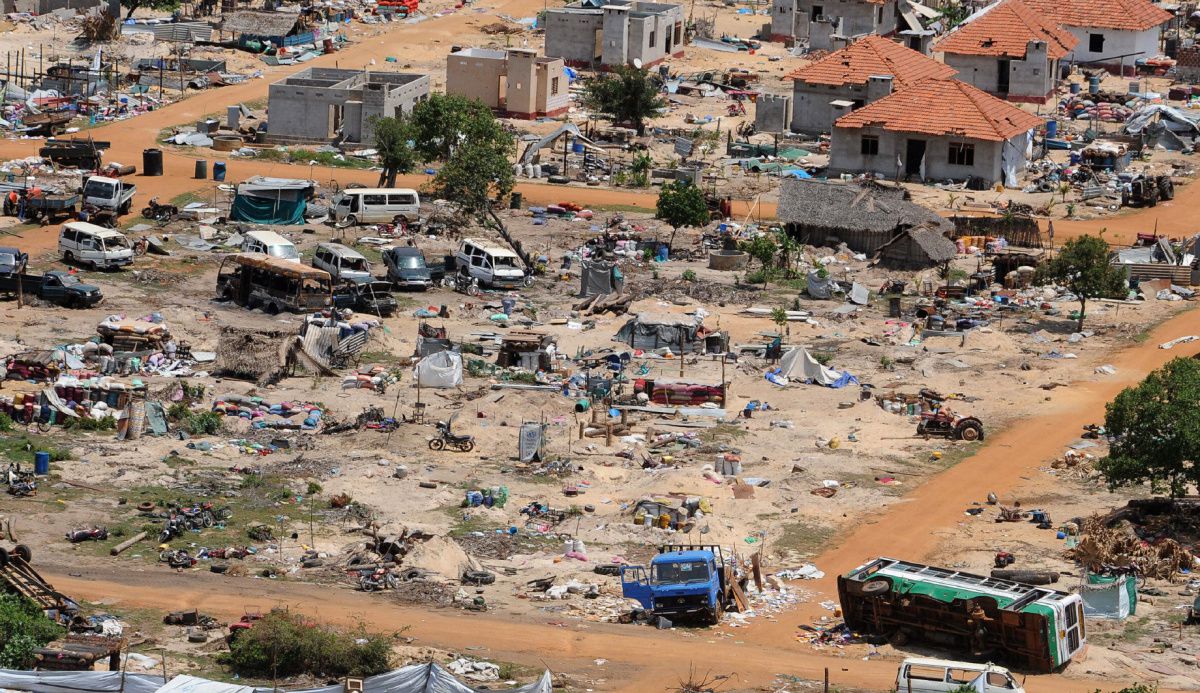
The aftermath of the Mullivaikkal genocide photographed days after it concluded.
Even prior to Trump coming into power, that order was fraying. The 2008 financial crisis, the ‘War on Terror’ and the invasions of Iraq and Afghanistan signalled that the excesses of American hegemony were exacting a cost. The empire was already crumbling. Trump’s doctrine recognises the decline to a degree, mutating the politics of the old system into something more explicit. It is unabashed in its embrace of ‘America First’ - to the point that Washington now sheds any pretence of caring for any values beyond its narrow scope of interest.
When abducting Nicolas Maduro in Venezuela earlier this month, for example, Trump did not claim to have done so to further human rights or democracy. He spoke only of American interest. In his repeated remarks about acquiring Greenland, he speaks only about American power.
The “fiction” and “gaps” that Carney highlighted, Trump no longer pretends even exist.
Where to next?
This has left states such as Canada, France, Germany and the UK facing a dilemma. The global order they helped sustain, and from which they benefited, has ruptured. Trump has made clear he will no longer abide by the old rules. Instead, he will deploy the full weight of American political and military machine to secure US primacy on his own terms.
Canada, given its proximity and reliance on this US, feels this fissure most acutely. It is why Carney says they were “amongst the first to hear the wake-up call, leading us to fundamentally shift our strategic posture”.
At Davos he laid out a multi-pronged response. It begins with building “strength at home” with a target to double defence spending and shore up domestic industries by “fast-tracking a trillion dollars of investment”. He called for a new swell of cooperation among like-minded “middle-power” states, including proposals such as buyer’s clubs within the G7 for critical minerals.
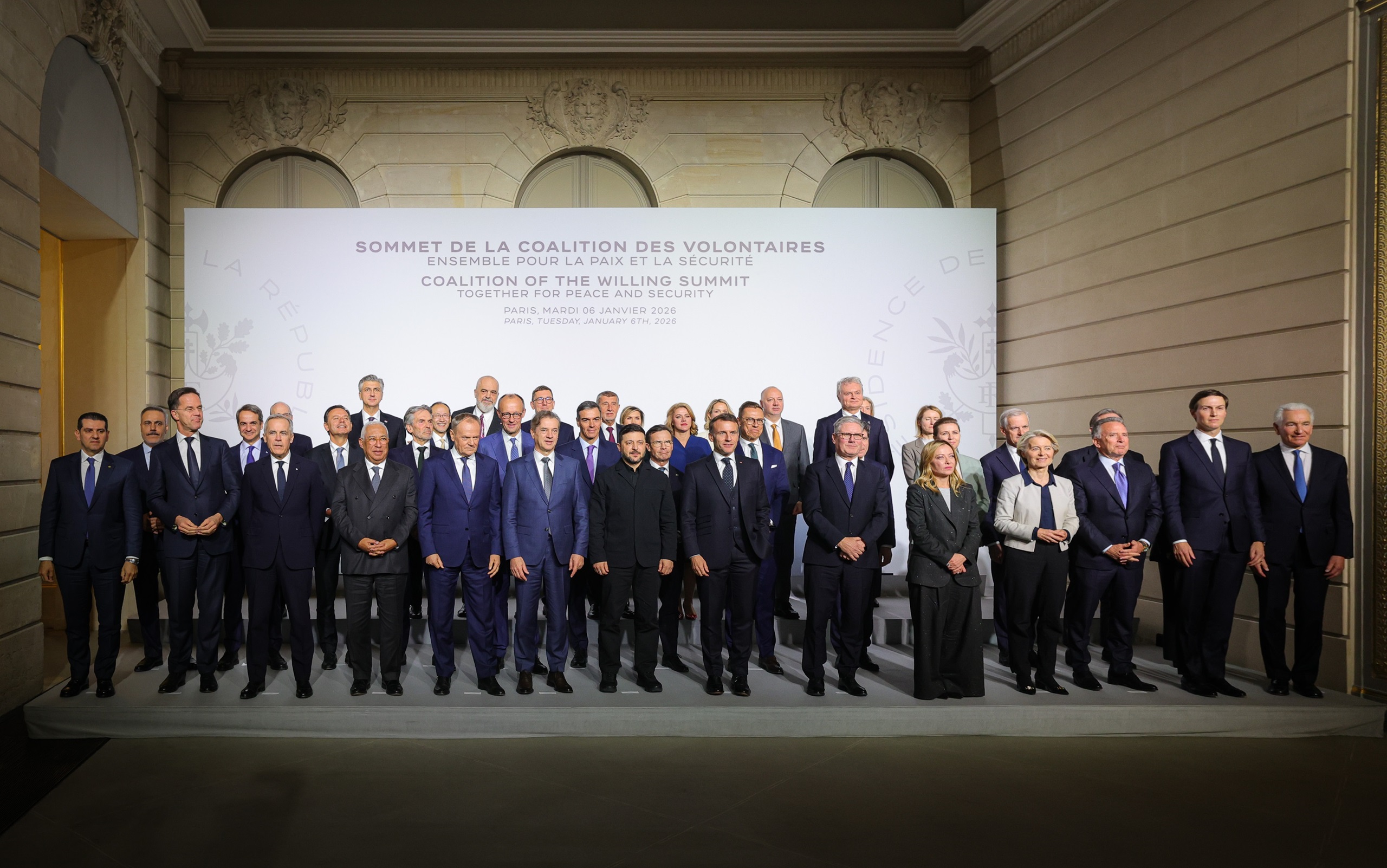
Carney alongside other world leaders as part of the 'Coalition of the Willing', a group of states backing Ukraine, in Paris this year.
And crucially, he spoke of Ottawa “rapidly diversifying abroad”. In recent weeks, Carney has been frenetic, striking deals with China and Qatar and pursuing free trade agreements with India, ASEAN states, Thailand, the Philippines and Mercosur. He cited Finnish President Alexander Stubb’s turn towards “values-based realism” and stressed the need for pragmatism when engaging with global actors.
Given his admission that “rules-based international order” did not function as advertised, that pragmatic approach raises serious concerns.
Indeed, Carney’s remark “if you’re not in the table you’re on the menu,” was a blunt call for self-preservation. In the face of the collapse of a partnership as vital as Canada’s relationship with the US, cynicism may be understandable. But in casting his net so widely, Carney risks replicating or even deepening the flaws of the old order he condemned; where Western states grew ties with repressive regimes or sought exploitative relationships for their own benefit.
Has the collapse of US-led order meant Ottawa will make deals in order to survive, even if it means sacrificing principles? Does calling for “honesty about the world as it is” signal a readiness to compromise values for self-interest? And is Carney’s language of realism simply a shield for moral abdication?
For those long subjected to the violence of the old system, including those outside the club of “middle powers”, a new global order cannot simply reproduce the same self-serving logic. For Tamils, Kurds, Palestinians and countless others still struggling for rights, recognition and justice, this moment must mean more than a reshuffling of power.
To his credit, Carney did directly acknowledge some of these dangers. He spoke of “acting consistently” and “building what we claim to believe in”. At Davos, he called for “applying the same standards to allies and rivals”, and less than a day after returning to Canada, he expanded on those themes in Quebec City. Canada, he said, should be “a beacon – an example to a world at sea”. “In a time of rising populism and ethnic nationalism, Canada can show how diversity can be a strength, not a weakness,” he added, arguing that “we can show how rights can be protected and how equal freedoms can endure”.
The words are welcome. But their meaning is diminished when juxtaposed against his own admission of an unequal global order and need to survive the economic turmoil engulfing the world.
After all, it is telling that it took threats against Greenland, a fellow NATO member, to provoke this reckoning. It was not the wanton destruction of Gaza, nor the flagrant disregard for international law there, that tipped Canada’s scales. It was only when Europeans and Canadians were on the receiving end of American unilateralism, something long familiar to other parts of the world, that this reaction was provoked.
That imbalance, even now, does not inspire confidence. It suggests that the urgency of international outrage remains tethered to the interests of the powerful, rather than the scale of human suffering. In pledging a new forward, only when their interests are threatened, will states like Canada simply emulate flawed systems of old?
Whether this moment marks genuine transformation to a “third path” or merely rhetorical honesty and self-serving Western policy remains to be seen. Carney speaks of ensuring relationships grounded in shared values, and of calling out hypocrisy rather than benefiting from it. How he balances those commitments against the realities of power politics will define whether this rupture leads.
For those who have long lived with the consequences of Western duplicity, words alone will not suffice.