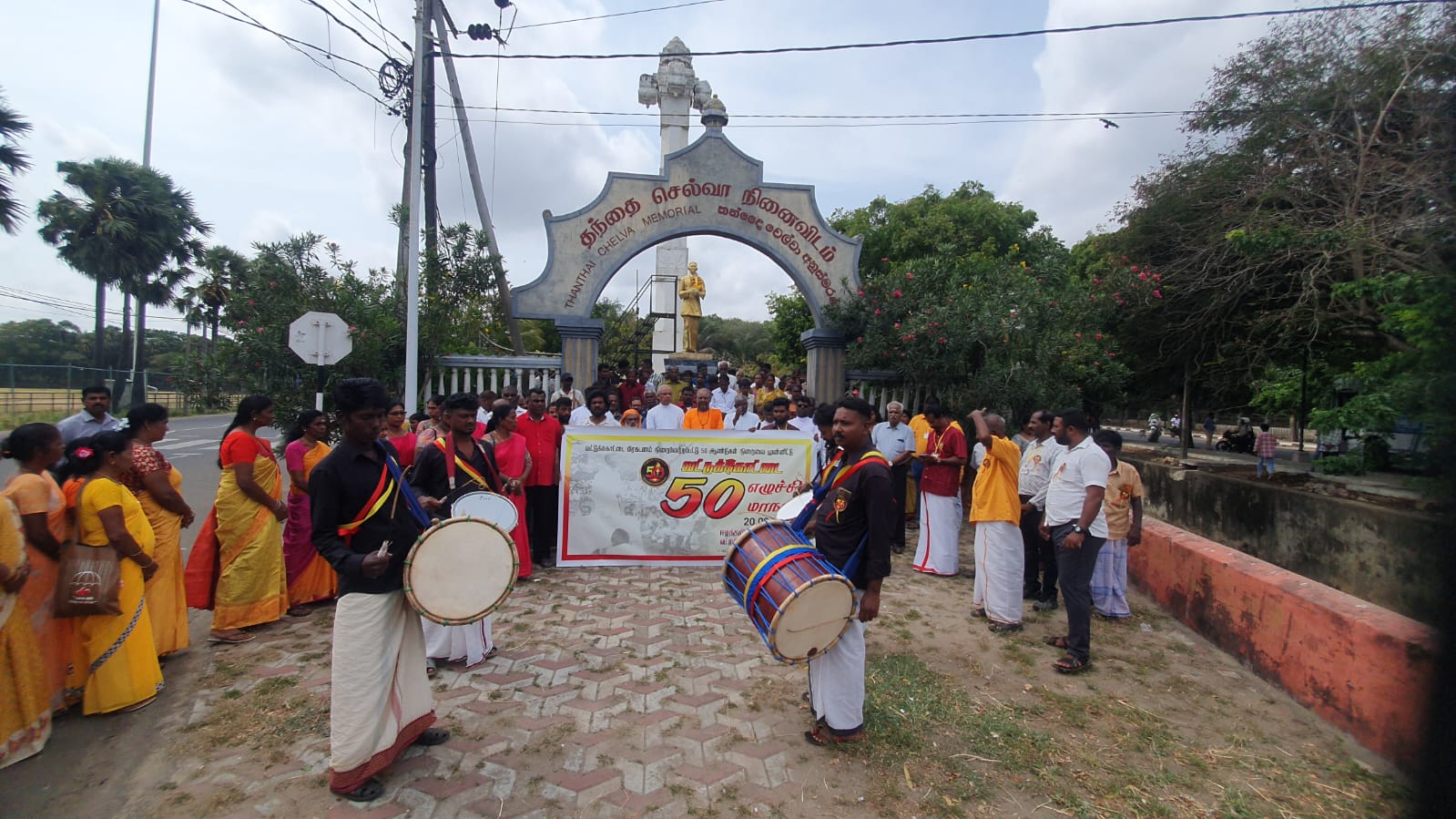
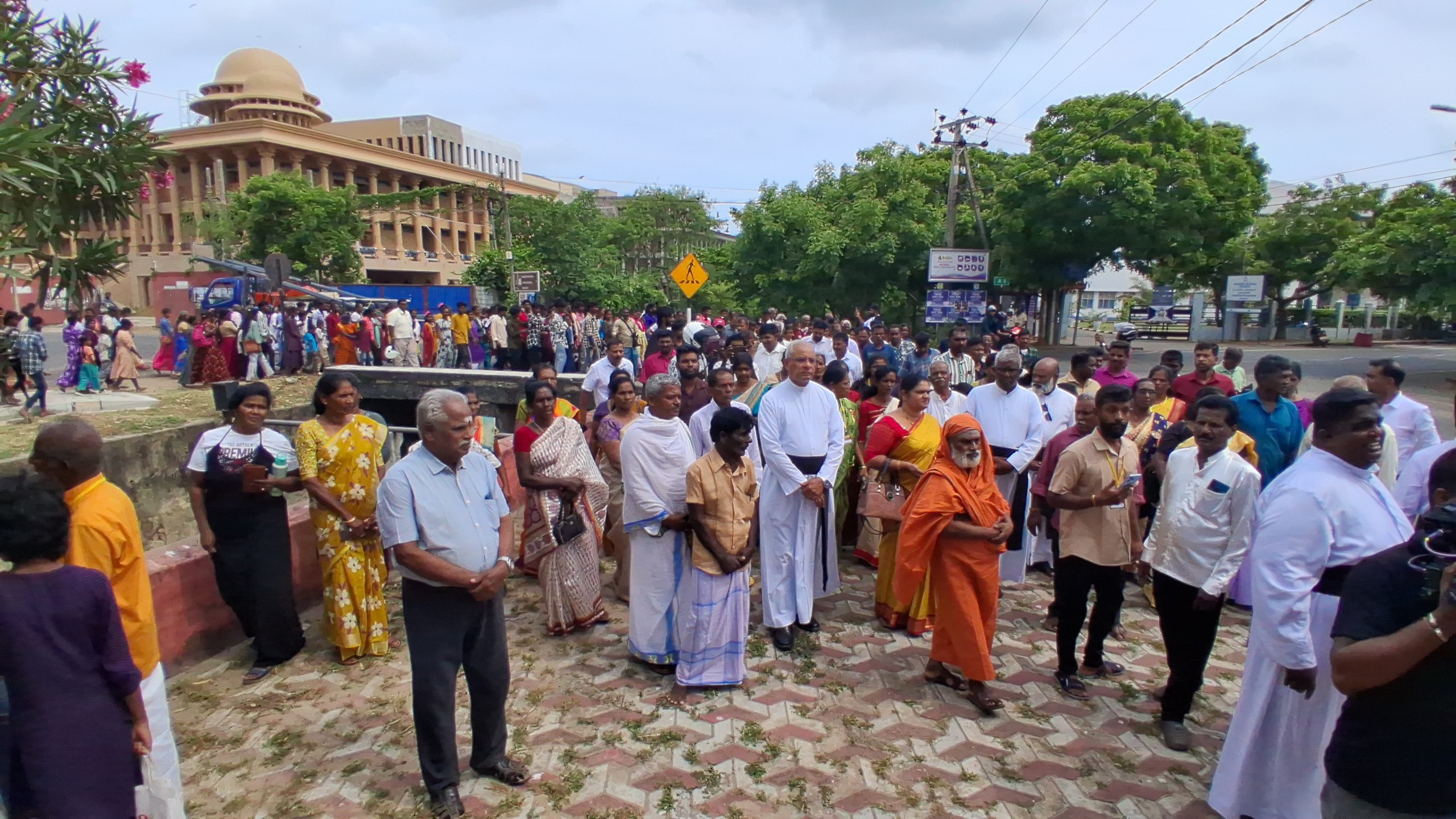
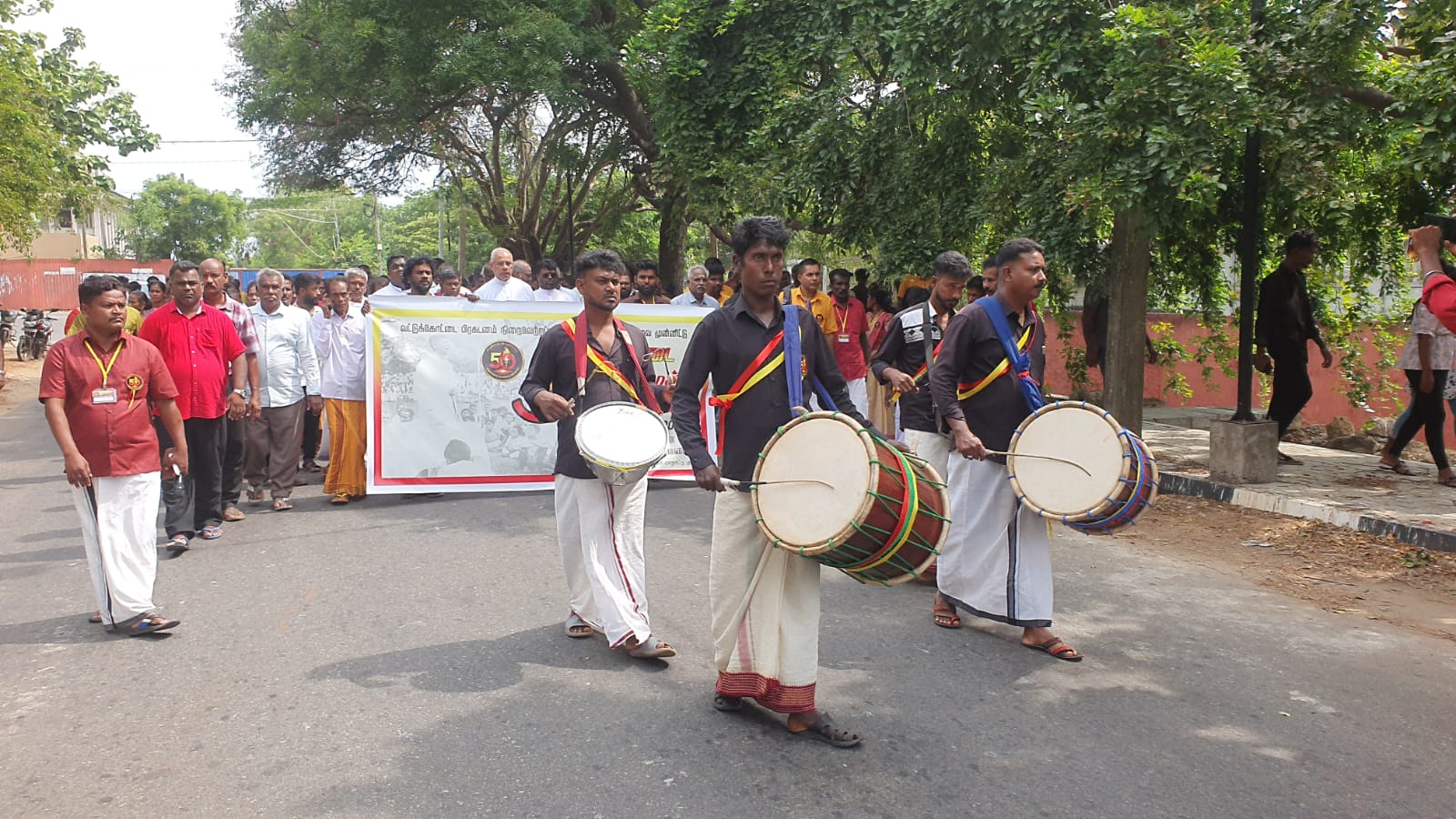
The Vaddukoddai-50 Ezhuchi (Resurgence) Conference was held at the Thanthai Selva Auditorium in Jaffna on Saturday, marking fifty years since the 1976 Vaddukoddai Resolution, in which the Tamil political leadership first declared the goal of an independent, sovereign state of Tamil Eelam.
Adopted on 14 May 1976 at the first national convention of the Tamil United Liberation Front under the chairmanship of S.J.V. Chelvanayakam, the resolution called for the restoration of a "free, sovereign, secular, socialist State of Tamil Eelam" and declared the Eelam Tamils a distinct nation.
It marked the first time the demand for a separate state was made the official policy of the main Tamil political formation, after decades in which Tamil leaders had sought only federalism or power sharing, and after the repeated abandonment of pacts and the entrenchment of majoritarian rule.
A year later, the TULF swept the North-East at the 1977 general election and became Sri Lanka's official opposition, the only time a Tamil party has done so, a mandate Tamil nationalists have since held up as a democratic endorsement of self-determination. The resolution remains a cornerstone of the Tamil struggle.
Ahead of the conference, participants paid tribute to Chelvanayakam, revered as Thanthai Selva, the father of Tamil nationalism, garlanding his statue at Thanthai Selva Square before a procession made its way to the auditorium. T
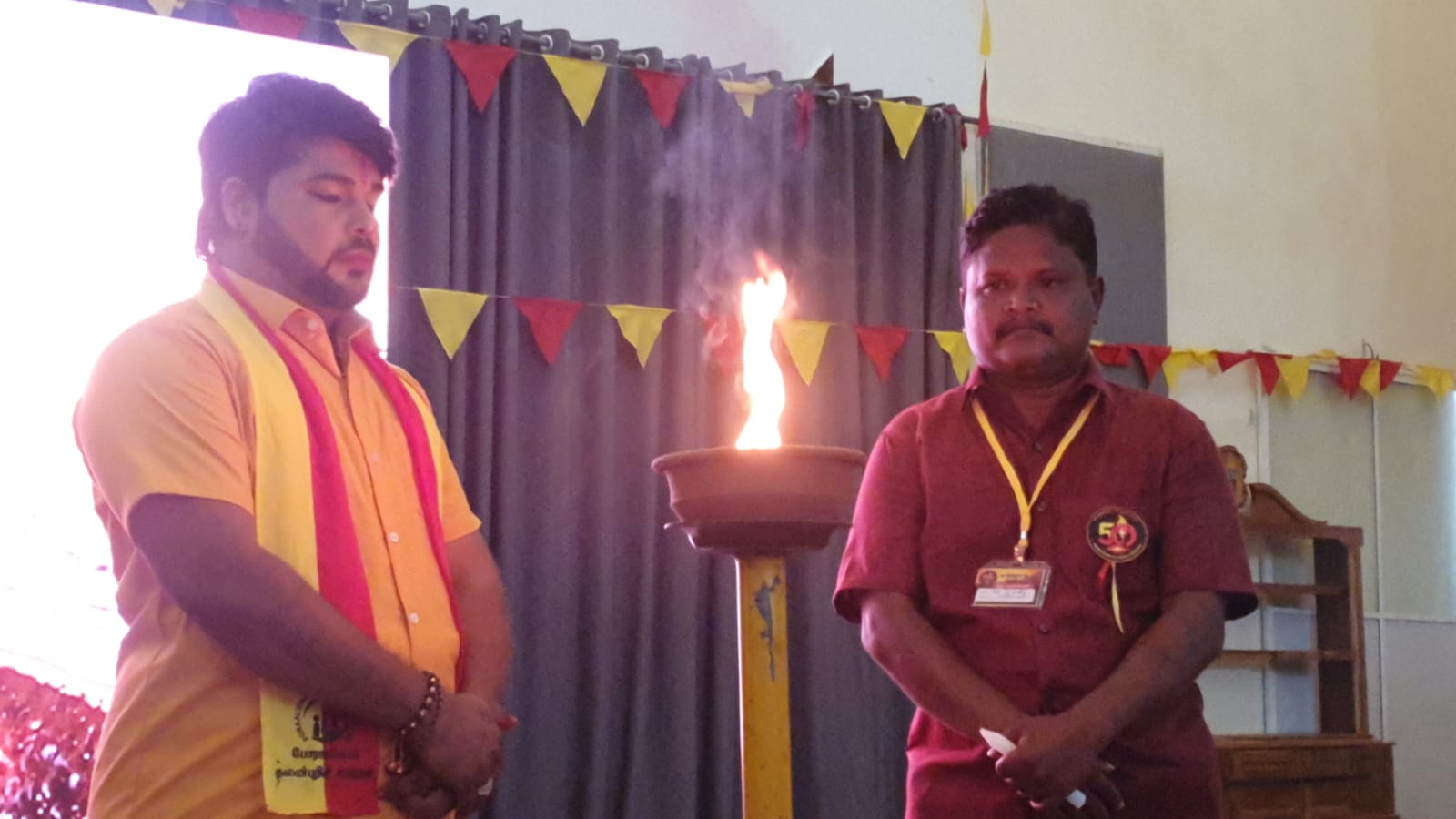
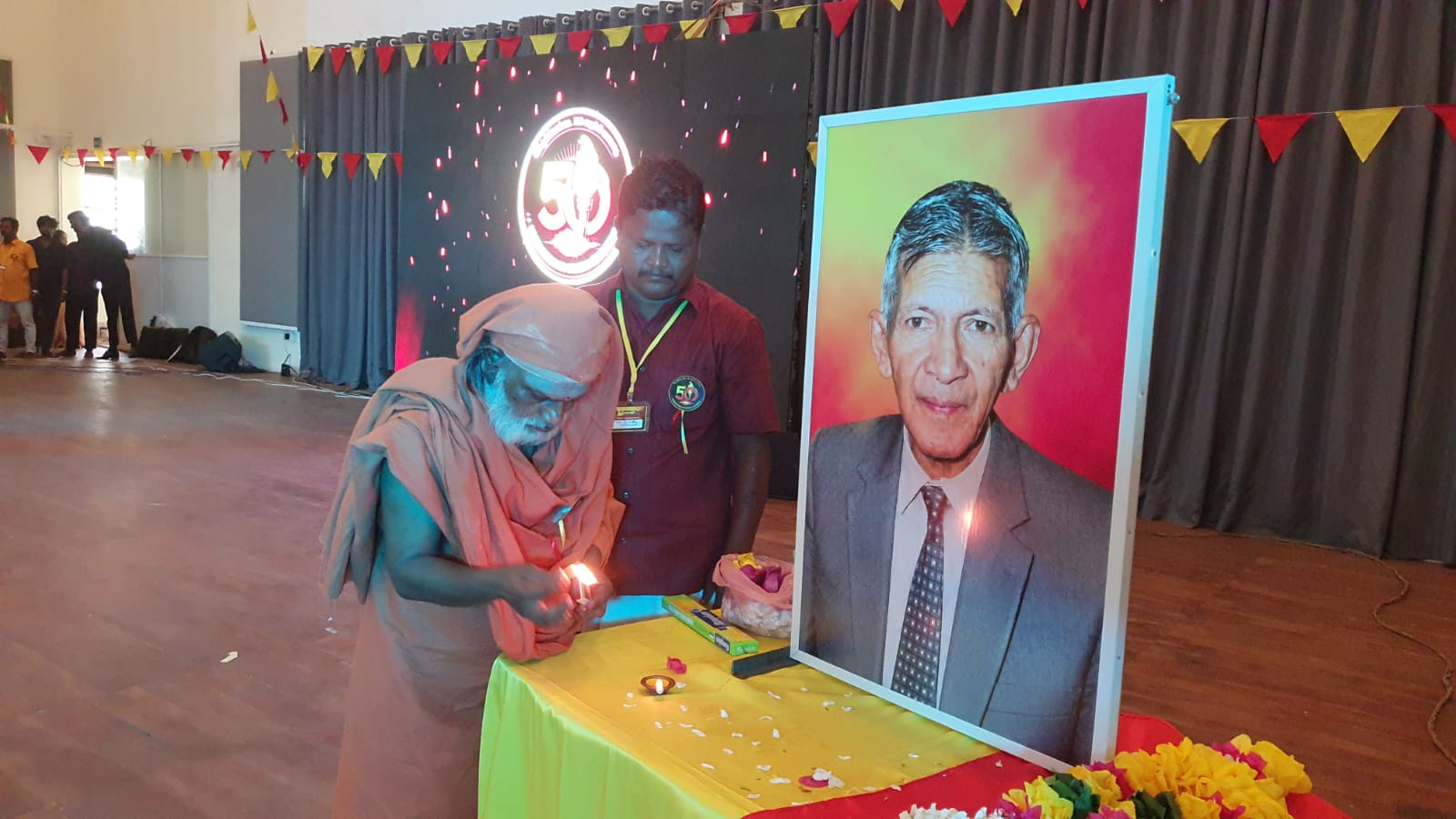
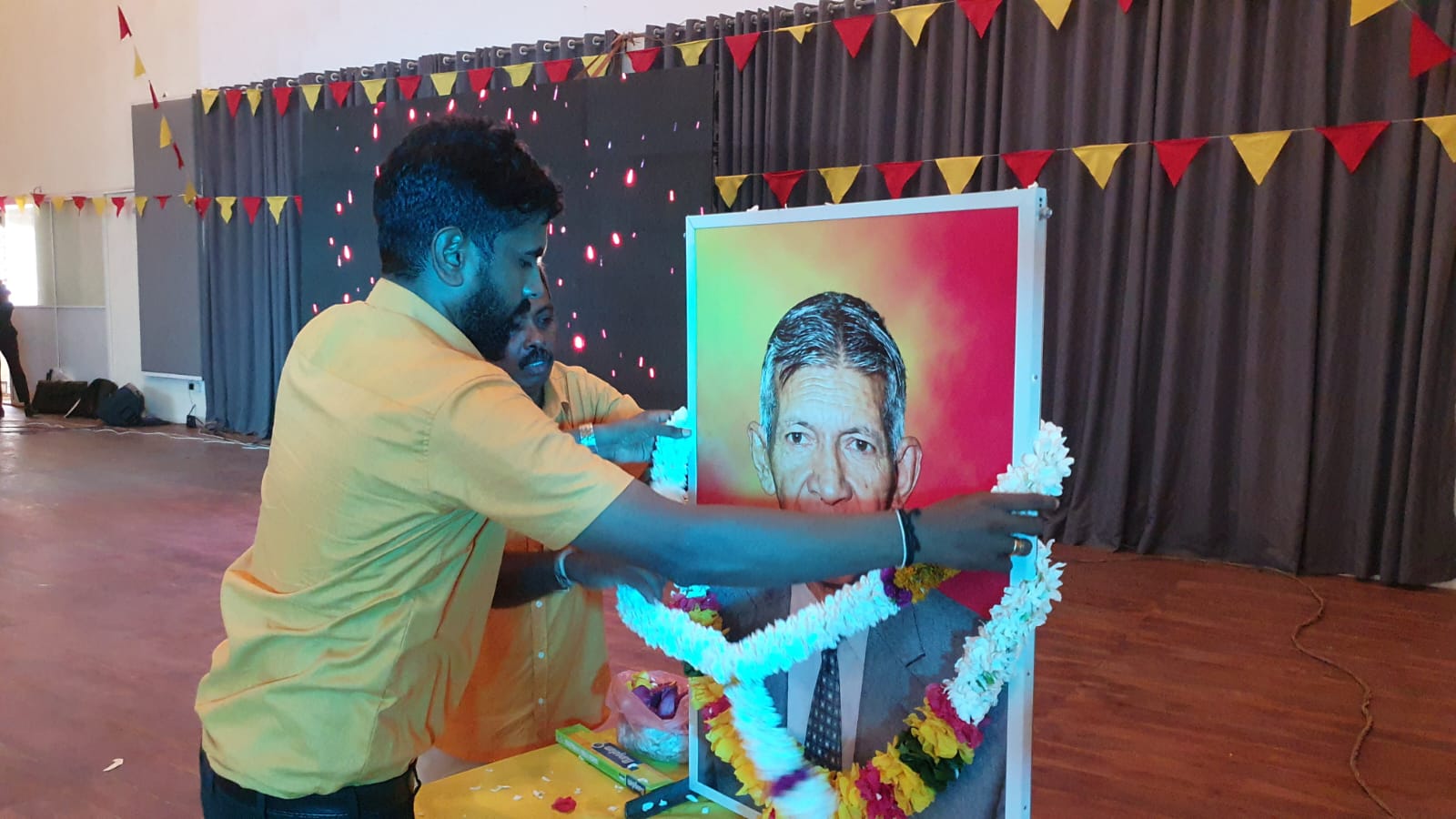
There, the brother of three Maaveerar, the honorific for the fallen of the Tamil liberation struggle, lit the ceremonial flame, after which the head of the Thenkailai Atheenam, Thavathiru Agathiyar Adigalar, garlanded Chelvanayakam's portrait. Other attendees then offered floral tributes.
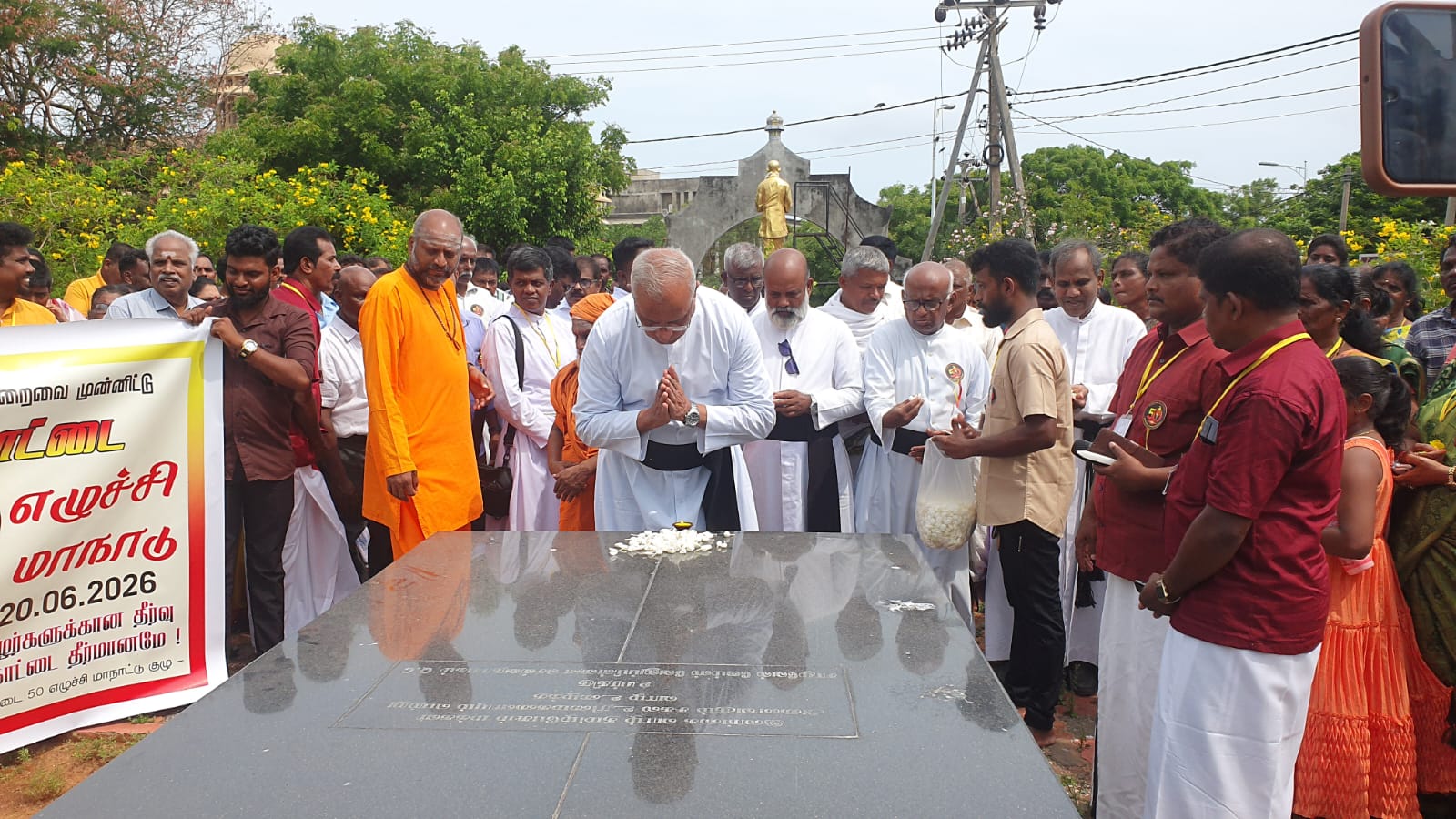
Among those present were the member of parliament Gajendrakumar Ponnambalam, the former MPs Selvarajah Gajendran and Ariyanethiran, the latter the common Tamil candidate in the 2024 presidential election, the former Northern Province agriculture minister Aingaranesan, the former Jaffna mayor and attorney-at-law V. Manivannan, the Pothuvil-Polikandy coordinator Thavathiru Velan Swamigal, the Vicar General of the Jaffna Diocese, Rev. Fr. Jebaratnam, alongside political representatives, intellectuals and members of the public.
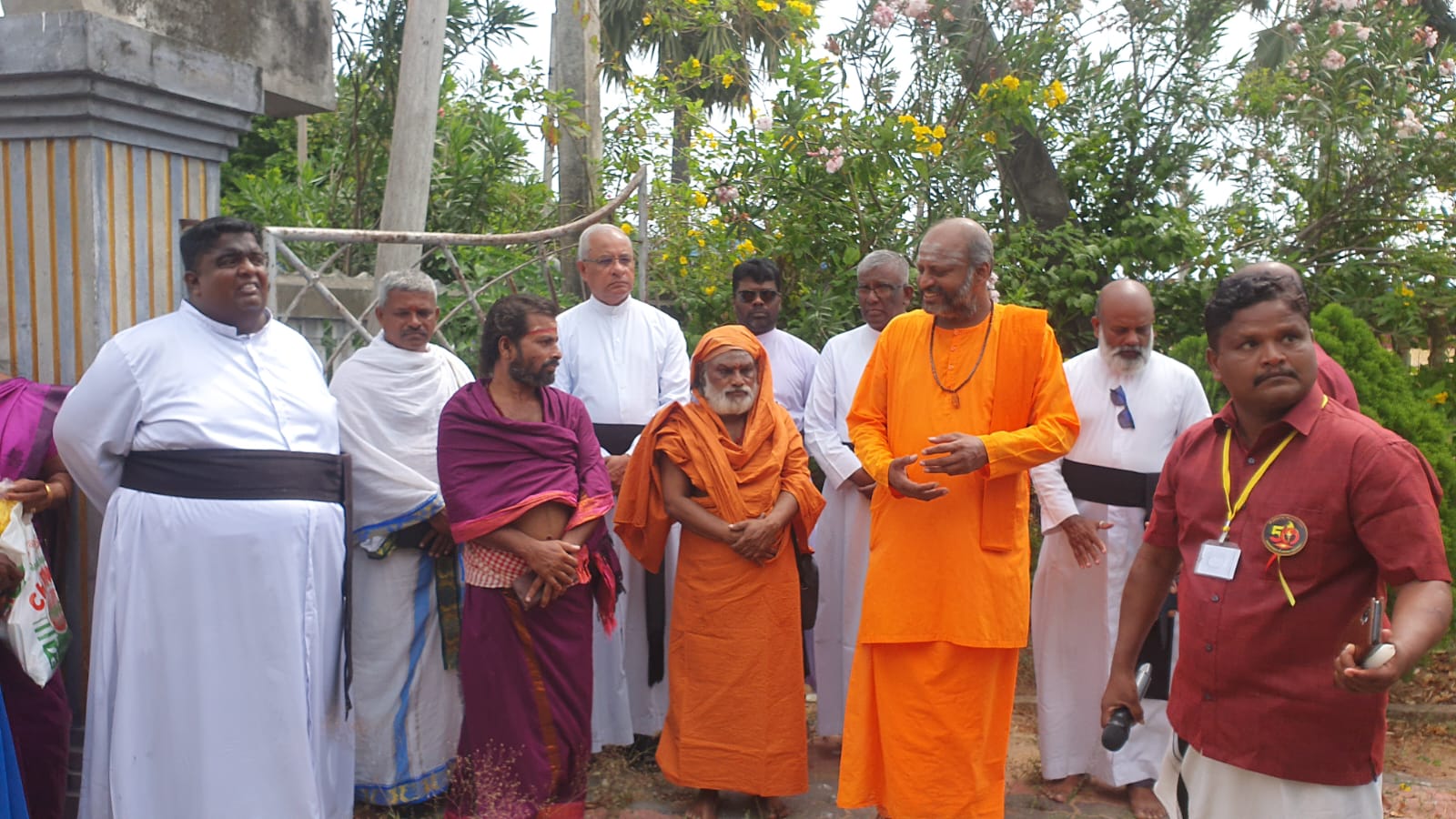
Addressing the gathering, Agathiyar Adigalar warned of a well-planned effort to undermine Tamil continuity in the homeland, and urged Tamil political leaders to act with justice, saying the people would follow leaders whose actions reflected those principles. He called on the present generation to preserve Tamil identity and heritage for those to come.
Rev. Fr. Jebaratnam reflected on the unanimous backing the Vaddukoddai Resolution had received from the Tamil leadership and people fifty years ago, and questioned whether such unity still existed, calling for a renewal of the collective resolve seen in 1977. The sacrifices of the past five decades would not be in vain, he said, noting that growing numbers beyond the Tamil community now acknowledged the injustices Tamils had faced and recognised the legitimacy of their political demands.
Velan Swamigal said the Sinhala supremacist narratives that cast the Tamil liberation struggle as terrorism were increasingly being challenged internationally, and argued that Tamils sought the restoration of their own sovereignty rather than territory belonging to others.
Criticising successive Sri Lankan governments, he said attempts at coexistence through agreements such as the Bandaranaike–Chelvanayakam and Dudley Senanayake–Chelvanayakam pacts had repeatedly been abandoned, and that Tamil efforts towards a negotiated settlement had been met with betrayal.
Manivannan focused his address on the legal terrain, and in particular on the Sixth Amendment to the Constitution, which he said had criminalised advocacy for an independent state, exposing those in breach to the loss of their civic rights, elected office and citizenship privileges.
He argued that the amendment, introduced after both the 1976 Vaddukoddai Resolution and the electoral mandate Tamil parties secured in 1977, could not retrospectively negate a resolution and a mandate that predated it.
Advocacy for self-determination, he noted, was not treated as a crime elsewhere in the world, pointing to the referendums held in Quebec and Scotland as democratic means of resolving such questions.
He also criticised successive governments for failing to hold Provincial Council elections in the Northern and Eastern provinces, noting that seventeen years after the end of the armed conflict no such elections had been held, despite the state's professed commitment to democratic governance and a political solution.
Enacted in August 1983 in the wake of the Black July pogrom, the Sixth Amendment required all members of parliament to swear an oath renouncing support for a separate state. The TULF members, refusing to take it, forfeited their seats, closing off the last avenue for the peaceful, constitutional pursuit of the demand articulated at Vaddukoddai. Half a century on, that demand, for recognition of the Tamil nation and its right to self-determination, remains both unmet and, under the law of the Sri Lankan state, a criminal one to voice.