The U.S Department of State's Investment Climate Statement on Sri Lanka has noted that foreign investment on the island is limited and 'difficult' due to minimal progress on 'structural reforms' and 'stronger governance mechanisms' across the state.
Despite the electoral victory of a new government under President Anura Dissanayake and the outward commitment of his National People's Power coalition to encourage Foreign Direct Investment (FDI), investors remain wary. The report states that,
"Regulatory unpredictability, bureaucratic hurdles, and selective transparency continue to limit broader participation."
Earlier this year, it was reported that Sri Lanka's foreign reserves had been overstated by USD $1.4 billion by the central bank. Inconsistent reporting practices and the inclusion of incorrect reserve assets had been publicised as economic recovery; however, the revelation dented investor confidence in the competency of the government.
The report also adds that investors state that "doing business remains difficult" and that frequent project reversals, regulatory shifts, and slow decision-making processes force investors to look away from the island, which is already crippled following its default in 2022.
"Overall, investors report that doing business remains difficult, frequently citing concerns about project reversals, regulatory shifts, slow decision making, and inadequate support for established businesses. The IMF and local business chambers stress the need for comprehensive structural reforms, including trade facilitation, digitization, and stronger governance mechanisms."
State-owned enterprises (SOE) continue to be a burden on public finances. The Sri Lankan government controls 527 SOEs, including 55 entities designated as strategically important. The report notes that SOE consistently strains public finances due to "mismanagement, excessive staffing, inadequate financial disclosures, and weak budgetary controls". It also states that "endemic corruption and lack of transparency" in the public sector have inflicted significant economic losses on Sri Lanka.
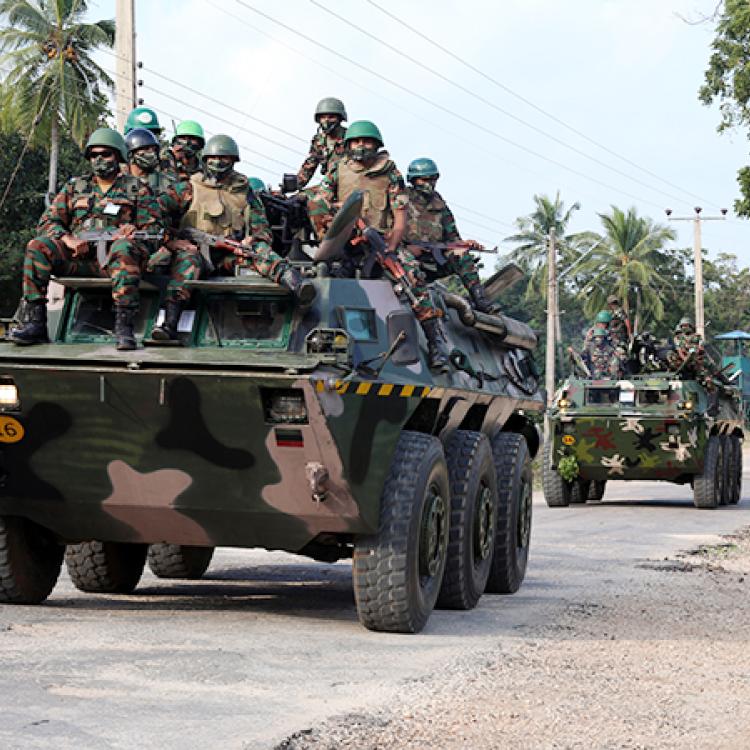
Sri Lanka's militarisation across the North-East continues to stifle development across the Tamil homelands. Despite the armed conflict ending 16 years ago, military personnel continue to occupy land, own businesses, and create a culture of fear and intimidation, which limits foreign investment and impacts local business owners. The report notes that land acquisition presents significant challenges, with the government prohibiting land sales to foreigners and enterprises with foreign equity exceeding 50 percent.
However, the Sri Lankan government continues to exercise excessive land grabs across the North-East, facilitated by state forces such as the military, archaeological or forestry departments. More than 2,500 acres of Tamil-owned land in Jaffna remain occupied by Sri Lanka’s military, navy, air force, and police. Sri Lanka’s Department of Wildlife Conservation has control of 72,348 acres of land in Jaffna, with 14,171 acres identified as land where people previously lived. Similarly, the Sri Lankan Forest Department has appropriated 5,397 acres.
Read the full report.