
A landmark report commissioned by the UN Development Programme (UNDP) and the UN Department of Political and Peacebuilding Affairs (DPPA), with support from the Australian Government, finds that Sri Lankan militarisation in the North-East has worsened the climate vulnerability and weakened the adaptive capacity of Tamils across the region.
The report 'Gender Responsive Climate Security Assessment for Sri Lanka' offers the first integrated analysis of climate resilience, peacebuilding and gender dynamics in Sri Lanka. The report provides actionable insights and locally tailored recommendations to support inclusive governance, equitable climate adaptation, and strengthened social cohesion.
The report examines how gender roles, norms and inequalities intersect with climate security and challenges on the island.
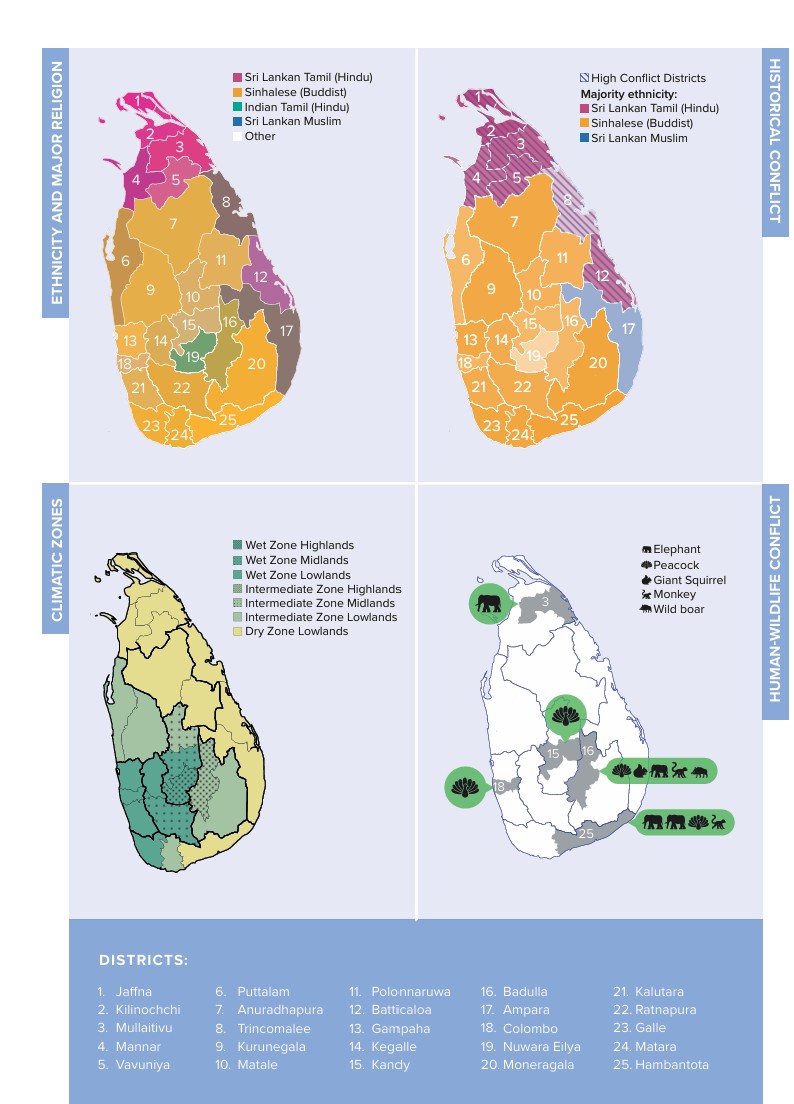
More than 165 people from 50 towns across Badulla, Batticaloa, Hambantota and Mullaitivu districts participated in interviews and focus groups. This included women, men, youth, different livelihoods,ethnic and religious groups.
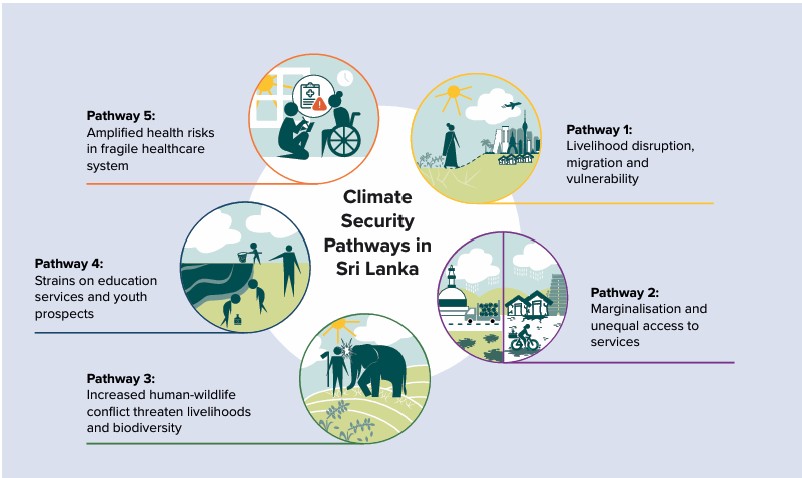
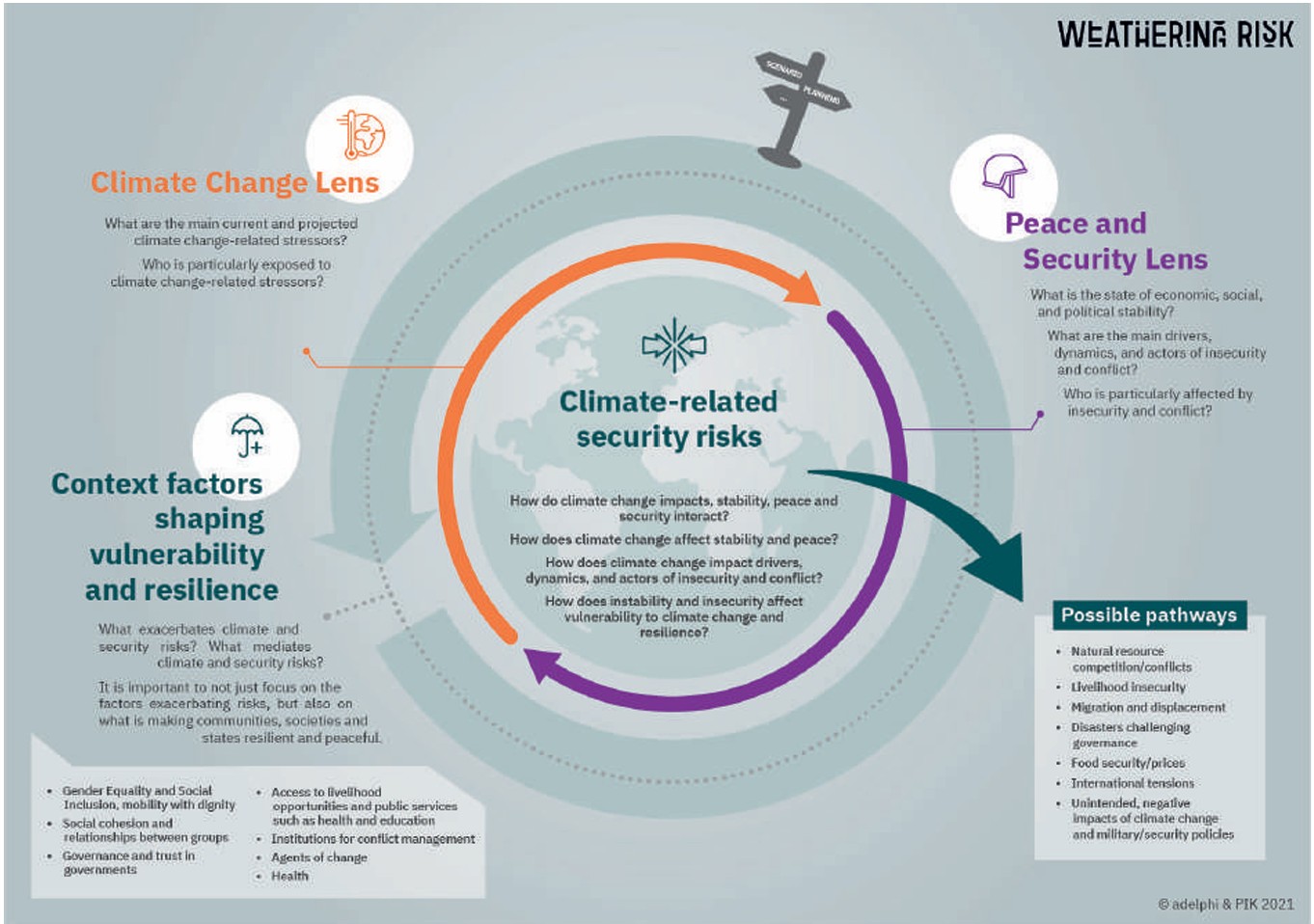
The report uses the Weathering Risk Methodology, adapted to Sri Lanka, to explore how climate change interacts with gender, peace and security. Combining quantitative and qualitative approaches, the report identifies 5 climate security pathways which detail how climate stressors and security risks undermine human security in the four districts studied, with detailed case studies provided for each district.
Climate Security Pathways
Climate Impacts Disrupting Livelihoods and Driving Migration and Vulnerability
This pathway examined the impacts of climatic events and the disruption to livelihoods, driving migration and exacerbating existing inequalities. The report notes that
"In the North and East, military occupation of increasingly scarce productive land and military use of this land for agricultural and fishing income generation further puts a strain on livelihood opportunities for communities "
The pathway notes how migration serves as a coping strategy for the occupation; however, the type of migration, which is dependent on gender, ethnicity and religion, is often precarious and leaves the community more susceptible to future climatic shocks. The departure of working-age adults is "hollowing out rural economies", placing a "disproportionate burden on women, children and the elderly left behind".
Disparities in migration trends across ethnicity and region were highlighted alongside access to agricultural and fishing work. In Mullaitivu recurrent droughts and flash floods have forced farmers, especially women-headed households, to abandon traditional crops like paddy and peanuts. Despite an abundant coastline, few communities engage in marine fishing, with almost all Tamils engaged in agriculture.
One female farmer stated,
“Sea work is being taken by Sinhalese and Colombo workers. We now just still do farm work.”
Migration patterns vary by gender, ethnicity, and religion. Sinhala men and women from Southern and Uva provinces often migrate to countries like the Republic of Korea under government programmes that provide legal safeguards and protections. By contrast, respondents from poorer communities in the North and East spoke of labour migration to Gulf states, where women are frequently recruited as domestic workers. Notably, no respondents from the North or East referred to government-supported migration programmes, including those with the Republic of Korea.
Marginalisation and Unequal Access to Services Undermining Resilience
This pathway examined how unequal access to services and governance failures are eroding communities' resilience to climate risk and exacerbating social tensions along ethnic, religious and rural-urban lines. The report notes that
"Disparities in infrastructure investments, agricultural support, and wildlife management have left marginalised communities feeling excluded from national development priorities. For instance, farmers in the East struggle with agricultural calendars and fertiliser allocations designed for the South, while military actors face fewer restrictions on logging than local villagers collecting wood for fuel"
The report details how Sri Lanka's national crop calendar, which dictates the timing of paddy cultivation, is perceived to prioritise the south and central zones, leaving Tamil and Muslim farmers in the east at a disadvantage. The calendar, which is designed around the predictable rainfall and robust irrigation systems of the South and Central zone, do not align with the erratic rainfall and underdeveloped irrigation infrastructure in the east. The report notes,
"Tamil farmers, reliant on rain-fed agriculture and poorly maintained tanks, often struggle to adhere to the prescribed schedule, leading to lower yields and higher costs. In a post-conflict context, these disparities deepen existing grievances, as Tamil farmers view the crop calendar as yet another example of systemic marginalisation rooted in historical inequities"
Government support, such as the allocation of fertiliser, seeds and water for irrigation, is tied to the crop calendar. It was noted that fertiliser and seed distribution often arrive too early or late for Tamil farmers, making it difficult to maximise productivity. A Tamil farmer from Batticaloa explained,
“The calendar is made for them, not for us. They don’t understand our problems or listen to what we need.”
Disparities in service provision, particularly in the North and East, have eroded trust in institutions and exacerbated post-conflict grievances. For example, respondents in Mullaitivu felt that, while the Northern Province received government resources, Mullaitivu itself was disproportionately neglected—particularly in areas like road reconstruction and bus services.
The pathway also examined the impact of predatory microlending traps and the lack of regulation. It notes that rural women who often engage in microfinance tend to be trapped in cycles of debt.
Many respondents strongly believed that the lack of permits for constructing elephant fences, which significantly affects farmers, is due to the region's predominantly Tamil population.
One respondent for Mullaitiviu, Murali stated,
“We just want permission—not even money—from the government to build elephant fences. But they have not been granted for over a year. I believe it’s because they want to keep the Tamils here down.”
Human-Wildlife Conflict Threatening Human Security, Livelihood and Biodiversity
This pathway detailed how human-wildlife conflict in Sri Lanka has escalated to a crisis which threatens livelihoods, human security and biodiversity. The report notes that,
"Climate change, deforestation, and human encroachment into wildlife habitats have intensified clashes. Rural communities, particularly women and marginalised groups, bear the brunt of these conflicts, facing crop destruction, physical danger, and economic strain. Governance gaps exacerbate the issue, as outdated systems and ineffective government responses leave communities vulnerable. Some affected communities feel animals and forests take policy priority over their lives."
Additional strains in Batticaloa and Mullaitivu were noted in the report due to the continued military occupation.
"Military occupation of vast tracts of highly fertile plots – one stretch of over two kilometres of prime coastal land in Batticaloa is the site of a military run cashew grove. Respondents noted that only two locals are employed by military in low-skilled work, while the rest of the employment and thus income remains within the military’s closed loop economy."
The report also details how government-sponsored Sinhala colonisation schemes have negatively impacted the livelihoods of Tamil and Muslim farmers in the east.
"The government’s resettlement of Sinhala families into Mullaitivu poses a range of challenges, including the lack of clear demarcation of boundaries, which complicates grazing of livestock. Tamil herders noted that they could previously just allow their animals to graze free ly on existing vegetation, but now, if the animals graze into Sinhala lands, they will be harmed or killed. Tamil respondents note that ethnic tensions between Tamils and Sinhalese are being piqued by land and related livelihood encroachment. Respondents noted that the government ‘seized’ land that was abandoned due to the conflict and gave it to Sinhalese. No grievances over land were mentioned between Tamil Hindus and Muslims or Christians."
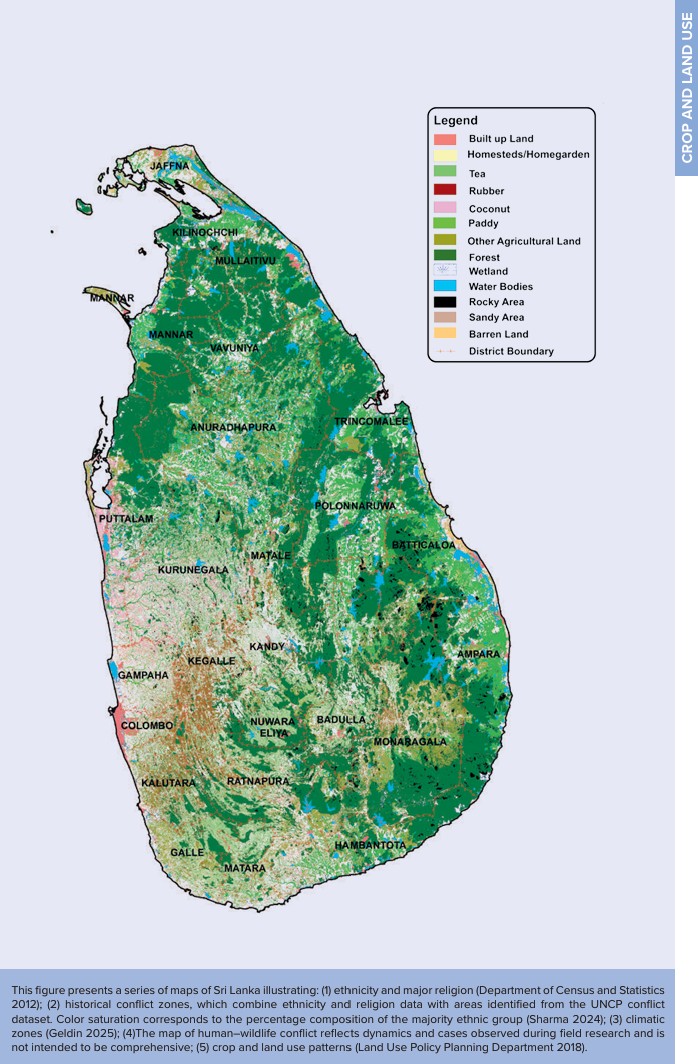
The pathway also examined crop damage by animals across the island, which is being made worse due to habitat loss driven by urbanisation.
Climate Change and Poor Education Services Negatively Affect Youth In Sri Lanka
This pathway examined the intersection of climate change, poor education services and socioeconomic pressures impacting the youth across the island. The report notes
"Seasonal agricultural labour, disillusionment with education, and the financial burden of private tuition exacerbate already limited access to quality education, particularly in rural and conflict-affected regions. Girls face additional barriers, including caregiving responsibilities and early marriage, while boys are more likely to drop out of school to engage in labour or migrate for work"
The report details how respondents described the drug and alcohol crisis across the North-East as an "epidemic". This directly impacts boys and young men while indirectly affecting women and girls through increased violence, divorce and rape. Respondents highlighted the lack of police action or judicial prosecutions for drug-related crimes. The report notes that,
"This lack of response was widely seen as evidence supporting a common belief among Tamils and Muslims in the region: that drugs are being deliberately introduced in Tamil areas to undermine the education, progress, and future prospects of the next generation. This perspective reinforces feelings of unfair treatment by the government, further eroding social cohesion and trust in public institutions."
A respondent from Mullaitivu, Kethes said
“Very few young people can escape through this trap they have laid to keep our people down.”
Climate Change Deepening Fault Lines in an Already Fragile Healthcare System
This pathway detailed how existing structural inequalities across the island have exacerbated the already stressed healthcare system. The report notes,
"Sri Lanka’s healthcare system, marked by chronic underfunding, fragmentation, and inequality, is under increasing strain, particularly in rural and marginalised areas. Districts like Mullaitivu and Batticaloa face severe shortages of medical staff, medicines, and diagnostic equipment, forcing many to rely on costly private pharmacies or forgo treatment altogether. These systemic gaps, identified as key drivers of multidimensional poverty (UNDP 2023), leave the healthcare system ill-equipped to meet routine needs, let alone adapt to climate-related challenges. Climate change exacerbates these vulnerabilities by intensifying health risks such as vector-borne diseases, malnutrition, and mental health issues. Overburdened and under-resourced facilities struggle to respond to these emerging pressures, while extreme weather events disrupt healthcare infrastructure and access"
Further structural and institutional barriers are detailed in the report. Alongside the chronic understaffing of hospitals across the North-East, medical consent forms are often only available in Sinhala, creating barriers for Tamil-speaking patients.
The report includes detailed case studies of each district alongside detailed recommendations on how to enhance resilience.
Read the full report in English, Tamil or Sinhala here