
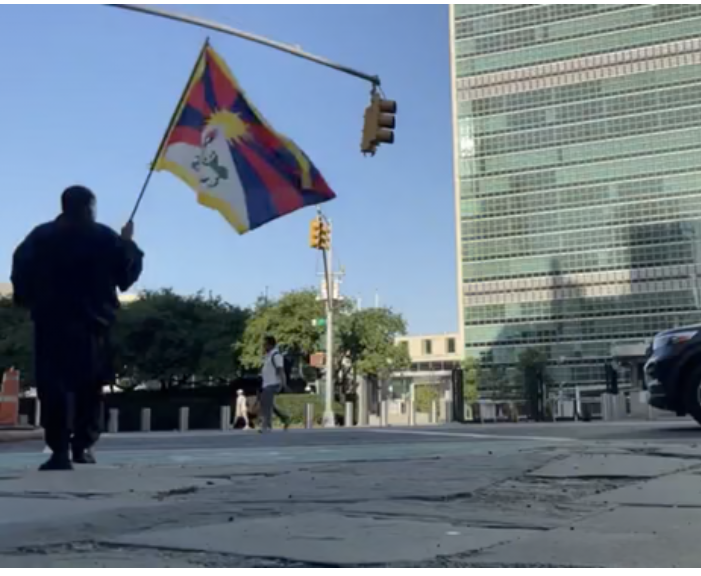
A Tibetan independence activist has died after setting himself on fire outside the United Nations headquarters in New York, in a act of protest that Tibetan exile groups described as an appeal for Tibetan independence and unity.
The New York City Police Department said officers responded to an emergency call on the evening of 2 July and found the man with severe burns near the UN complex in Manhattan. He was taken to Bellevue Hospital, where he was pronounced dead. Police have not officially identified him or confirmed a motive, and said an investigation remained ongoing.
Exiled Tibetan organisations, the media outlet Voice of Tibet, the prominent Tibetan writer Jamyang Norbu and the International Campaign for Tibet named the man as Lobga Rangzen, describing him as a longtime independence activist and community leader who had gone into exile from Tibet in the 1980s, settled in New York and worked as a cab driver. He arrived at the scene carrying a Tibetan flag, a banned symbol of Tibetan independence in China, and acted following a live-streamed appeal.
In a video posted online, Rangzen called on Tibetans to work together for the independence of Tibet and to never forget their heritage and identity, accusing the Chinese government of pursuing policies aimed at destroying the Tibetan identity, culture and language.
Protests have taken place since his death, demanding greater weight to the situation in Tibet, and to the demands of Tibetans both inside the region and in exile.
His protest came only days after China enacted a new Ethnic Unity Law, which expands the mandated use of Chinese in schools and government across minority regions, legislation that Tibetan and human rights advocates fear will deepen the cultural erasure of ethnic minorities. Beijing says the law protects the rights of all ethnic groups.
China has governed Tibet since the 1950s, following the region's incorporation into the People's Republic, and Tibetan exile organisations and rights groups have long accused Beijing of restricting religious freedom, suppressing cultural identity and curtailing political expression. China rejects those charges, maintaining that Tibet is an integral part of its territory and that its policies have improved development and living standards there. Advocacy groups say more than 150 Tibetans have self-immolated since 2009, around ten of them in exile.
The head of Tibet's government-in-exile, Penpa Tsering, said he was deeply saddened by the death and urged Tibetans to value their lives.
"While we honor his devotion, human life is precious and must be preserved to serve the long-term struggle for Tibet," he said. Tencho Gyatso, president of the International Campaign for Tibet, described Rangzen as "a tireless advocate for Tibet". China's foreign ministry, asked about the death, reiterated that Tibet had been "an inalienable part of China's territory since ancient times".