
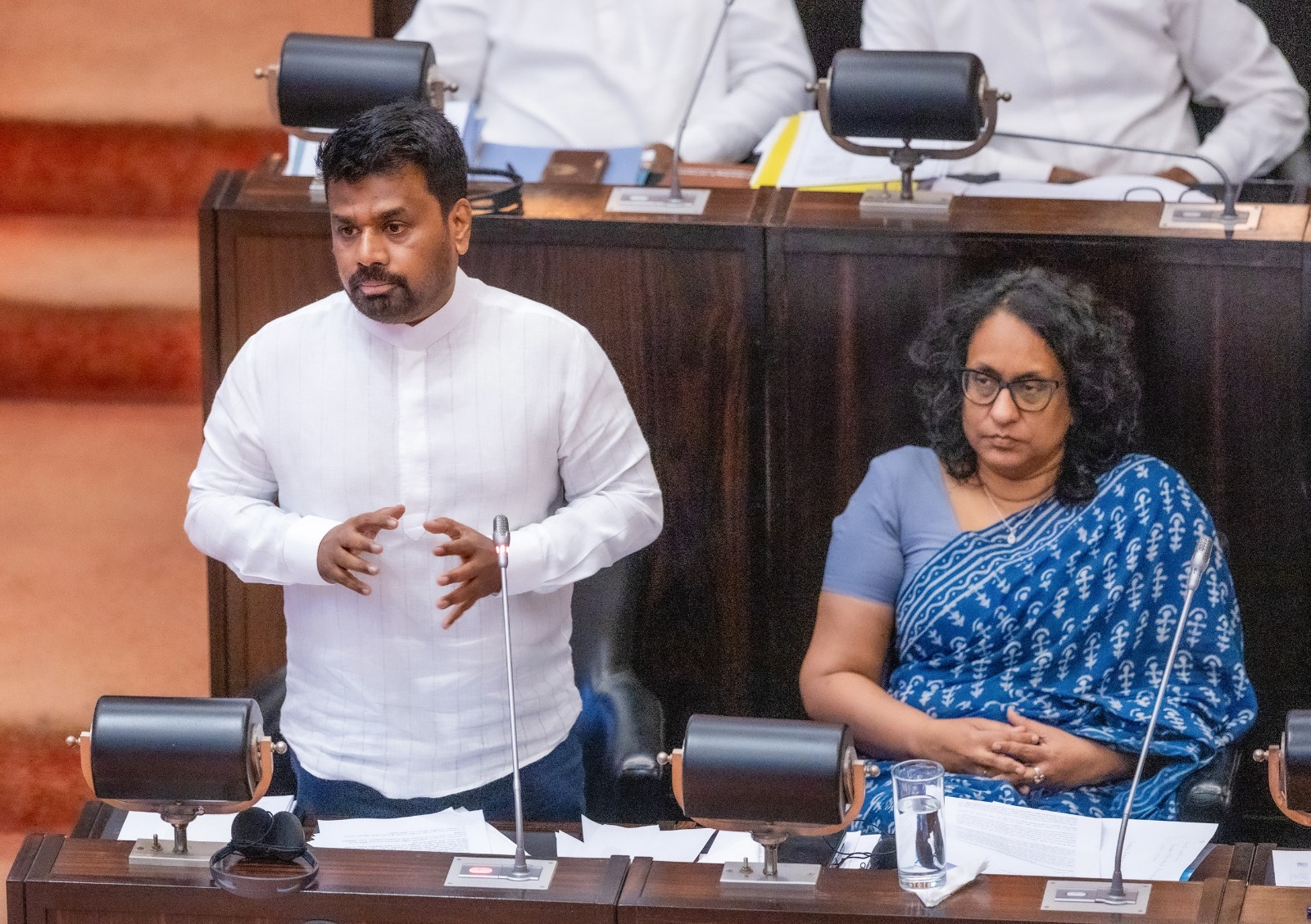
Sri Lanka's president has told Parliament that the country could not buy oil from Russia because it could not afford to antagonise the United States, as Cabinet Spokesman Nalinda Jayatissa confirmed that discussions were ongoing with Moscow.
Speaking in parliament, Anura Kumara Dissanayake acknowledged that economic dependence on the United States had shaped the government’s decision-making, despite earlier insisting that Sri Lanka remained neutral.
"Some people are asking why we couldn't get oil from Russia," Dissanayake told lawmakers.
"Understand. 25 percent of our exports go to the US. You know our neighbouring countries had to reduce their dealings with Russia due to the tariff issue. Therefore, Sri Lanka needed to be careful."
Dissanayake had previously told Parliament that Sri Lanka would "not be biased to any state nor submissive to any state."
The remarks come as the island continues to grapple with fuel shortages and rising prices, prompting renewed scrutiny over its energy strategy and external economic pressures.
Sri Lanka had previously explored the possibility of securing oil supplies from Russia, particularly as global prices fluctuated. Cabinet Spokesman Nalinda Jayatissa confirmed that discussions were ongoing, stating that Russia’s Deputy Energy Minister Roman Marshavin is expected to visit the island for talks aimed at formalising a government-to-government agreement.
"Yes, the talks are in process at the diplomatic level. Russia's Deputy Energy Minister is due for talks. Then we can further formalise it," Jayatissa said. "But you all know that we were not able to buy oil from Russia in the past. So we are trying to see if we could strike a government-to-government deal with Russia."
Despite these discussions, Sri Lanka’s ability to secure Russian oil has remained constrained. The government has indicated that trade relations with the United States, which accounts for a significant share of Sri Lanka’s exports, continue to shape its economic decisions.
Last year, Sri Lanka negotiated a reduction in US tariffs from 44 percent to 20 percent, though details of those negotiations were not fully disclosed. Treasury Secretary Harshana Suriyapperuma said at the time that efforts included facilitating increased imports from the United States and improving conditions for American firms operating in the country.
“Due to non-disclosure rules Sri Lanka cannot immediately release all areas that are under discussion,” he said.
“Some of them are the ones you very correctly identified,” Suriyapperuma added, responding to a question on whether longstanding US concerns over intellectual property protection and agricultural market access had been part of the discussions, as well as whether oil imports would proceed under quota arrangements.
“Sri Lanka is a net importer of energy into the country,” he said. “So wherever possible, within competitive parameters to see how best we can accommodate their requirements.”
Sri Lanka’s Ceylon Petroleum Corporation has also indicated it was considering importing oil from the United States, further underscoring Colombo’s reliance on Washington amid ongoing economic challenges.
Beyond diplomatic considerations, logistical constraints have also limited Sri Lanka’s ability to import Russian oil. Unlike larger regional economies, the island lacks the shipping capacity and insurance mechanisms required to transport sanctioned or high-risk crude. Rising insurance premiums linked to global conflict have further increased costs, eroding the price advantage of discounted Russian supplies.
The developments come as Sri Lanka continues to navigate a worsening fuel crisis, with shortages and price increases affecting daily life across the island, including the Tamil homeland where access to essential resources remains uneven.