
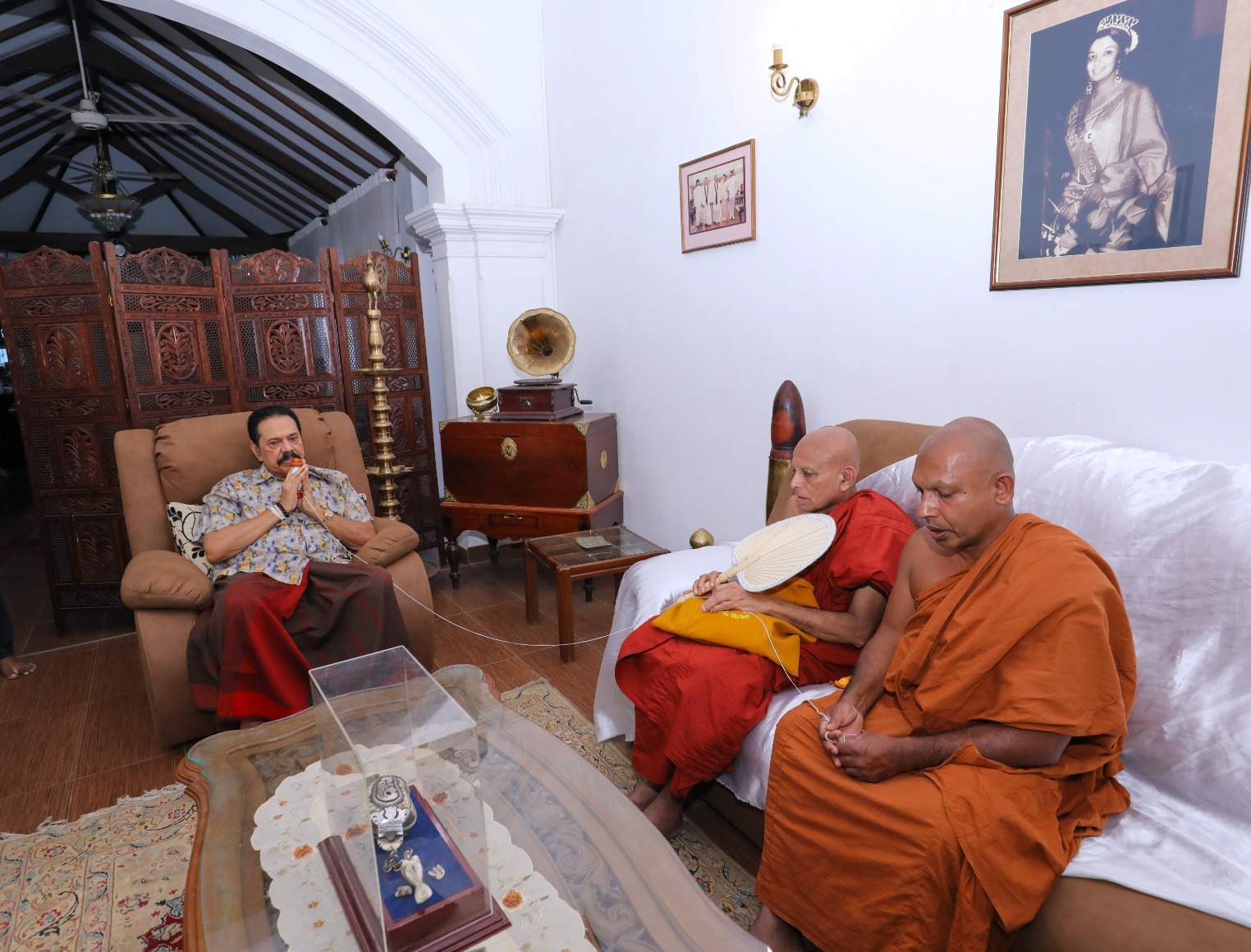
Former Sri Lankan president and accused war criminal Mahinda Rajapaksa lashed out at the government this week, claiming that the island was witnessing “political terrorism” driven by “personal revenge,” after he was compelled to vacate his luxury Colombo residence under the newly enacted Presidents’ Entitlements (Repeal) Act.
Rajapaksa, who returned to his family’s Carlton House in Tangalle, attempted to cast himself as a man of the people, posting on Facebook that he was “returning to where it all began.” “As my eldest son Namal said, I have returned to my village where it all began. I travelled here via the Southern Expressway that we built. Now, I can enjoy a sour fish stew in the village,” he wrote.
The legislation, signed into law last week, stripped former heads of state of state-funded housing and other perks, forcing Rajapaksa and others to vacate official residences.
Dismissing media and political criticism, Rajapaksa declared, “I had no need to listen to statements made in front of the media by a group of people who, unable to do anything for the people and who were becoming increasingly disenchanted with the public in a very short period of time, were trying to cover up their incompetence.”
The former president also issued thinly veiled threats, saying, “I have learned of a statement claiming that Mahinda Rajapaksa now deserves to be hanged”.
“Personally, I do not respond to such direct targeting. However, I wish to state that as long as I live, and for as long as we all live under the shelter of the lion flag, I will rise up—no matter the suffering—against anyone who betrays this unitary motherland.”
He added that the Maha Sangha and the “beloved people” of the south would be ready to “make any sacrifice.”
Rajapaksa further claimed that “political threats and loud rhetoric are nothing new to Mahinda Rajapaksa of Giruwapattuwa,” portraying himself as a victim of persecution.
SLPP General Secretary Sagara Kariyawasam revealed that several houses in Colombo had already been offered to Rajapaksa, but insisted any new residence must be “fairly large” to accommodate visitors and secure enough to protect him. “We aren’t in a hurry,” he added. “Mr Rajapaksa will only return to Colombo if a house that meets these key requirements is found.”
The move from Colombo has not diminished Rajapaksa’s political activity. In televised remarks, he accused the current government of detaining close allies out of “revenge” and insisted that even though “winds may change,” he and his family remained steadfast. “My political activities are continuing,” he added.
Reflecting on his tenure, Rajapaksa once again boasted of his role in ending the armed conflict, praising his defence secretary and military commanders. He repeated his long-standing rejection of war crimes allegations, framing massacres of Tamil civilians as part of “a collective effort” to defeat the LTTE.
The former president’s comments comes as Tamils continue to demand justice for the mass atrocities carried out under his leadership, including massacres, sexual violence and the shelling of hospitals. For many, Rajapaksa’s rhetoric about “political terrorism” and “sacrifice” is a continuation of the Sinhala nationalist politics that underpinned the island’s genocide against the Tamil people.