
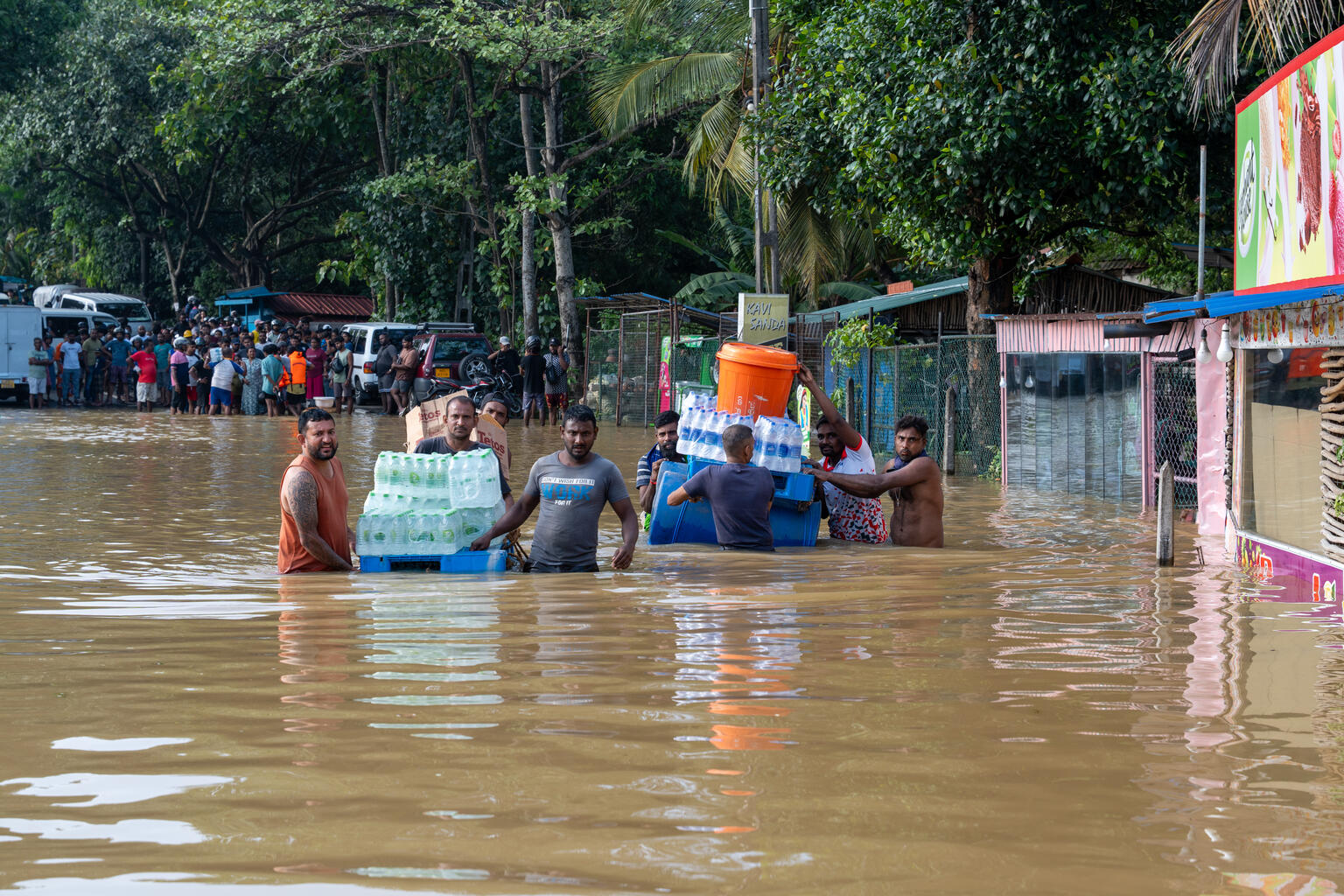
Photograph: UNICEF
Sri Lanka has issued fresh landslide and monsoons warnings as the death toll from the devastation caused by Cyclone Ditwah rose to at least 638, with 191 more still missing and more than two million people affected across the island.
The Sri Lankan Disaster Management Centre said ongoing monsoon rains are now falling on areas already devastated by the cyclone, further destabilising hillsides and placing communities that had only just begun clearing debris at renewed risk. Many displaced families are once again bracing for fresh slope failures and mudslides.
Ditwah, one of a series of storms that have killed more than 1,800 people across Asia in recent weeks, struck the island earlier this month, triggering catastrophic flooding and landslides across the central highlands, the North-East and the north-western midlands.
Late on Sunday, the National Building Research Organisation expanded its landslide warnings to cover Kandy, Nuwara Eliya, Badulla, Matale, Kegalle, Kurunegala and Ratnapura. Several locations were raised to Level 3 alerts, signalling an imminent risk of slope failure.
The Department of Meteorology has forecast rainfall of 150 to 200 millimetres in the central highlands, alongside strong wind gusts along the eastern slopes. Although floodwaters have begun receding in some districts, the Disaster Management Centre warned that saturated soil and continued rainfall have created a “very high” landslide risk across multiple regions.
Authorities confirmed that more than two million people, nearly 10 per cent of Sri Lanka’s population, have been impacted by the disaster, with tens of thousands still displaced.
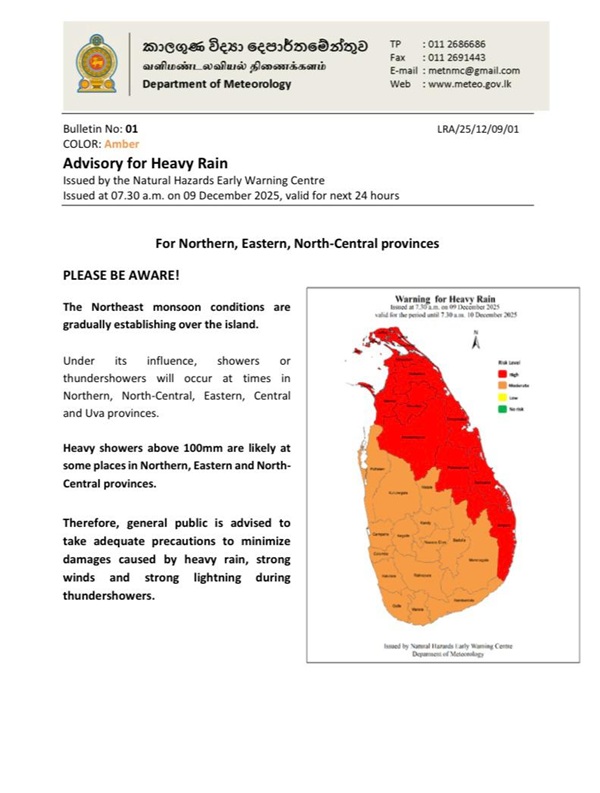
Meanwhile, the Department of Meteorology warned on Tuesday that a new storm system developing in the Bay of Bengal is expected to bring further rain to the island, particularly affecting the Northern, Eastern and North-Central provinces.
The Daily Mirror reported that the system is forecast to deliver around 75 millimetres of rainfall. While not considered extreme on its own, officials have warned that it could trigger fresh disasters in already saturated areas. The Department has alerted the Irrigation Department, the Mahaweli Development Authority and the National Building Research Organisation to assess potential impacts.
The BBC has also reported that cloud movements in the Bay of Bengal could intensify into a storm drifting towards Sri Lanka.
Deputy Minister of Land and Irrigation Aravinda Senarath said authorities were bracing for the management of reservoir water levels as the north-east monsoon intensifies.
“It will be risky if it rains more than 150-200 mm again. The irrigation and Mahaweli authorities are on alert to release excess water and manage the situation,” he said.
He added that small and medium tanks had borne the brunt of damage during the latest flooding.
Separately, the Department of Meteorology issued a further advisory confirming that north-east monsoon conditions are now gradually establishing over the island. Showers or thundershowers are expected at times in the Northern, North-Central, Eastern, Central and Uva provinces, with heavy rain above 100 millimetres likely in parts of the Northern, Eastern and North-Central provinces.
Fairly strong winds of 30 to 40 kilometres per hour are expected over the Northern, North-Central and North-Western provinces and in the Trincomalee district. The public has been urged to take precautions to minimise damage from heavy rain, strong winds and lightning.
Sea areas off the coast from Hambantota to Mannar via Batticaloa, Trincomalee and Kankasanthurai are also expected to experience frequent showers, with rough sea conditions forecast off the western and north-western coasts.