Demonstrations were held in Mullaitivu and Batticaloa last month demanding justice for a young girl who is alleged to have been sexually abused by a senior Buddhist monk in Anuradhapura, as Tamil women's organisations across the North-East took the lead in pressing for accountability over a case that has drawn international attention.
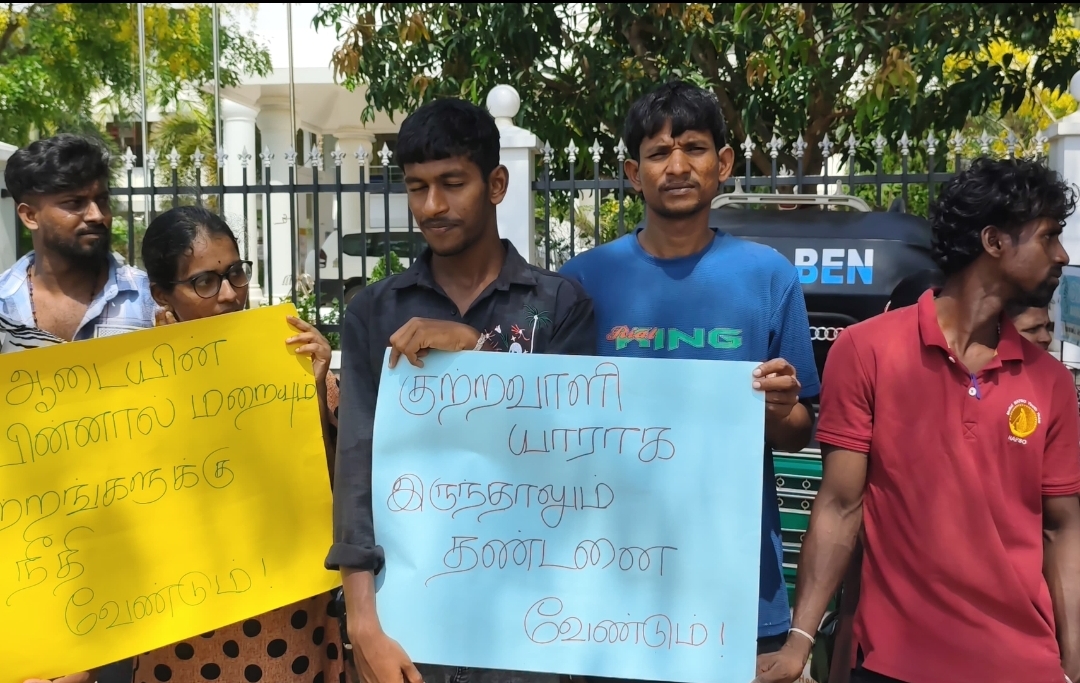
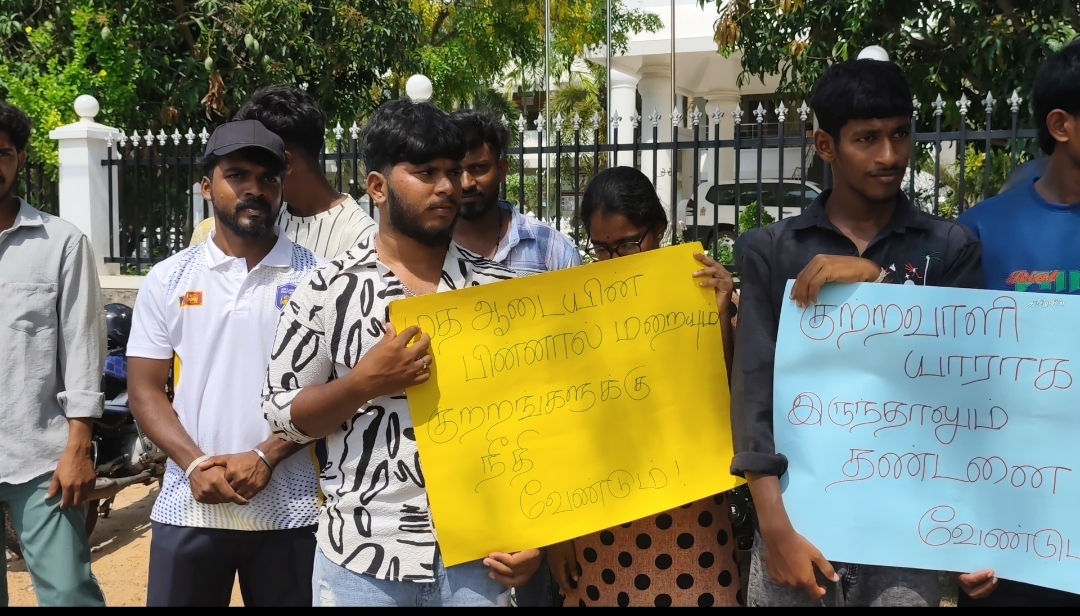
In Mullaitivu, the National Fisheries Solidarity Movement organised a demonstration on 29 May in front of the District Secretariat. Participants held placards bearing slogans including "A child's tears will not be silenced", "Justice for crimes hidden behind religious robes", "Punish the perpetrator, whoever it may be", "Protect children, stop abuses" and "Child safety is our right". Vanni District parliamentarian Thurairajha Ravikaran took part in the protest.
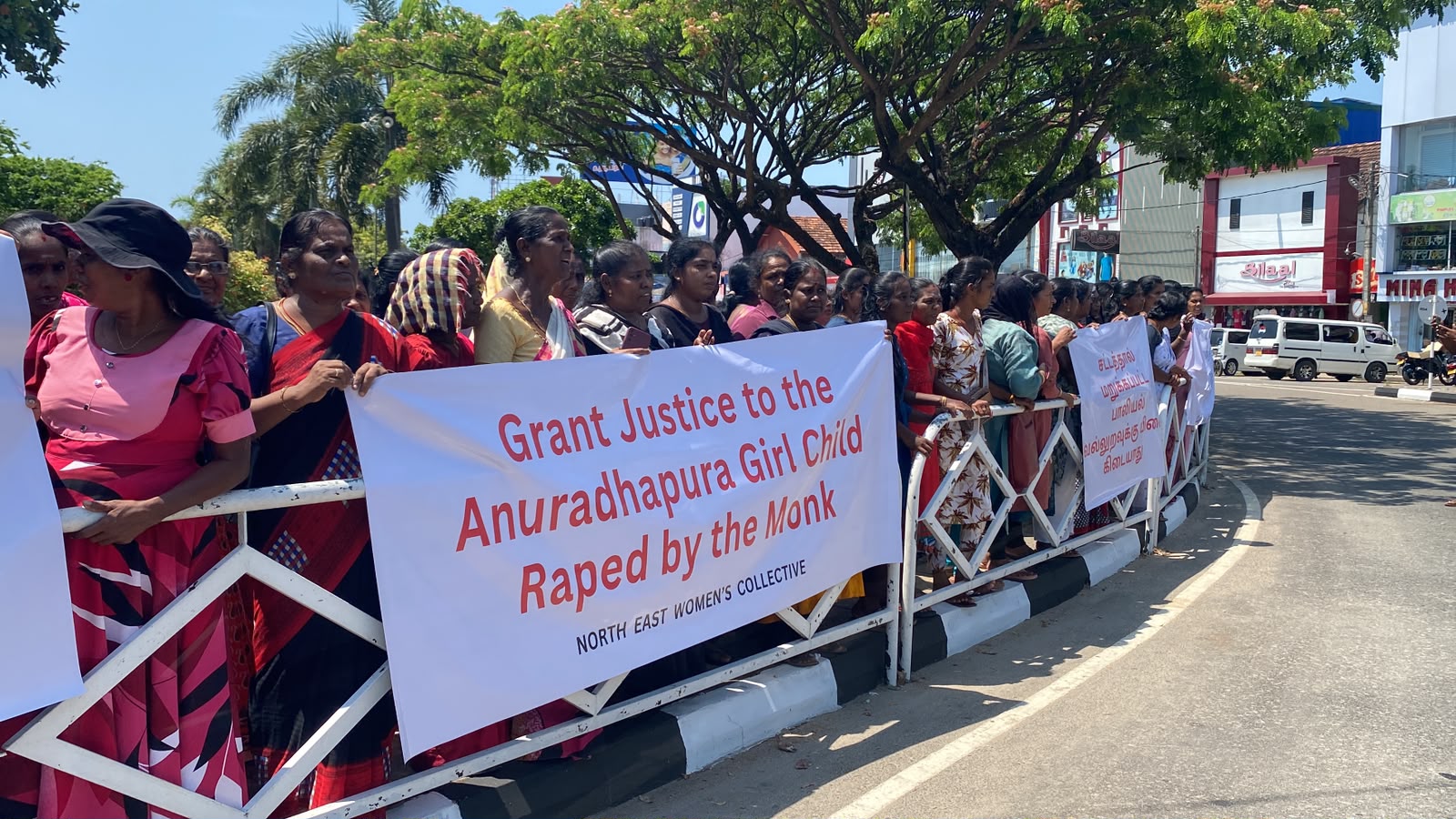
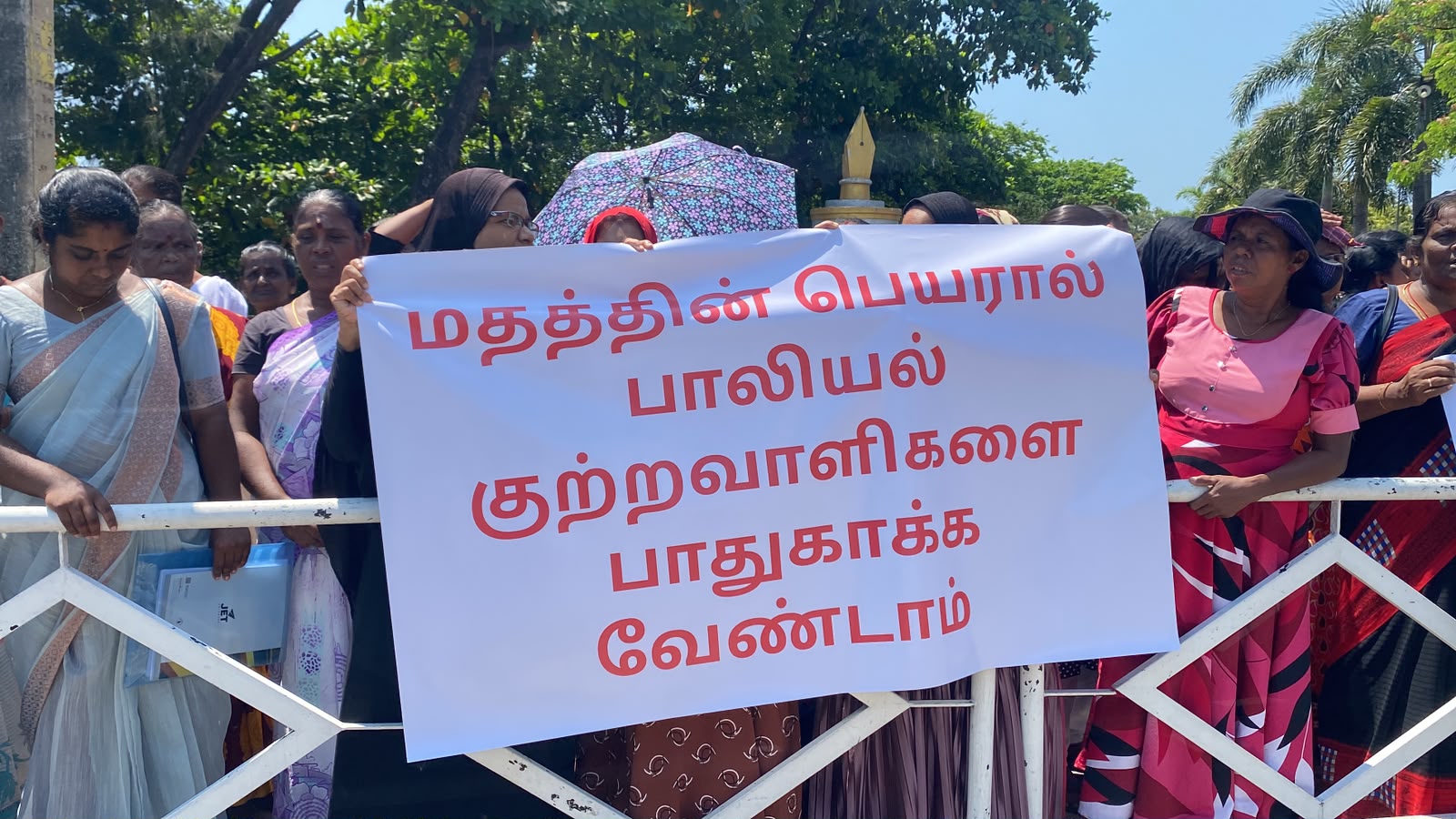
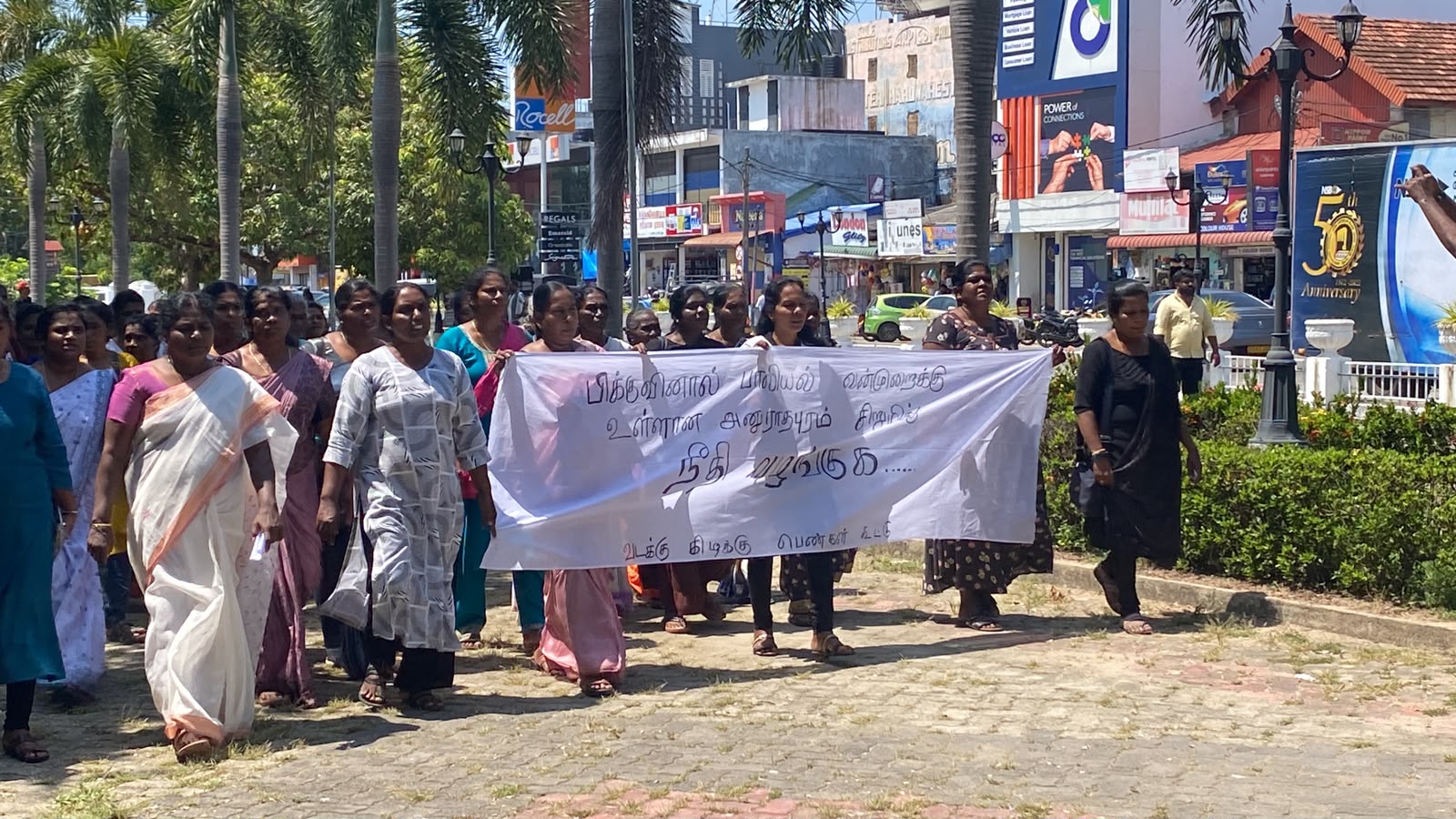
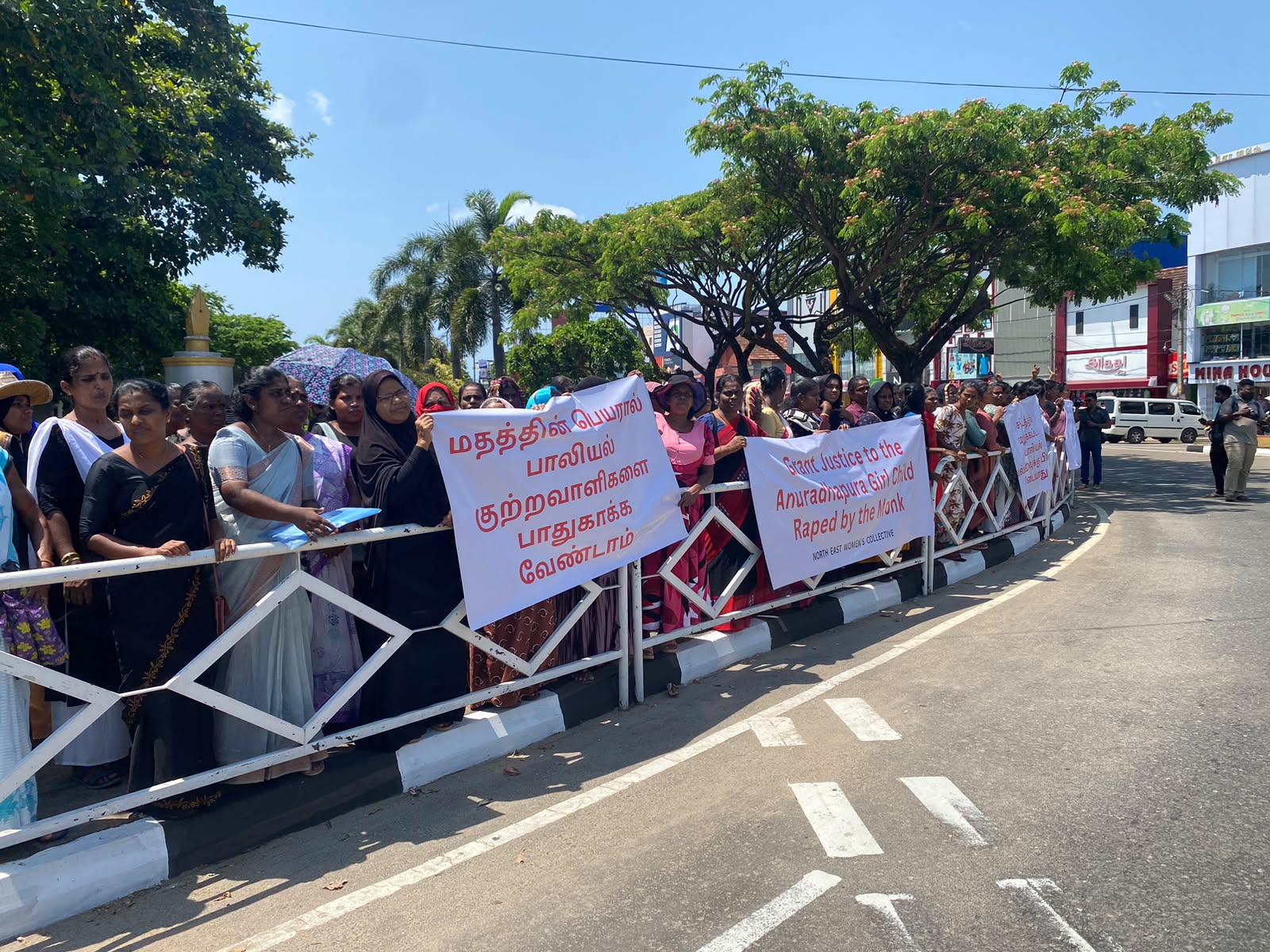
Two days earlier, on 27 May, the North East Women's Collective had held a parallel demonstration in Batticaloa. Women gathered at Gandhi Park before marching in procession to the memorial monument dedicated to slain journalists, where the protest was held. Their placards condemned the abuse and called for immediate legal action against the accused monk, with slogans demanding "Deliver justice to the Anuradhapura girl abused by a monk", "Do not protect sexual offenders in the name of religion" and "Ensure justice for the victimised child".
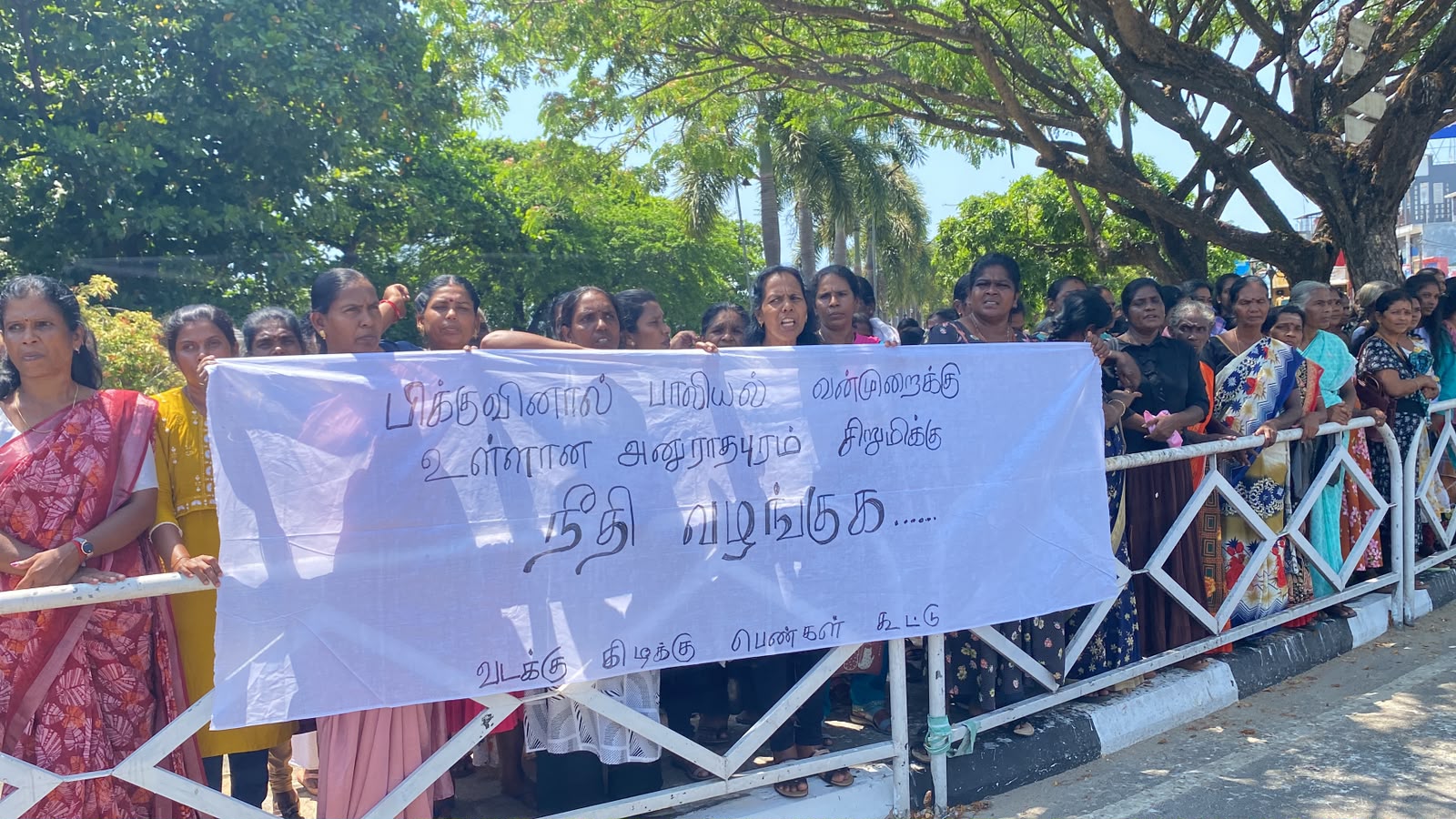
The demonstrators in Batticaloa stressed that justice must be delivered swiftly to the affected girl and warned that sexual violence against women and young girls continues to rise across the island.
They urged the Sri Lankan government to strengthen protections for vulnerable children and women, and called on Sri Lankan president Anura Kumara Dissanayake, the Ministry of Justice and the Human Rights Commission of Sri Lanka to take firm action over the case.
A memorandum was read out and later handed to the Batticaloa office of the Human Rights Commission.
The protests in Mullaitivu and Batticaloa followed an earlier demonstration in Jaffna and were among the first major public actions on the case to emerge from anywhere on the island. They came alongside another in Vavuniya, with Tamil women's organisations in the North-East taking the lead at a time when much of Sinhala-language media remained reluctant to scrutinise the conduct of the clergy.
The case at the centre of the protests is that of Pallegama Hemarathana Thero, the chief prelate of Anuradhapura's eight sacred Buddhist sites, who was arrested on 8 May after being accused of raping an 11-year-old girl, with the alleged abuse reportedly carried out over years. Sri Lanka's National Child Protection Authority had alerted police, but the monk was arrested only 28 days after the child's statement was recorded.
The NCPA's legal officer later told a court that the authority "had to take a stick and chase the police" to secure the arrest. He was subsequently released on bail by the Anuradhapura Chief Magistrate's Court on two personal sureties of Rs. 5 million each and Rs. 100,000 in cash, with a foreign travel ban imposed. The girl's mother has been named as a suspect on charges linked to human trafficking, accused of facilitating the abuse in exchange for money. Hemarathana denies the allegations.
The case has unfolded against a backdrop of mounting evidence of clerical abuse on the island. According to OCCRP reporting, citing Sri Lanka's National Child Protection Authority, nearly 300 monks have been accused of child abuse over the past three years. Sri Lankan media outlets have historically been criticised for their reluctance to scrutinise members of the Buddhist clergy, and many Sinhala outlets continue to refer to accused monks using reverential honorifics such as "Ven." even when reporting on allegations of child sexual abuse.
While Hemarathana's case has attracted such international attention that silence has become harder to sustain, the same reluctance has shaped the response to other recent cases, including the arrest of a monk attached to the Navatkuli Buddhist temple in Jaffna over allegations of sexually abusing a 13-year-old Tamil girl who had visited the temple to collect water.
The government's response has itself drawn scrutiny. Dissanayake has indicated that legislation will be introduced to establish separate disciplinary courts for Buddhist monks, a proposal that protesters in Vavuniya warned could be used to evade justice.