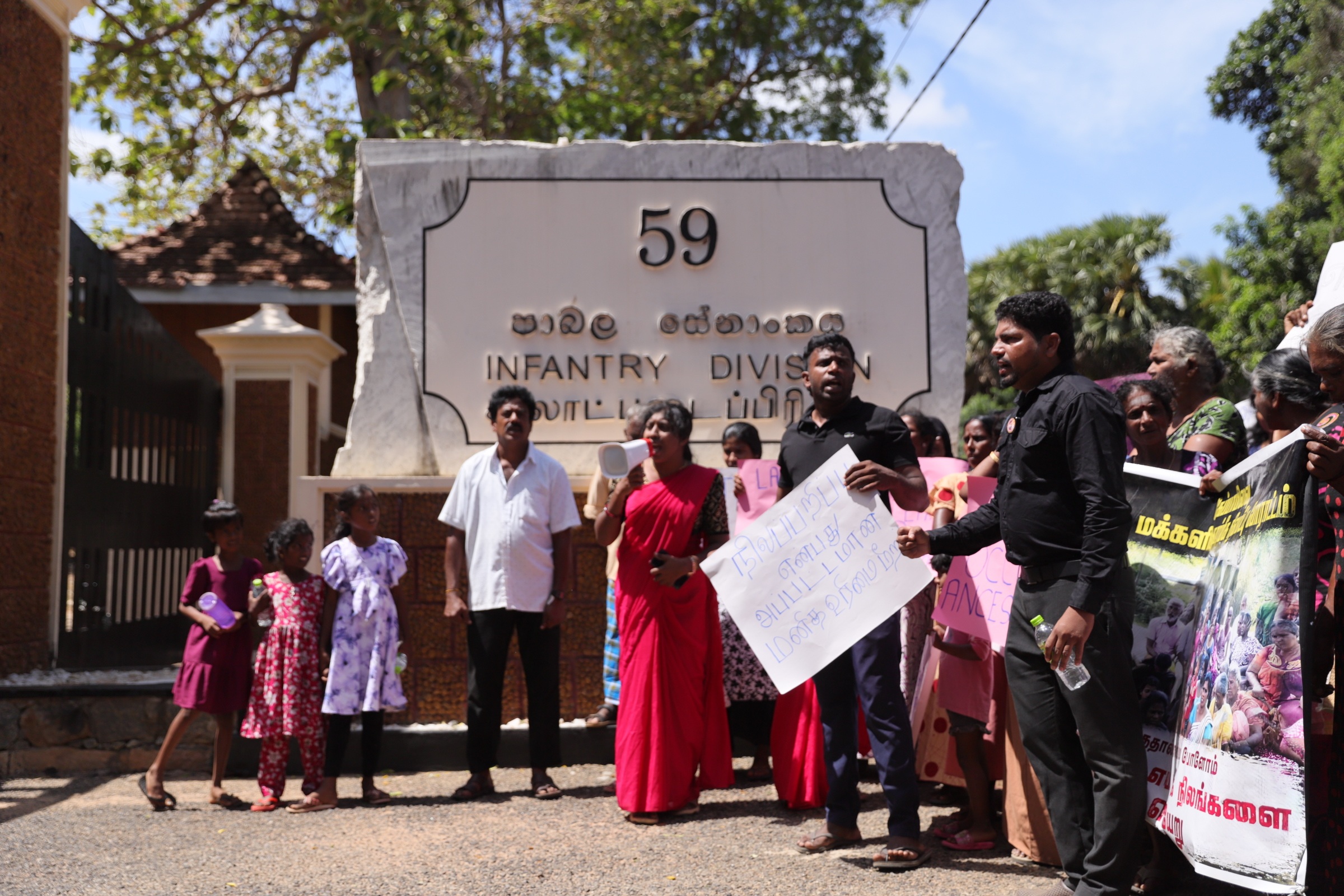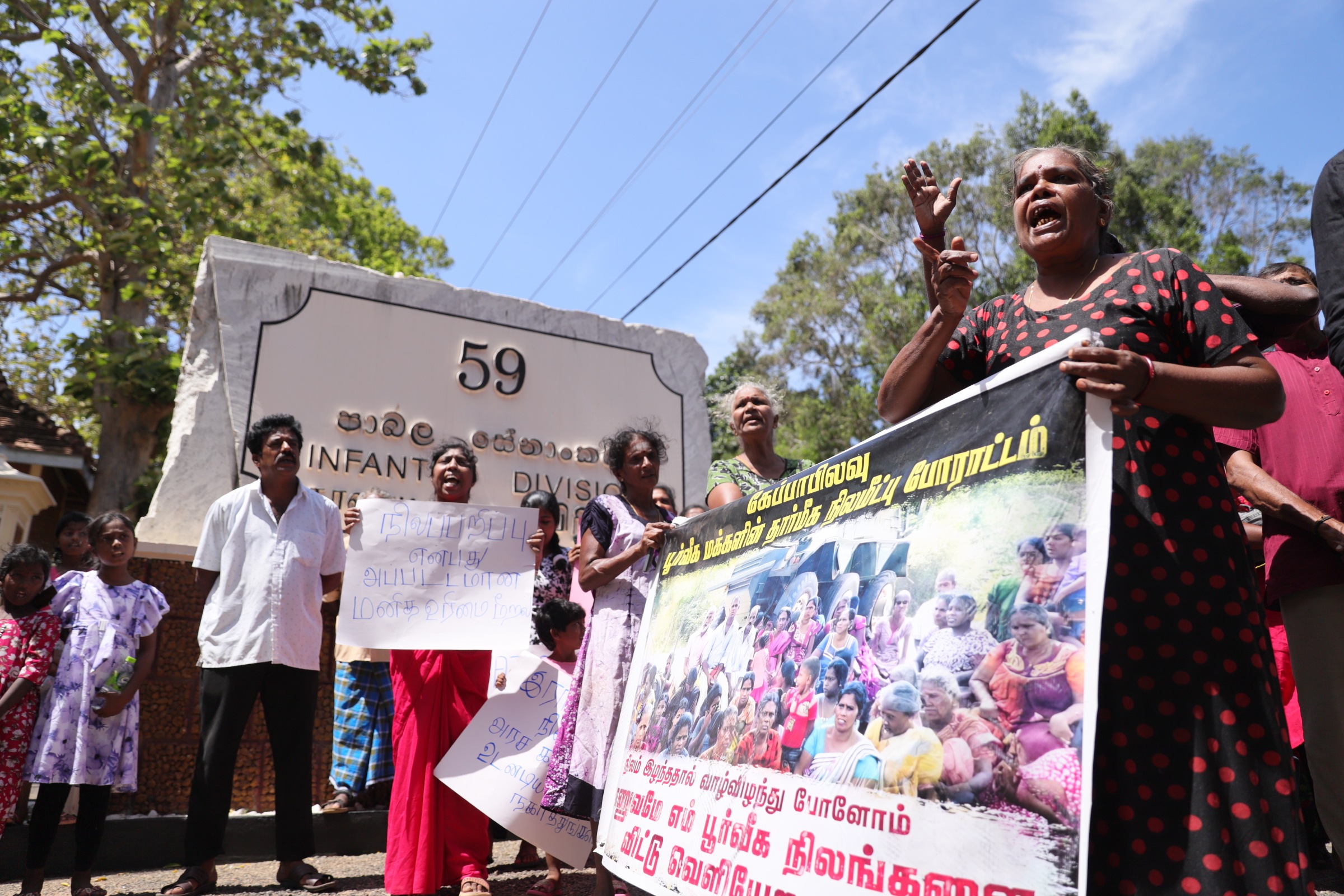
Residents of Keppapulavu in Mullaitivu protested for the twelfth consecutive day on Sunday, demanding the release of their ancestral lands, which have remained under military occupation since 2009.
The demonstrators said 55 families are still unable to access a total of 159.5 acres of residential and agricultural land, and that the continued occupation has prevented them from resettling and rebuilding their livelihoods. Beyond their private property, the protesters called for the return of community facilities that also remain under military control, among them a school, a temple, a church and a community hall, sites they described as essential to the educational, religious, social and cultural life of the village.
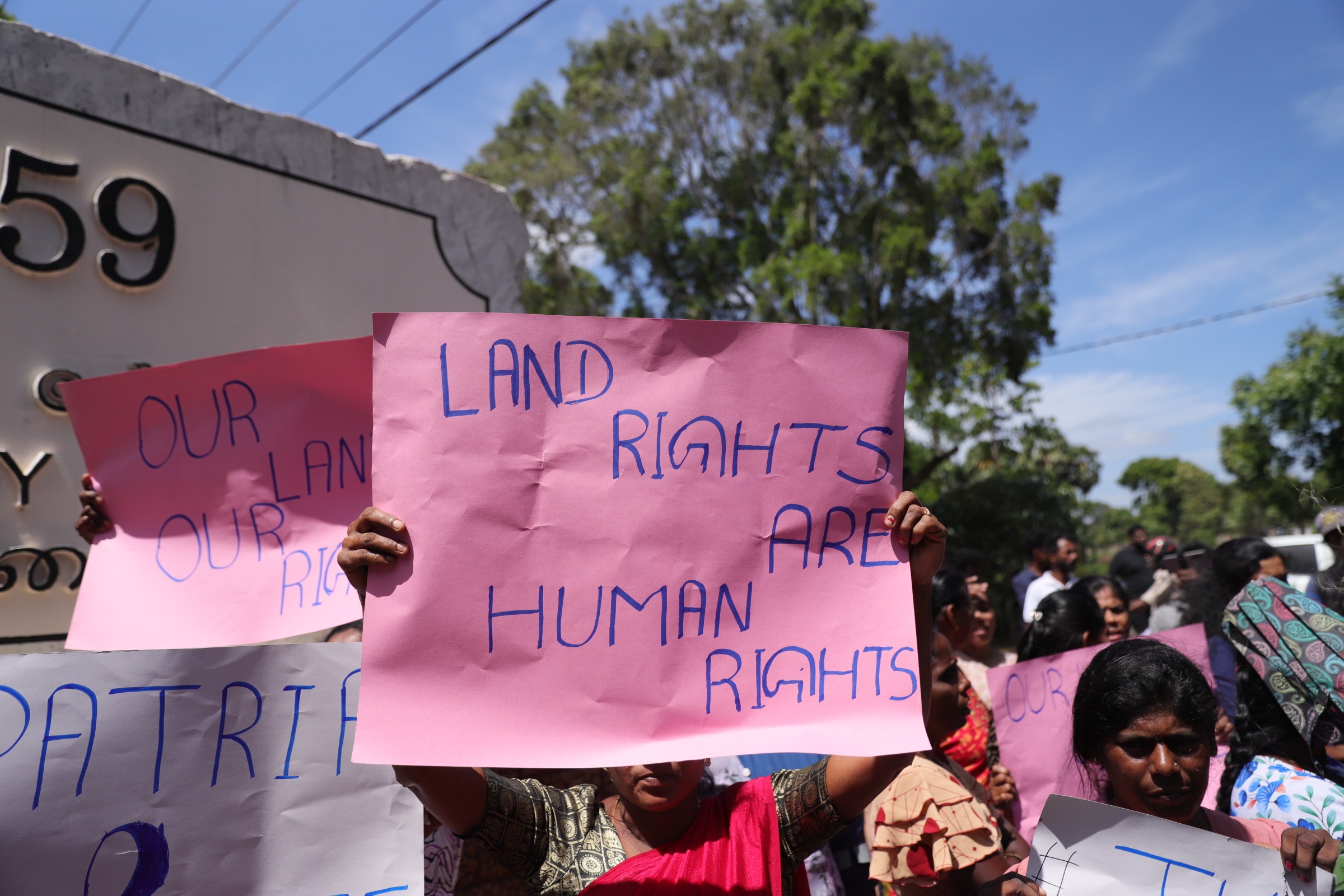
Gathering outside the army's 59th Division, the residents urged the government to take immediate steps to release the land and let displaced families return to their village, saying that despite repeated appeals to successive governments over the years, a substantial portion of it remains inaccessible.
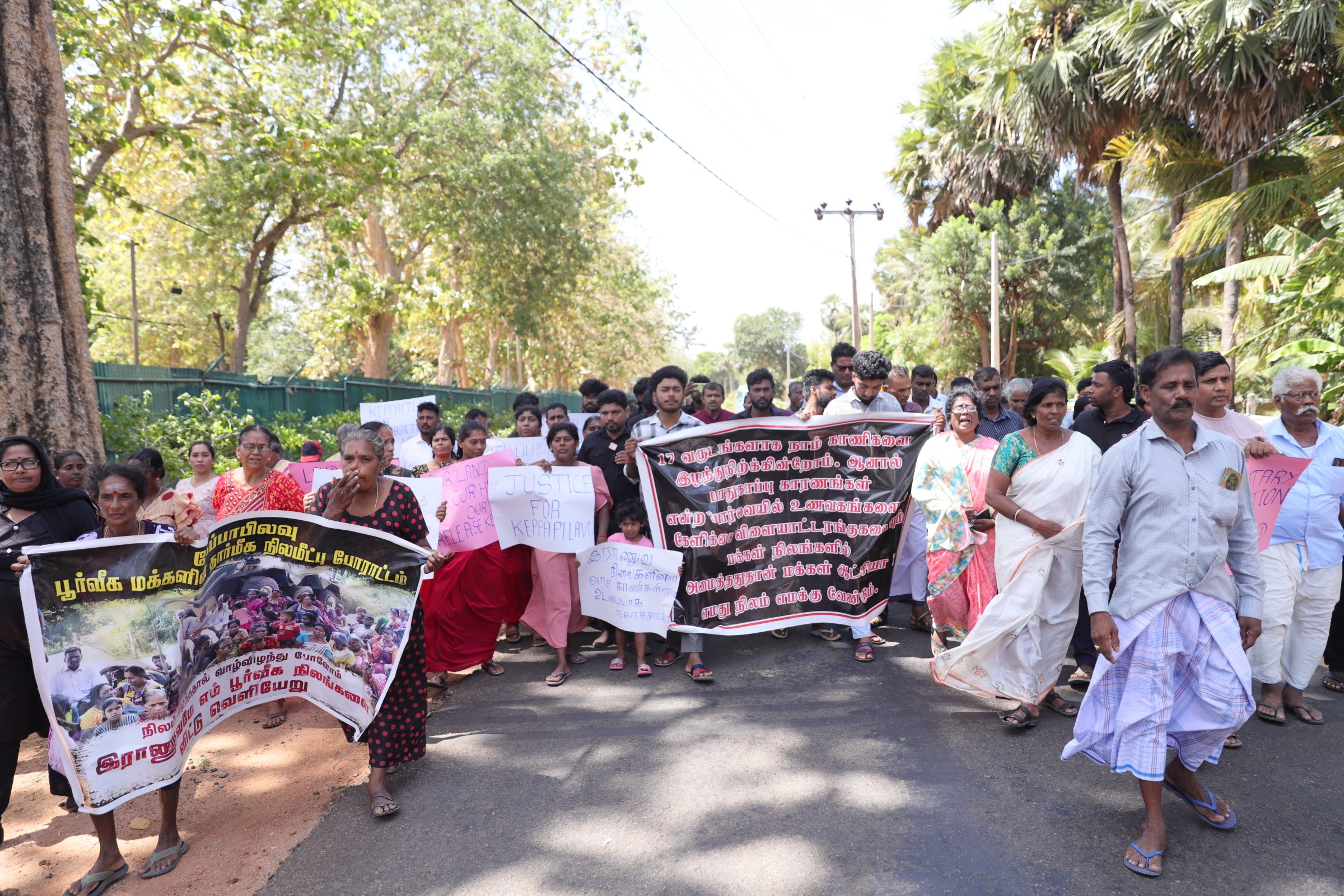
The demonstration follows a hunger strike launched by Keppapulavu residents last month over the same occupation, to which, they say, the government has yet to offer any meaningful response. During that action, soldiers stationed at the nearby camp were seen photographing and filming the demonstrators, raising fresh concern over the surveillance of land-rights activists and displaced families campaigning for the return of their land.
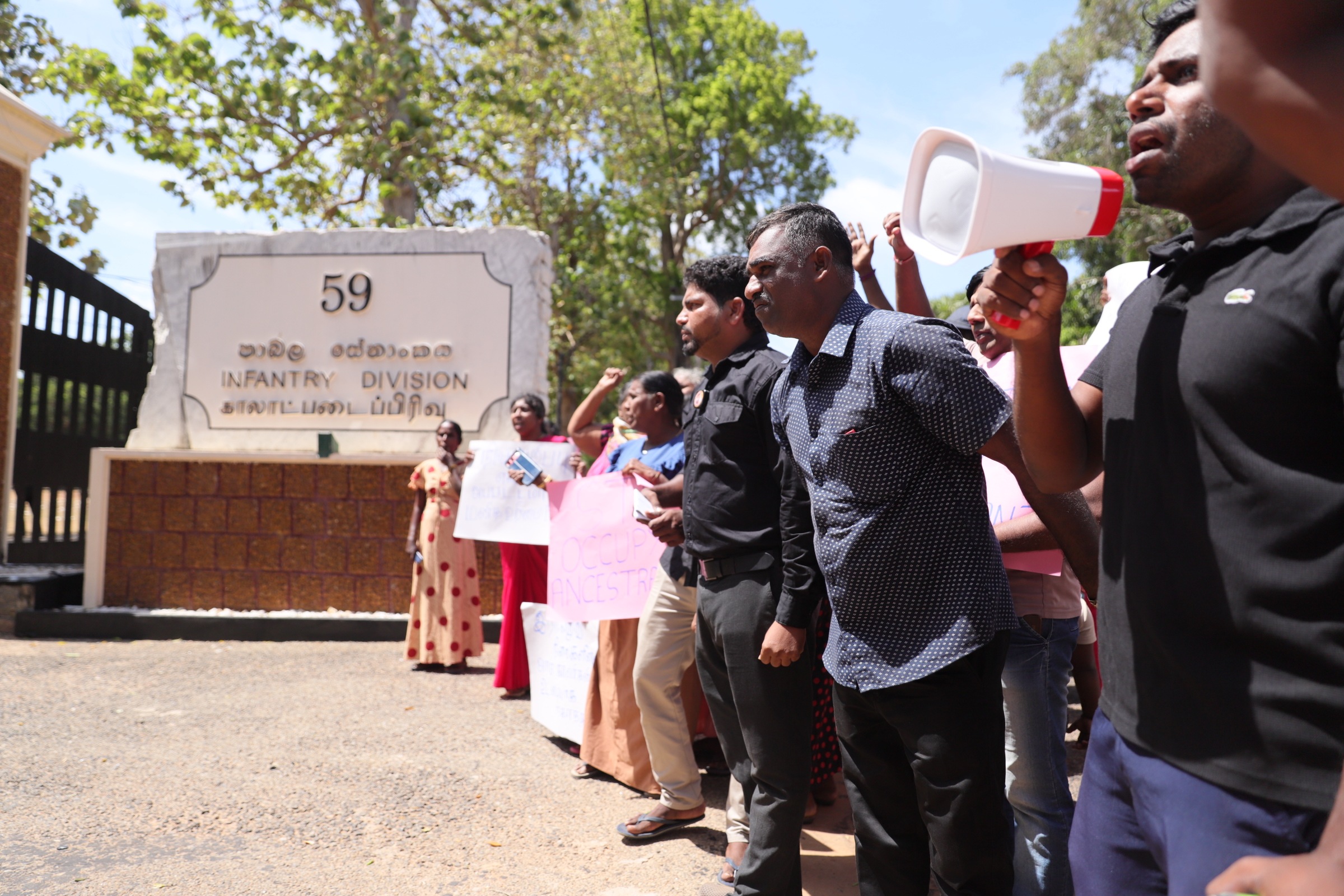
The residents have repeatedly rejected claims that they accepted alternative plots in place of their ancestral property, maintaining that the unconditional return of their original land is the only acceptable outcome. The wider dispute concerns around 171 acres held by the military, comprising 59.5 acres of residential land and 111 acres of agricultural land.
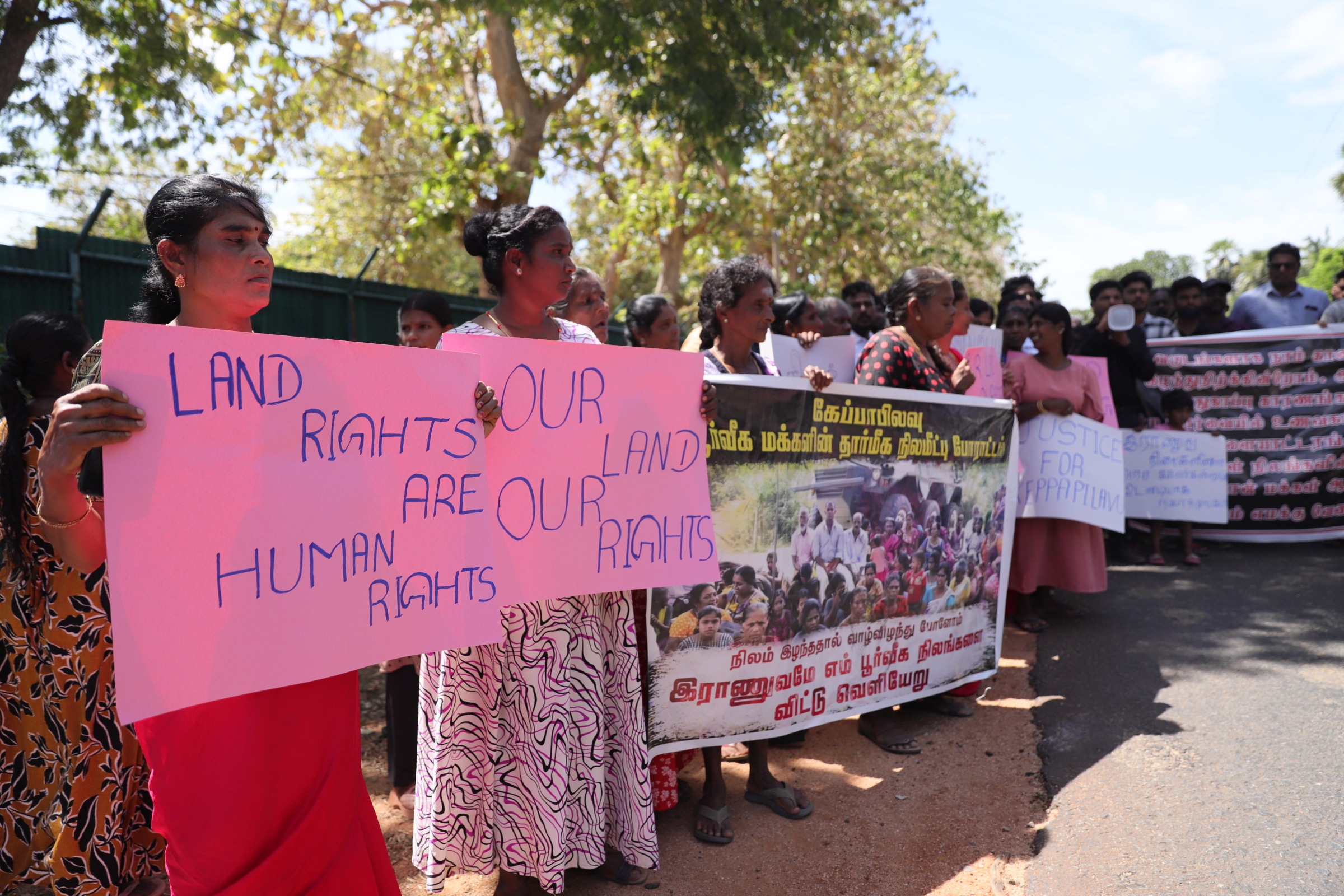
Though the residents had appealed for wider public backing for Sunday's demonstration, only limited support was visible. They vowed nonetheless to continue until all their occupied lands and community properties are returned, calling on the authorities to address grievances that have gone unanswered for more than sixteen years.
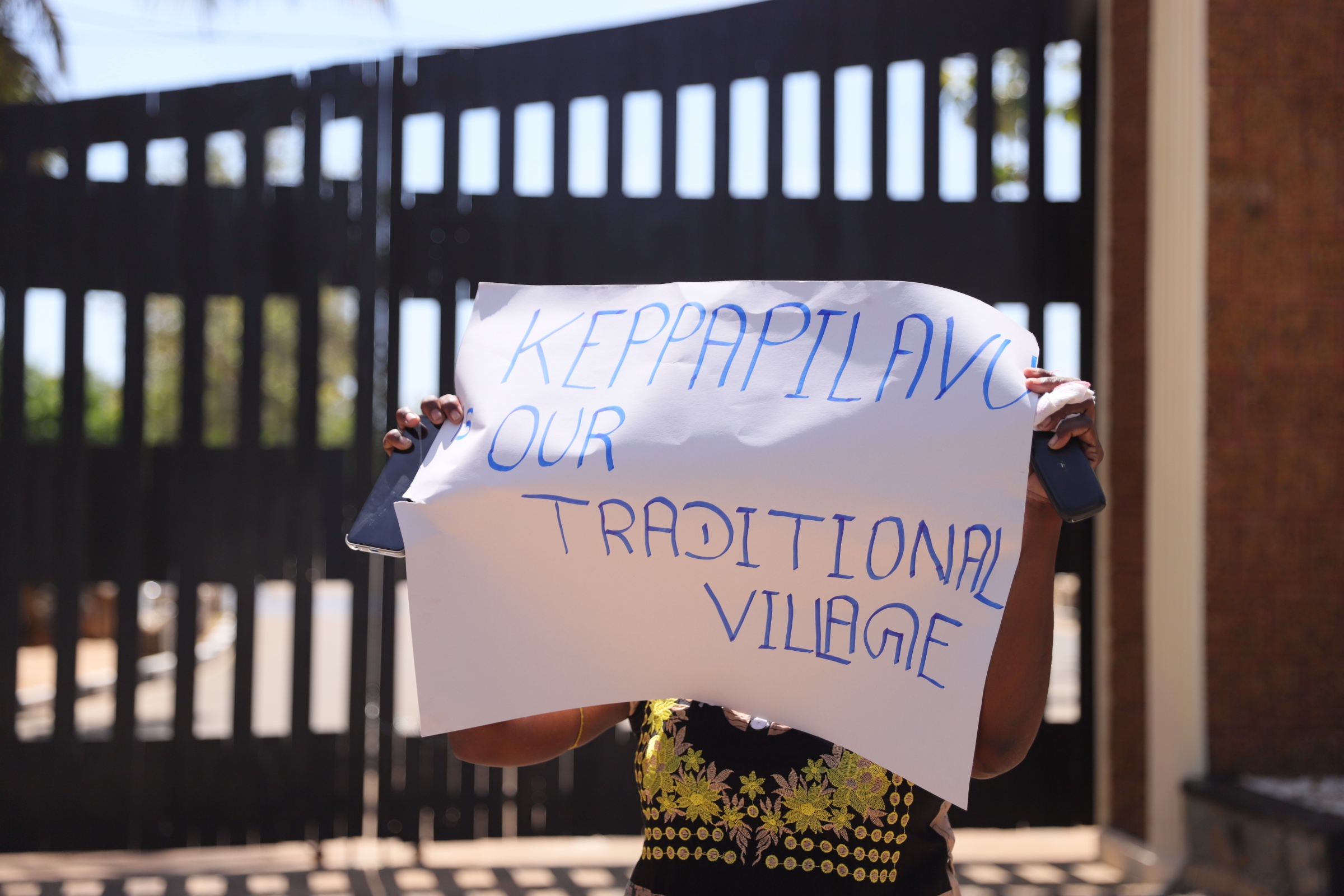
Keppapulavu has become one of the most enduring symbols of the militarised occupation of Tamil land in the North-East. Its families were among those who began continuous roadside protests as far back as 2017, refusing offers of alternative land and holding out for the return of their own, even as the army has retained their homes, their fields and their places of worship, and put much of the seized land to its own use.