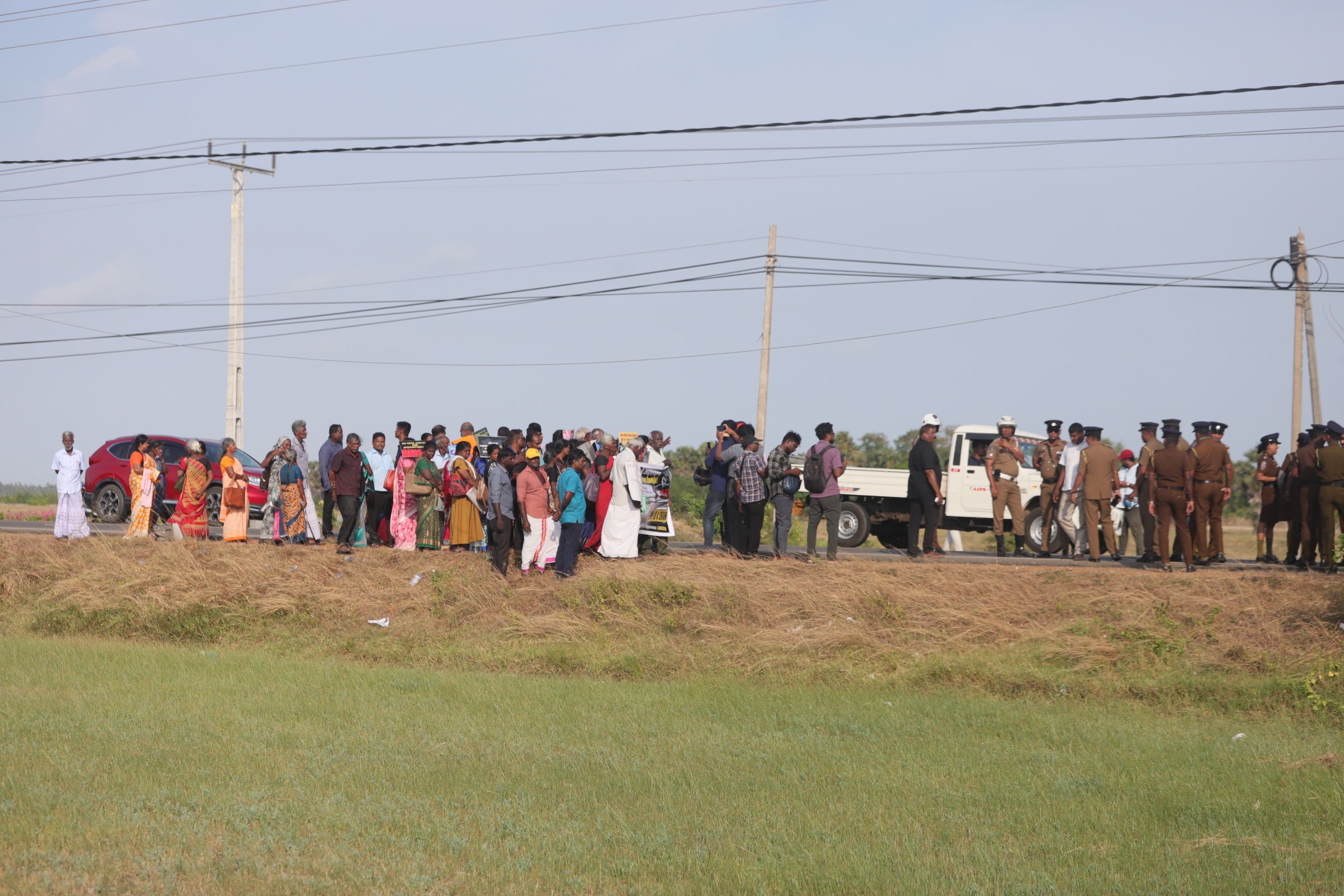
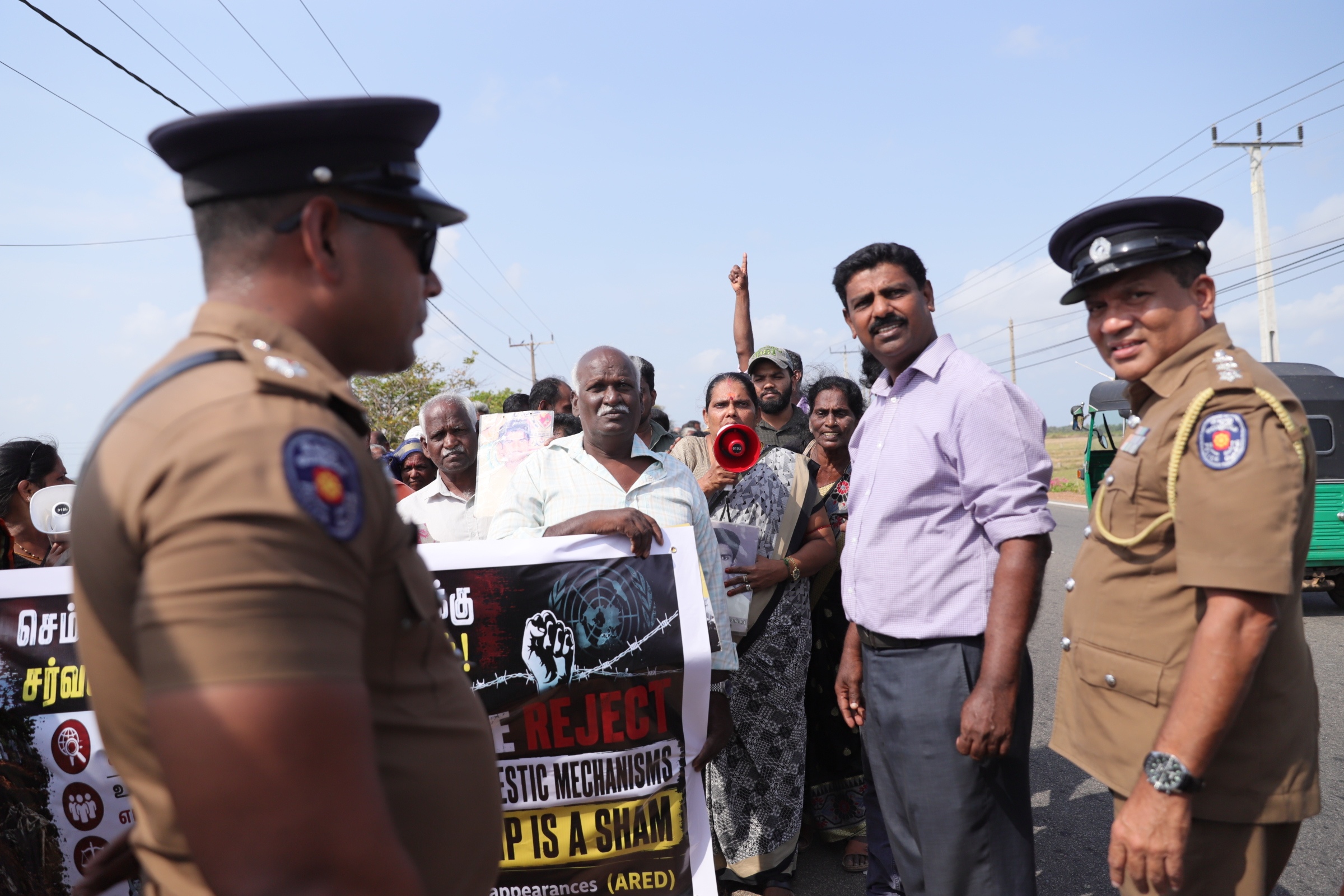
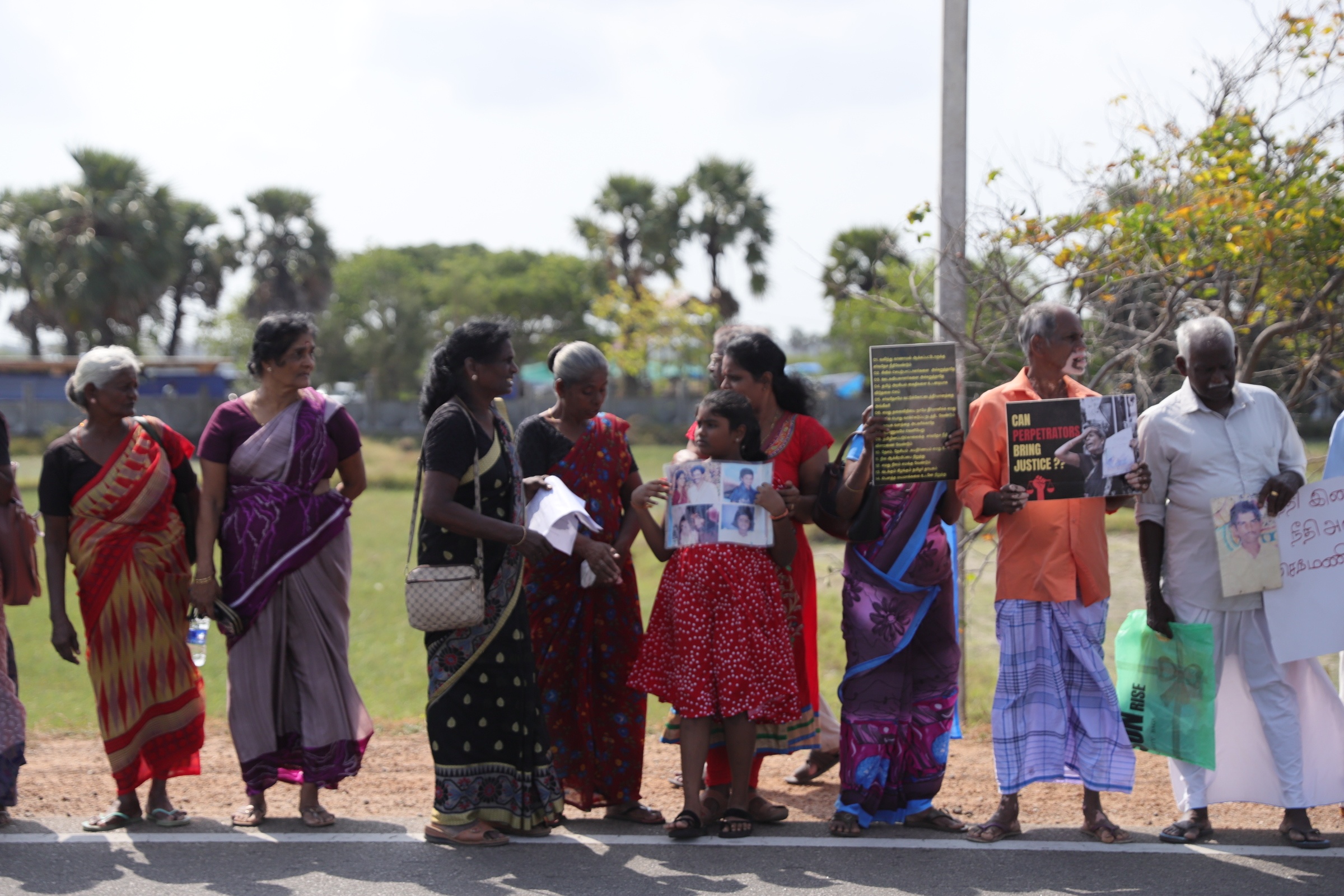
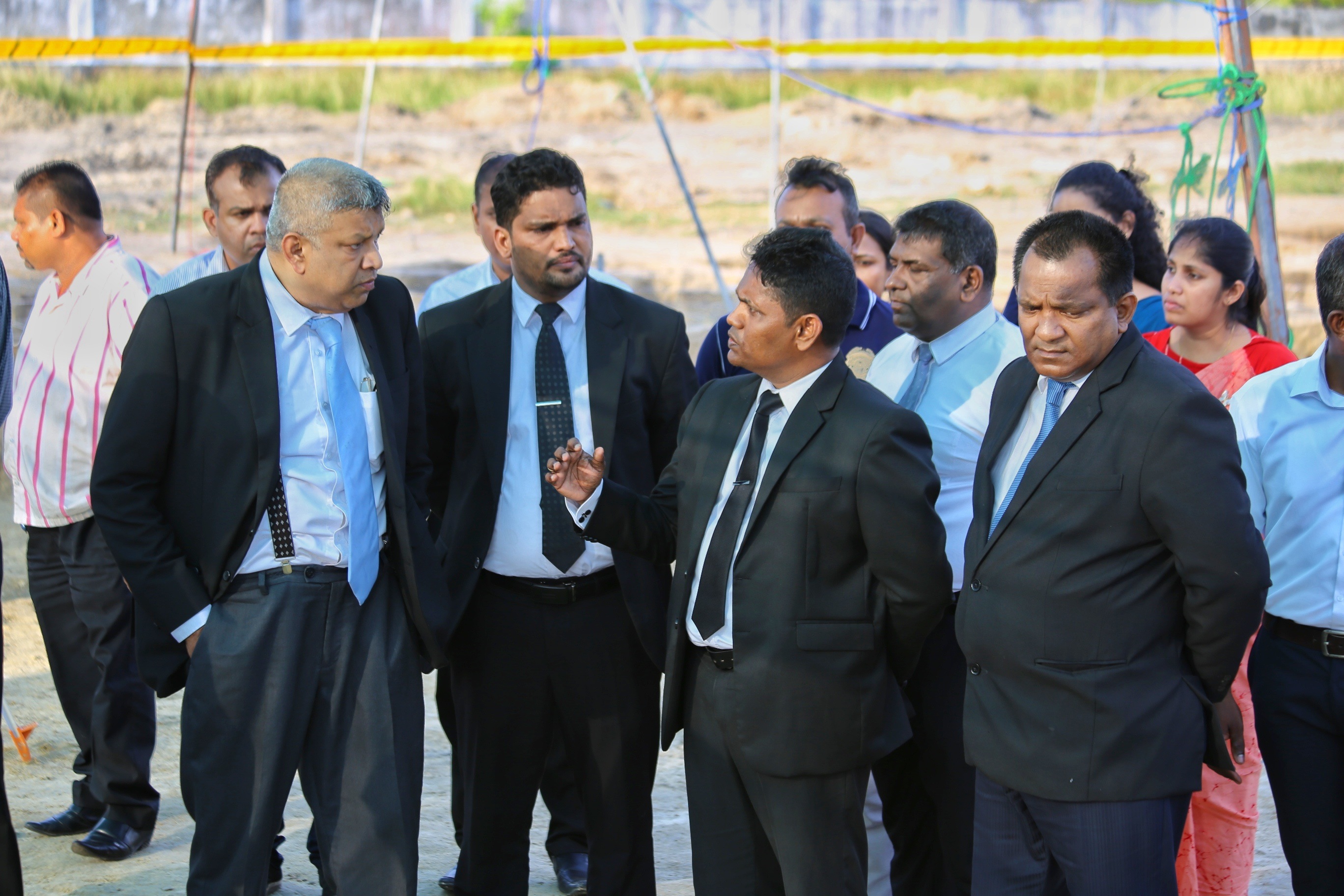
Families of Tamil victims of enforced disappearance protested near the Chemmani mass grave excavation site in Jaffna on Friday as Sri Lanka's Justice Minister, Harshana Nanayakkara, and officials from the Office on Missing Persons (OMP) proceeded past the demonstrators without stopping to engage with them.
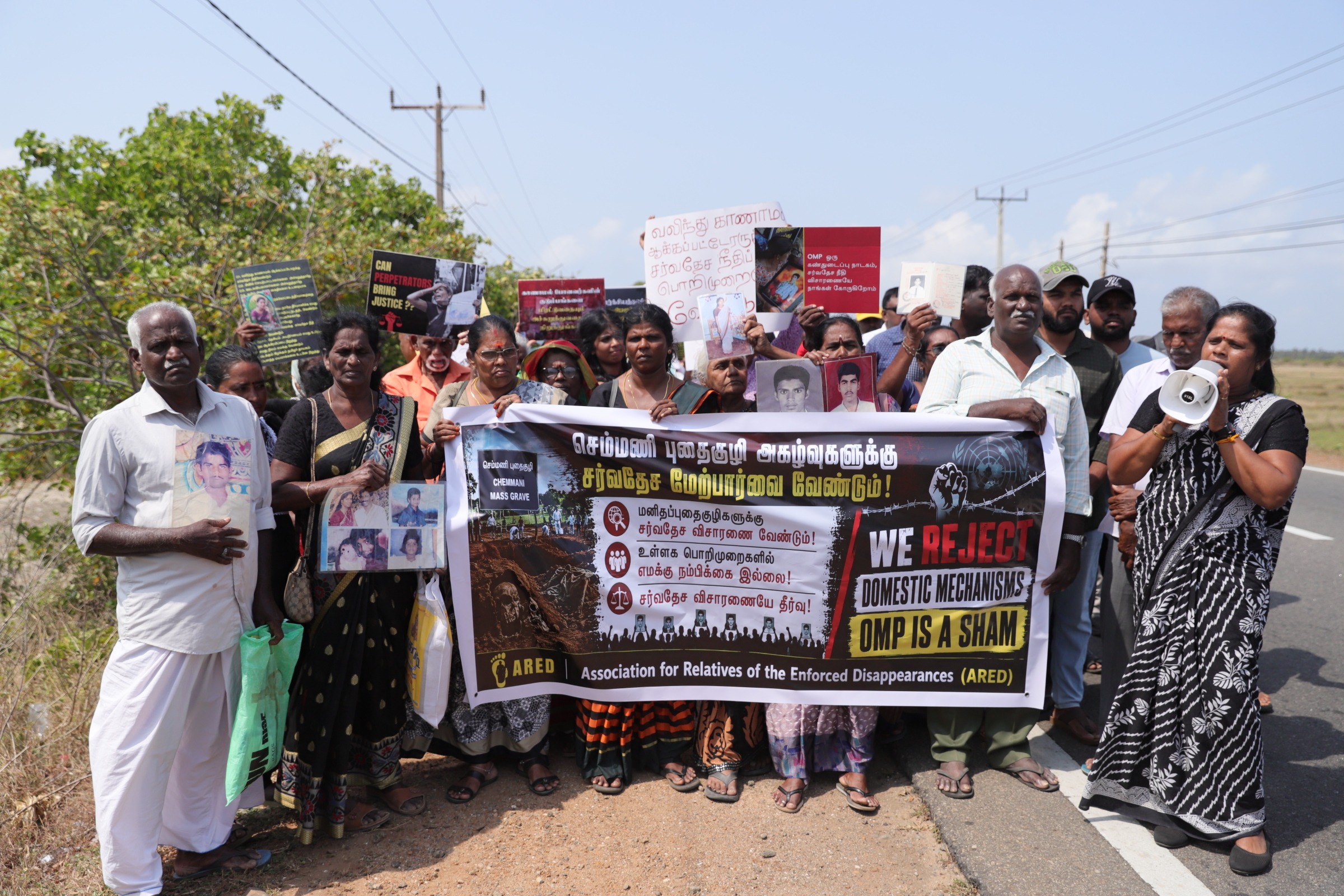
The demonstration took place along the A9 road adjacent to the excavation site, where relatives of the disappeared called for international supervision of the ongoing excavation and investigation.
Rejecting Sri Lanka's domestic accountability mechanisms, they demanded an independent international justice process to address enforced disappearances.
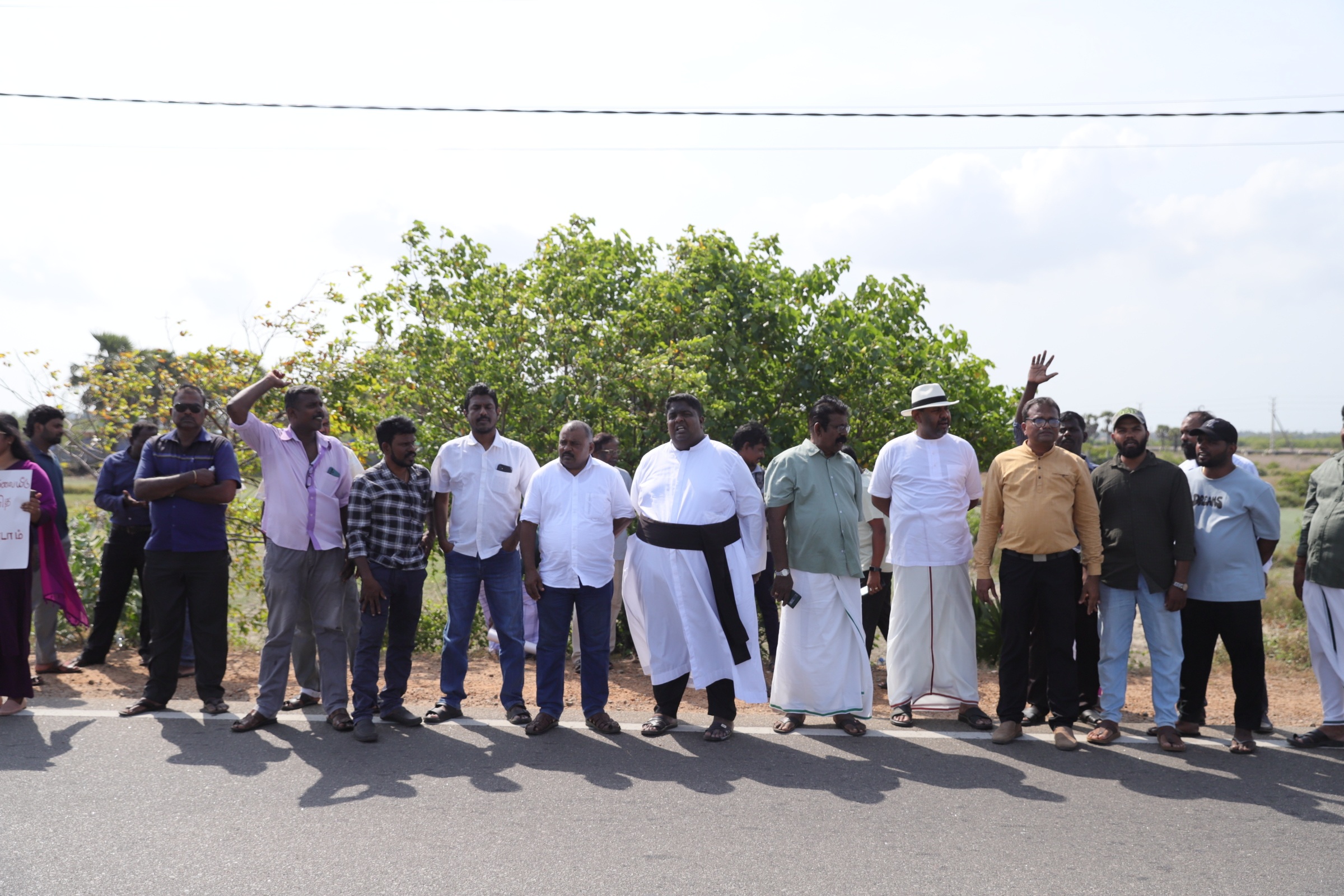
A heavy Sri Lankan police presence was deployed during the minister's visit, and police had obtained a court order against seven individuals, among them relatives of the disappeared, prohibiting them from blocking the road or disrupting the visit.
Despite the restrictions, the families pressed on with their demonstration, reiterating their demands for international involvement to secure truth, justice and accountability.
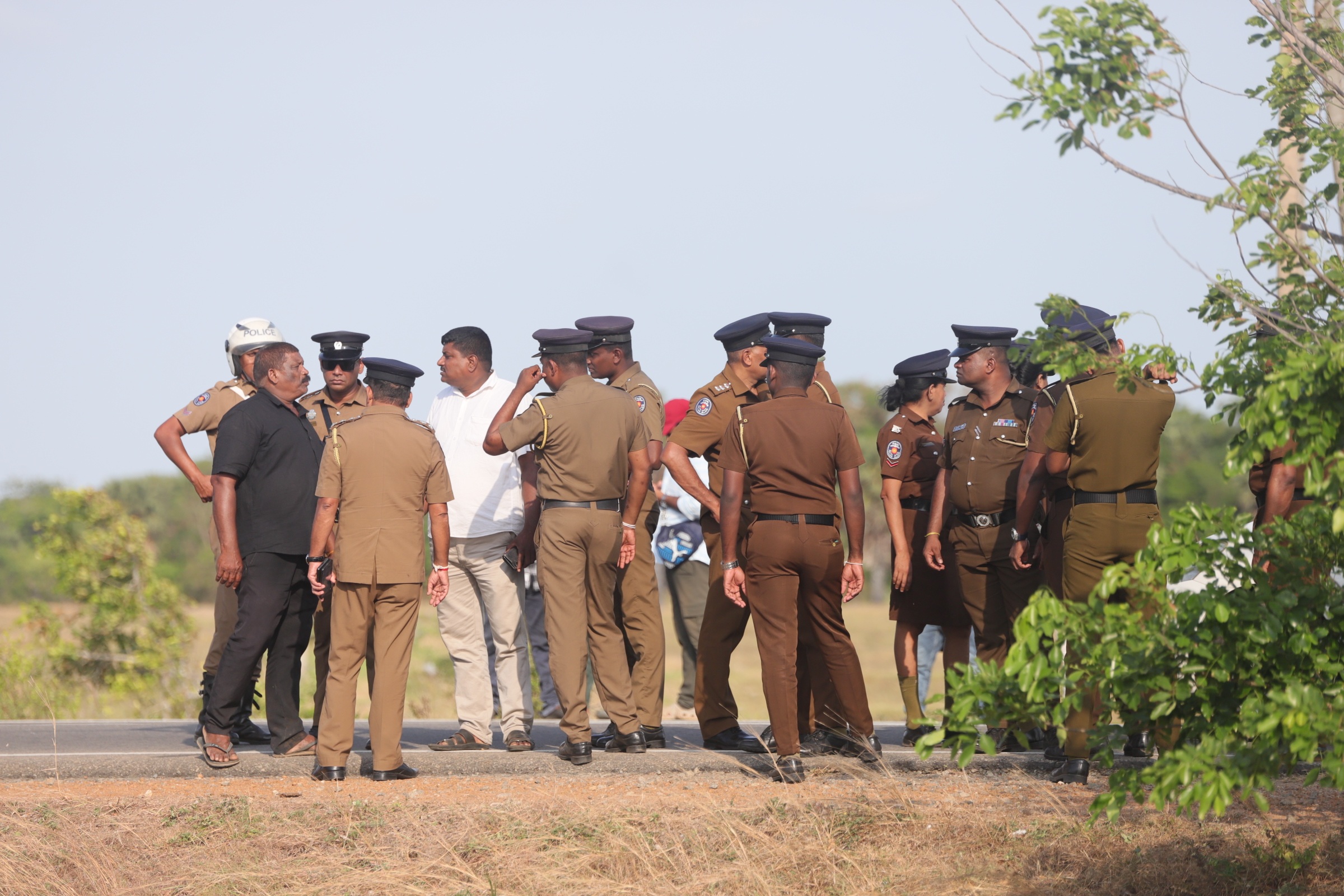
As the protesters raised slogans and voiced their demands, the minister and the accompanying officials walked past without halting. Those gathered questioned how they could be expected to believe that justice would be delivered when officials would not even stop to hear them.
Nanayakkara, who visited on the 29th day of the third phase of excavations, told reporters that the government had allocated the necessary funding for the work and was prepared to finance subsequent stages, and that the Ministry of Justice would take all necessary steps to ensure justice over the Chemmani graves. The current government, he claimed, would not deceive Tamils as he alleged previous governments had done, and Tamils could place their trust in it.
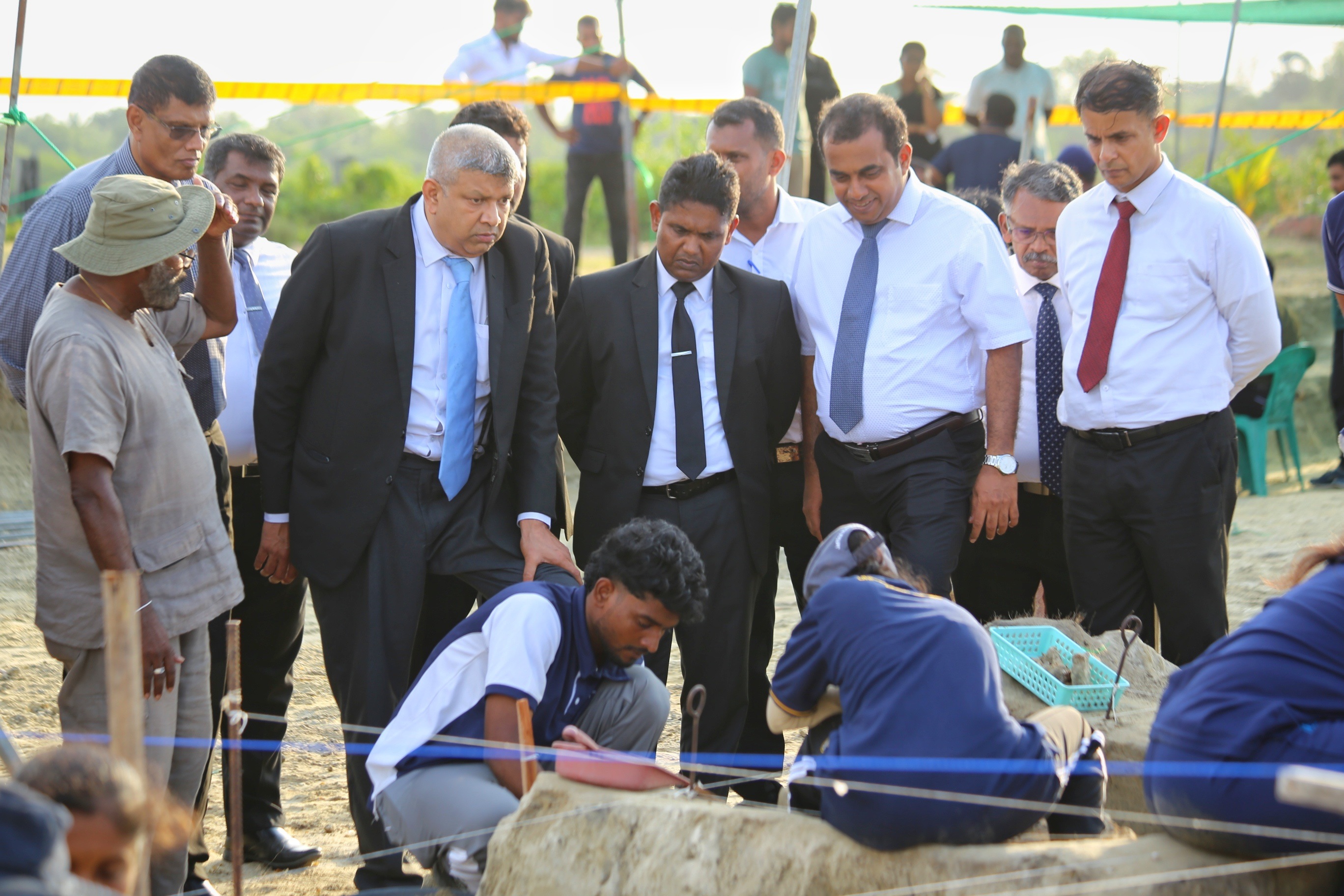
Those assurances were offered on the same visit during which he declined to stop for the families gathered at the roadside.
The minister added that those responsible for crimes would be punished whether they were from the North or the South, but that arrests could not be made without investigations, and that action would be taken against military personnel if evidence emerged that they had been involved in killings.
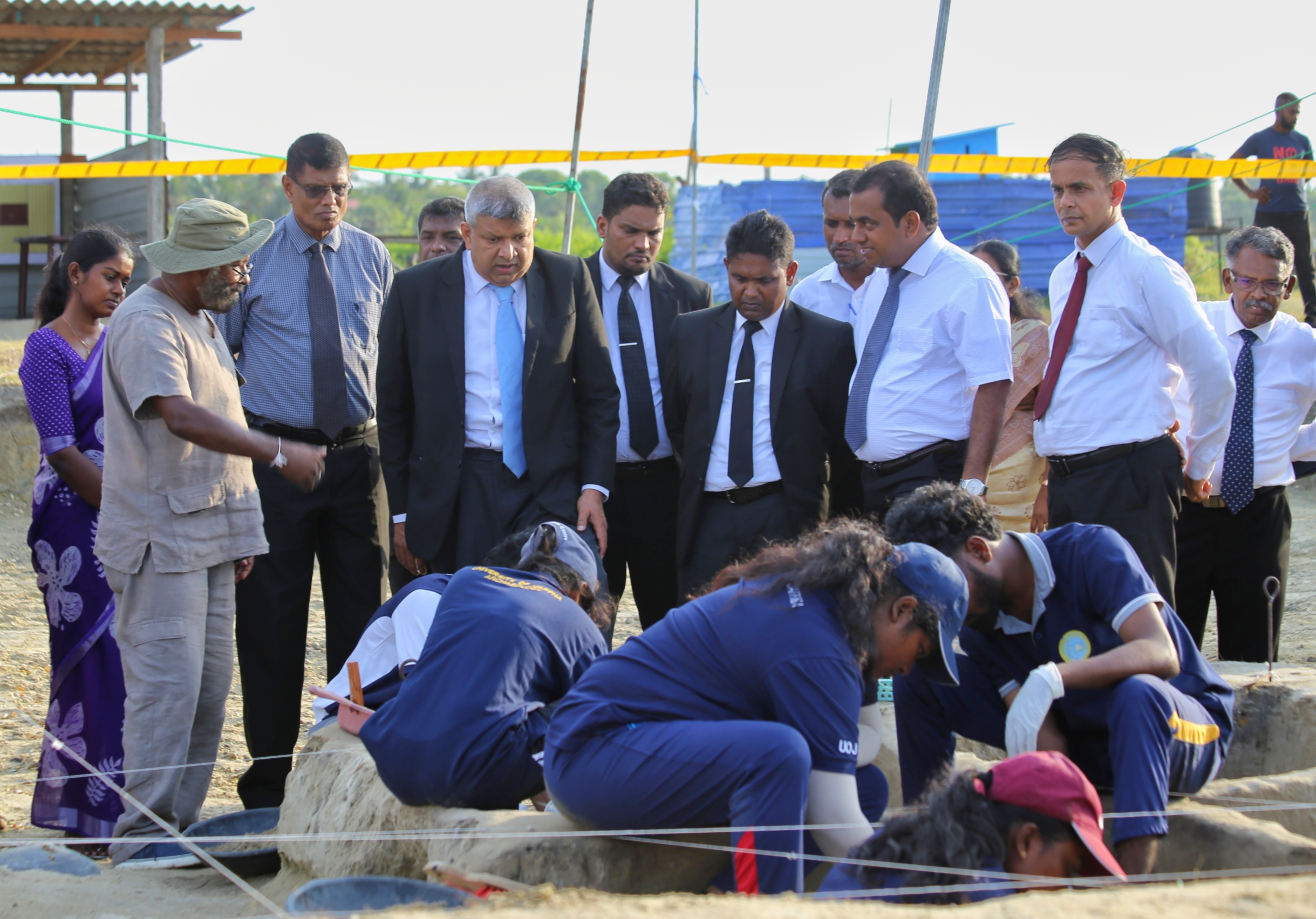
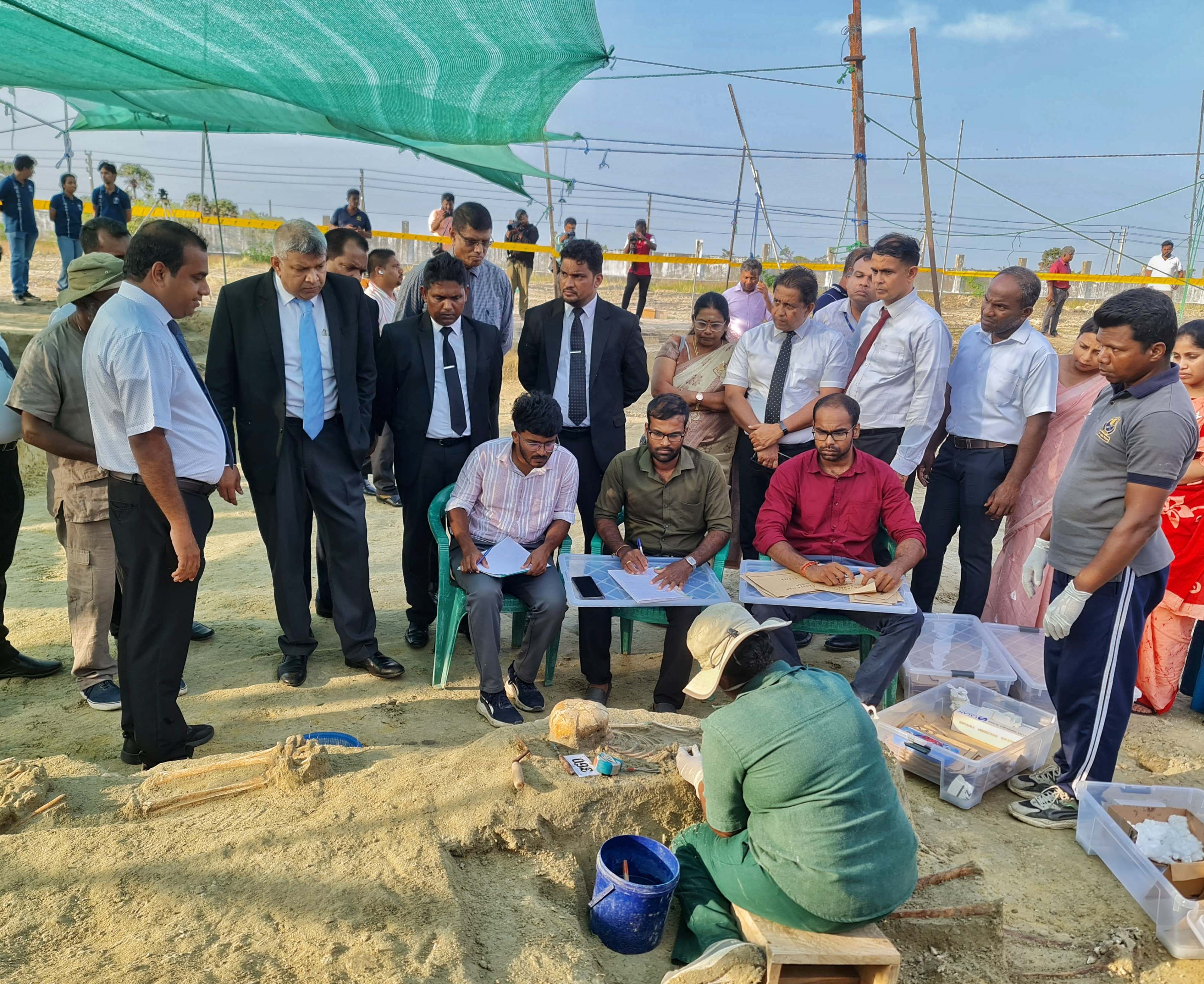
As of Friday, a total of 394 skeletal remains had been identified at the site, of which 370 had been fully exhumed, after three more were recovered and seven newly identified during the day. A large metal object was also found, with skeletal remains inside it, which officials are carefully cleaning and examining.
Chemmani is now the largest mass grave ever uncovered on the island, having surpassed the Mannar Sathosa grave, and is tied to the enforced disappearance and extrajudicial killing of Tamils during the military's occupation of Jaffna.
It first drew attention in 1998, when a Sri Lankan soldier testified that hundreds of bodies had been buried there. The families' insistence on international oversight is rooted in the repeated failure of Sri Lanka's domestic processes, the Mannar excavation among them, where remains were carbon-dated to centuries past in a finding the families rejected, and no accountability followed.
Ahead of the minister's visit, the ITAK acting general secretary and President's Counsel M.A. Sumanthiran had called on the Justice Minister to act immediately to identify the remains and to ensure legal action against those responsible. While skeletal remains continued to be recovered, he said, efforts to identify the victims had remained stalled for more than a year. "Excavating skeletal remains is only the first stage of the process. Identifying who they belonged to is the most important task," he said.
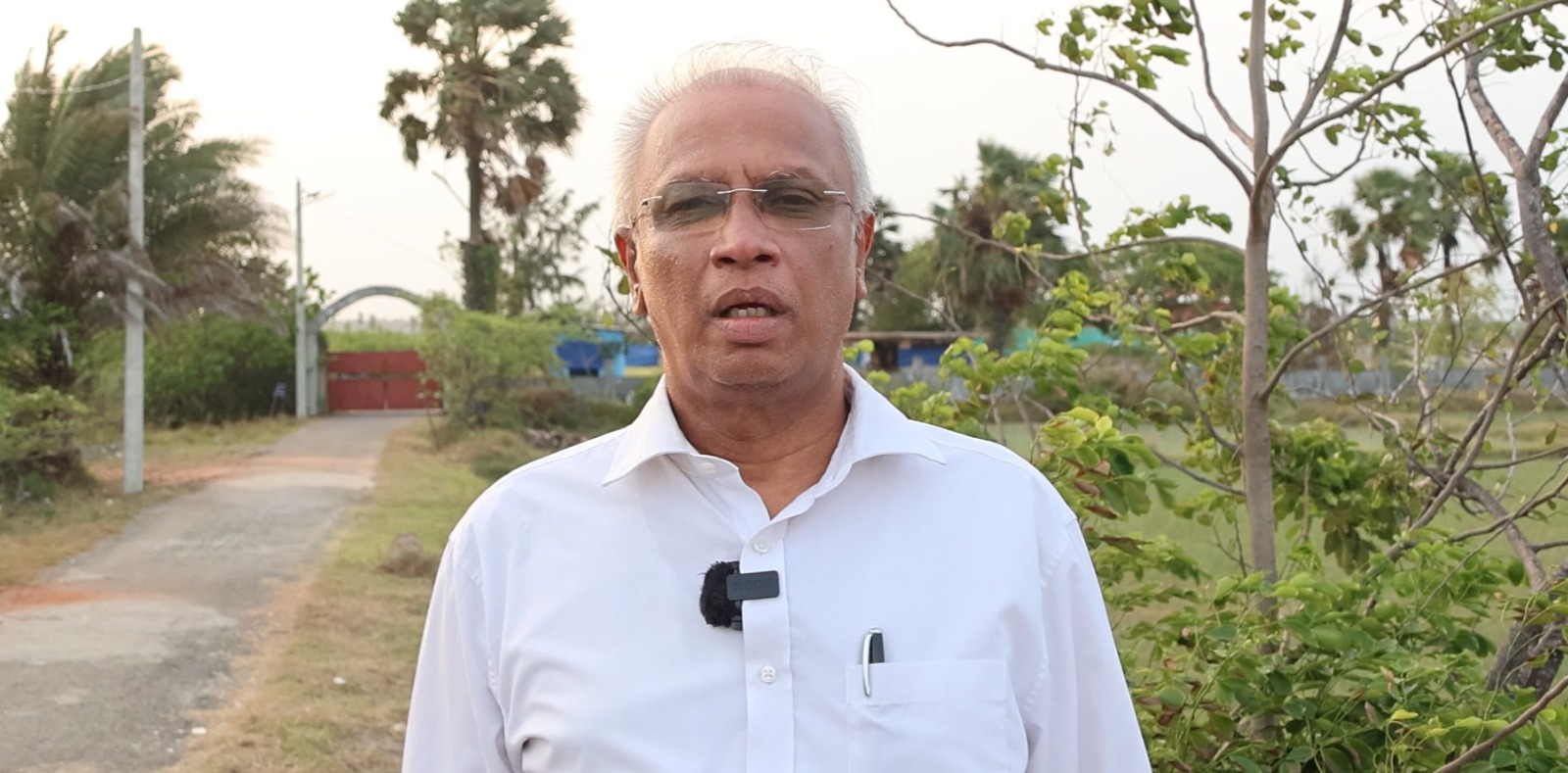
Noting that the recovered remains included not only men but women, children and infants, Sumanthiran said this "clearly demonstrates that people were killed and buried intentionally as entire families", adding that Chemmani was "not an ordinary mass grave". He recalled that the original excavations, prompted by a soldier's 1998 testimony that between 300 and 400 bodies had been buried in the area, recovered 15 sets of remains that were sent to the University of Glasgow, leading to two identifications.
Sumanthiran said requests had been made, and a court order issued, for the remains now being recovered to be sent to internationally recognised universities or laboratories with the necessary expertise, recalling that the minister himself had previously said international expertise would be sought if Sri Lanka lacked the capacity to carry out DNA analysis. A year on from the resumption of excavations, he warned, identification had still not begun, and he urged that legal action be pursued without delay against those responsible for what he called "these heinous crimes".