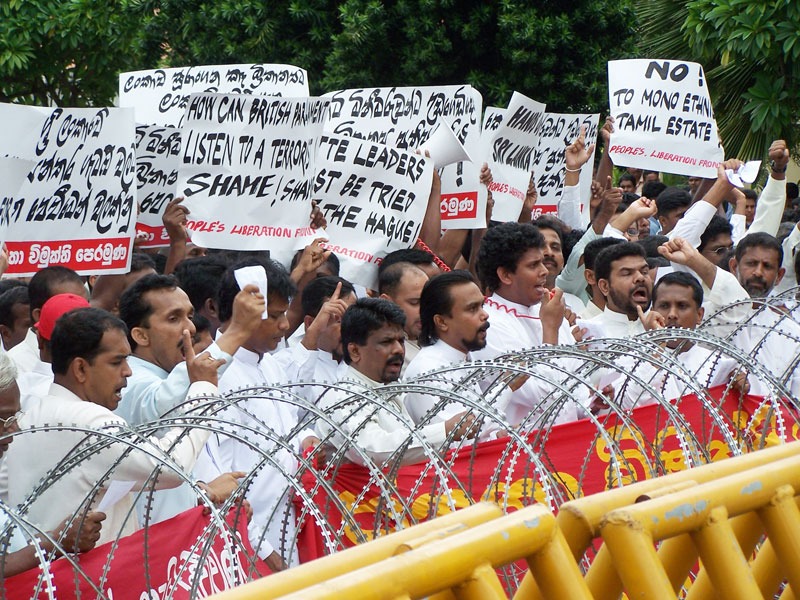
A 2007 anti-peace process protest outside the British High Commission in Colombo, with Dissanayake in the front row.
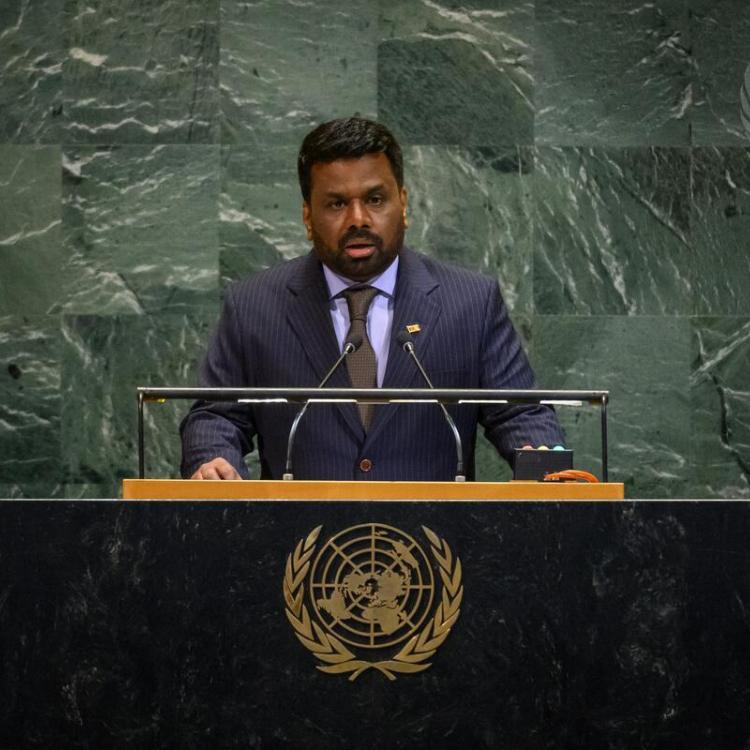
Sri Lankan president Anura Kumara Dissanayake’s call at the United Nations for a ceasefire in Gaza drips with hypocrisy. The very man who stood on platforms railing against peace for Tamils now speaks the language of international humanitarianism. For Tamils on this island, his words are hollow and an insult.
When the Liberation Tigers of Tamil Eelam (LTTE) signed a ceasefire agreement with Colombo in 2002, Dissanayake was amongst the most vociferous critics. He fumed in parliament that the deal laid the “foundation to establish a separate state,” and led a 116-kilometre march against peace. His Janatha Vimukthi Peramuna (JVP) built its political fortune on opposing negotiations and backing war. By 2004, the party had thrown its lot in with Mahinda Rajapaksa and Sinhala nationalists, demanding an end to the ceasefire and endorsing a military solution.
The result was genocide. Tens of thousands of Tamils slaughtered, hospitals bombed, surrendering civilians executed, food and medicine blockaded. For this, Dissanayake and the JVP provided full-throated support. At no point did they demand a ceasefire. At no point did they raise their voices for the protection of Tamil lives.
Today, as Gaza burns, Dissanayake tells the UN that “no one has the right to inflict pain and suffering on another to enhance one’s own power.” Yet he has repeatedly vowed that no Sri Lankan soldier will ever be punished for war crimes. He has embraced accused war criminals as allies, and dismissed Tamil calls for international justice, claiming, “even the victims do not expect anyone to be punished.”
This is the same man who assures Sinhala Buddhist monks that Article 9 of the constitution, which entrenches Buddhism above all other faiths, will remain sacrosanct. The same leader who does not even acknowledge the brutal militarisation of the Tamil homeland.
If Dissanayake truly believed in ceasefires, he would confront the crimes committed here. If he truly believed in protecting children from the horrors of war, he would recognise Mullivaikkal alongside Gaza. Instead, he uses the suffering of Palestinians to launder his own image, courting international applause while burying Sri Lanka’s bloody history.
Tamils know better. We know that a man who once marched against ceasefires and cheered on genocide cannot be trusted when he speaks of peace. His words in New York will mean nothing so long as the truth in Mullaitivu, Batticaloa, and Jaffna remains denied, and justice for the Tamil genocide remains obstructed.
_____
Theepan is a staff writer at the Tamil Guardian.