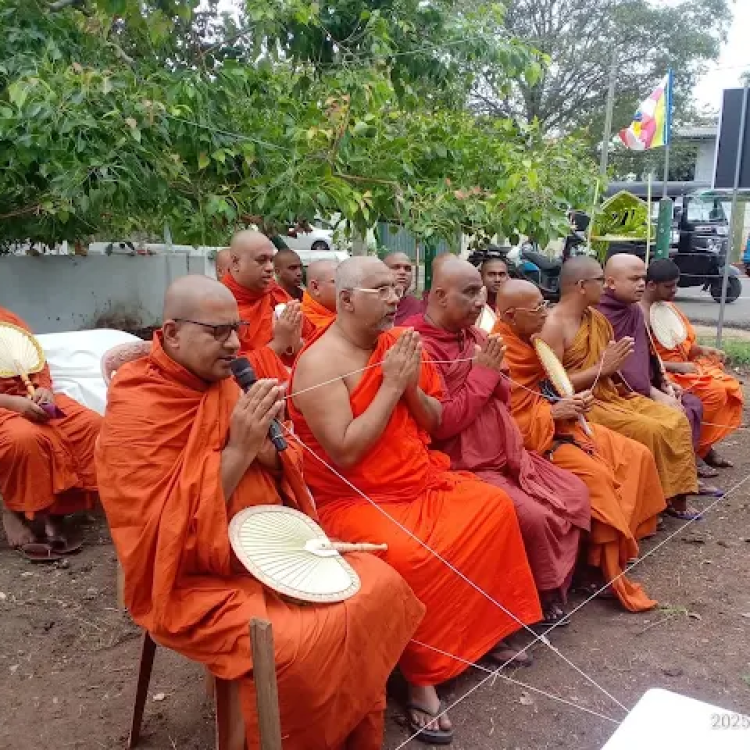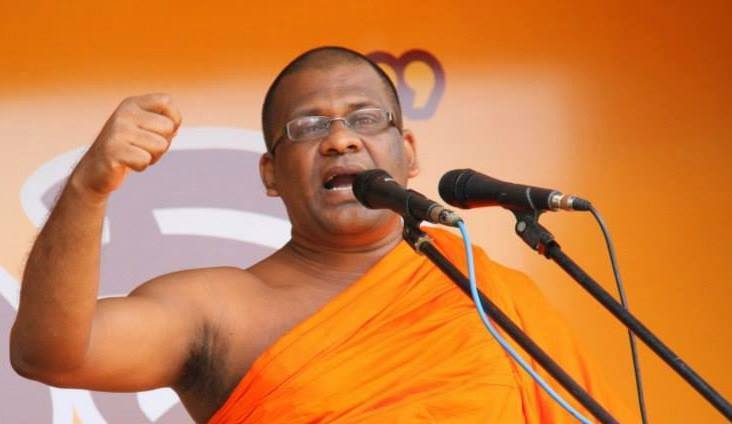
The extremist Sinhala-Buddhist group Bodu Bala Sena (BBS) has entered the growing controversy in Trincomalee, as its General Secretary, Galagodaaththe Gnanasara, travelled to the district yesterday to condemn the Coast Conservation Department and police over the removal of an illegally placed Buddha statue on coastal land.
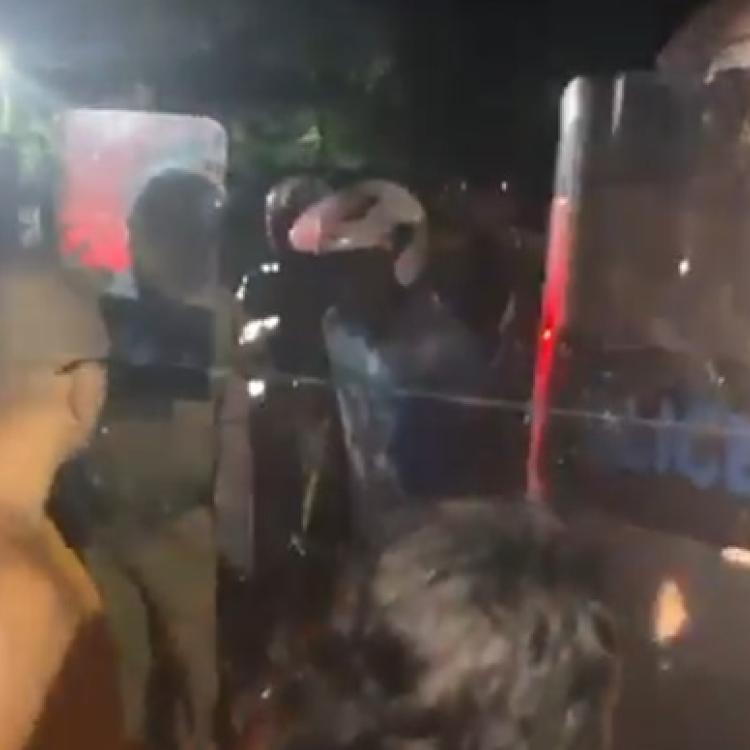
During his visit, Gnanasara Thera accused state officials of “disrespecting Buddhism”, sharply criticising the police for removing a Buddha statue from the recently erected temporary structure. He claimed that officers had acted in a manner insulting to the Buddhist community, despite the construction taking place on coastal reserve land without approval.
Addressing supporters, he warned that “the authority of the Buddhist clergy must not be challenged,” adding that the Buddhist Sangha’s role “cannot be challenged by any entity.” He went further, according to the Daily Mirror stating that Tamil National Alliance should consider “whether Buddhist archaeology or the TNA came to this country first.”
His reference was to the now defunct Tamil political party coalition.
His remarks mirrors the BBS’s long-standing history of incitement, including campaigns targeting Muslims and interventions in land disputes across the Tamil homeland. Gnanasara himself has previously been convicted for contempt of court and received a presidential pardon, returning to public life as a symbol of Sinhala-Buddhist majoritarian power.
Temple files legal challenge as monks fume
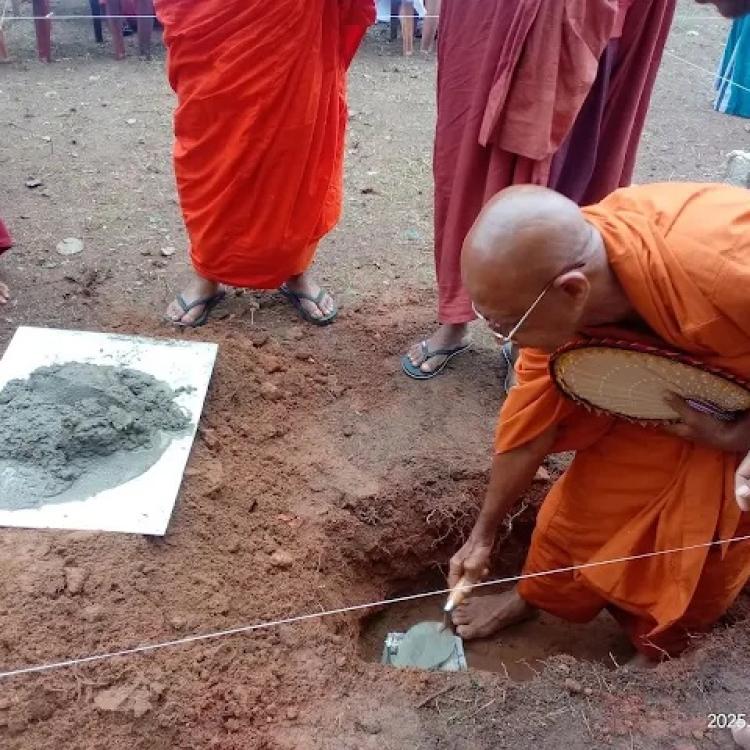
Amid the mounting tensions, the Chief Incumbent of the Viharaya, Kalyanawansa Tissa, has filed a writ petition before the Court of Appeal seeking to block the demolition of structures built on coastal reserve land.
The petition argues that the temple, registered in 1951 under the Amarapura Nikaya, was granted a deed in 2014 by then-Sri Lankan president Mahinda Rajapaksa. It also cites a letter from the Trincomalee Municipal Council indicating it had “no objection” to the development of land identified as No. 57/TG.
The Department of Coast Conservation, however, has stated that only a small 127-square-foot welfare shop was ever authorised, and that the site had since been expanded into multiple unauthorised permanent and temporary structures. A court order had been obtained to remove all illegal construction.
The Court of Appeal has scheduled the petition for hearing on 16 December, instructing both parties to “maintain peace” until then. Officials from the department are expected to conduct a site inspection and present findings to the court.
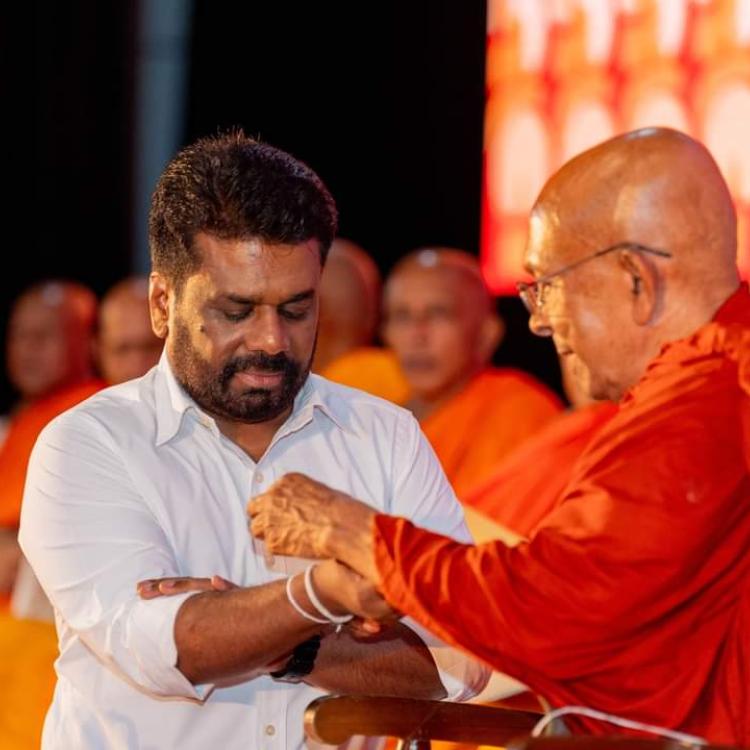
The Chief Prelate of the Sri Lanka Amarapura Maha Nikaya, Venerable Karagoda Uyangoda Maithri Murthy, has also written to the Sri Lankan president Anura Kumara Dissanayake condemning the enforcement action.
The letter claims the police removal of the statue and alleged assault on resident monks constitutes a “blatant violation” of Article 9 of the Constitution, which gives Buddhism “the foremost place.” It demands that Dissanayake halt any demolition work and ensure the safety of the temple and its clergy.
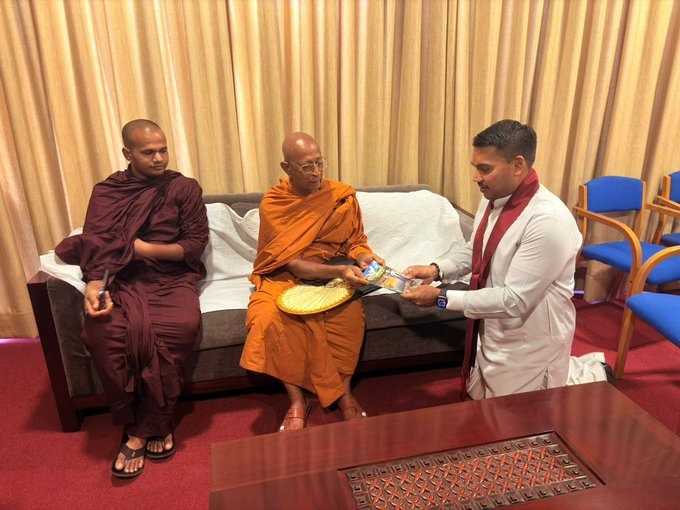
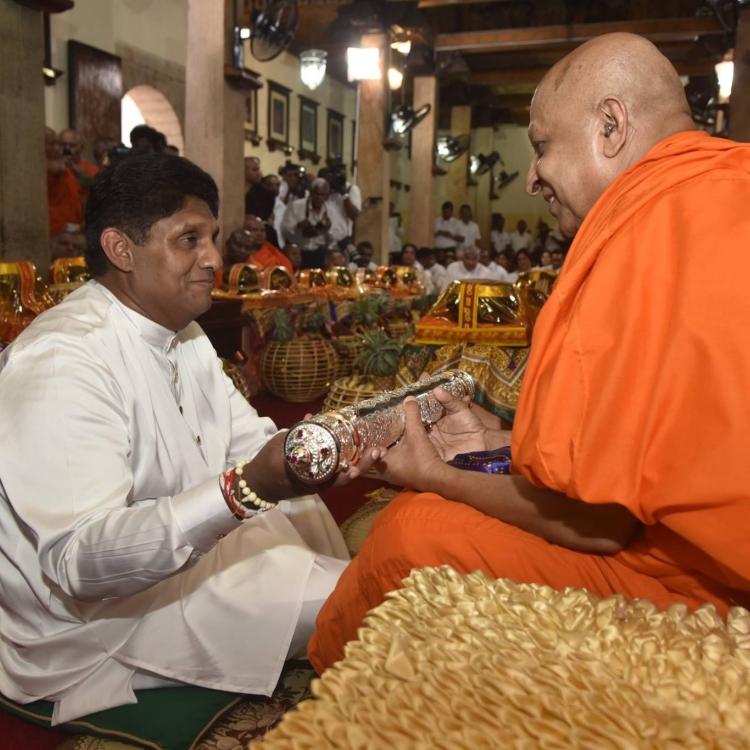
SLPP MP Namal Rajapaksa also entered the fray, meeting with senior monks and describing the removal of the statue as an act requiring “respectful dialogue and understanding”.
Currently, Sri Lanka’s Minister of Public Security Ananda Wijepala claimed the statue had been removed only due to a “threat of potential vandalism,” and that it had been returned to the site. He added that police protection would now be provided for the unauthorised shrine.
The events come against the backdrop of repeated attempts by Sinhala-Buddhist groups to claim land in Trincomalee, where demographic engineering and state-enabled Sinhalisation have accelerated since the end of the armed conflict in 2009. Coastal lands, archaeological designations and state agencies have frequently been used to justify new Sinhala-Buddhist constructions in historically Tamil areas.