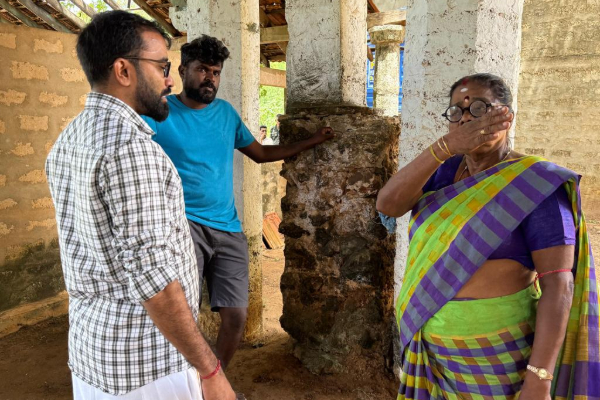
Following decades of military occupation, the Sri Raja Rajeswary Amman Temple in Palaly East has finally been opened for public worship. However, concerns remain as large tracts of land in Valikamam North, including homes, schools, temples, and agricultural fields, continue to be held by the Sri Lankan military.
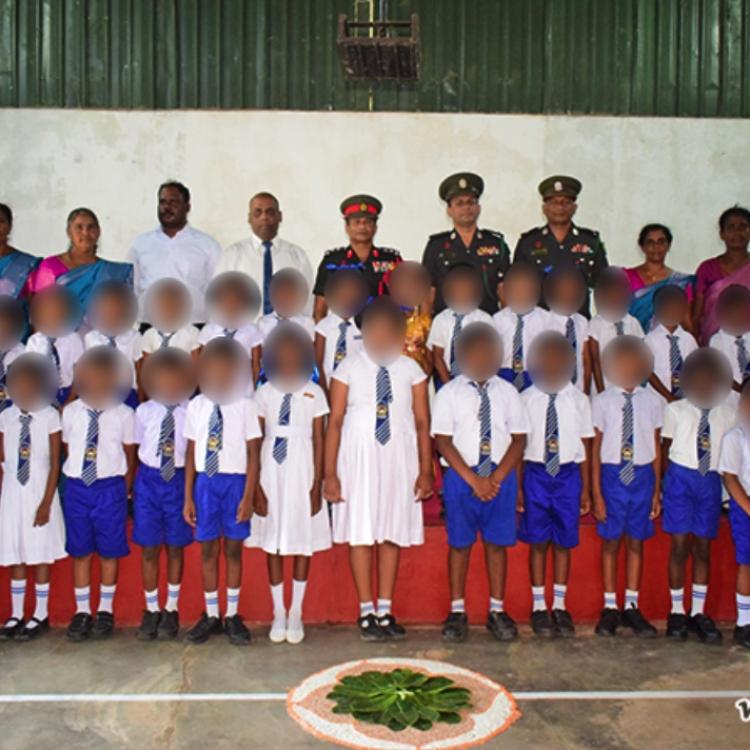
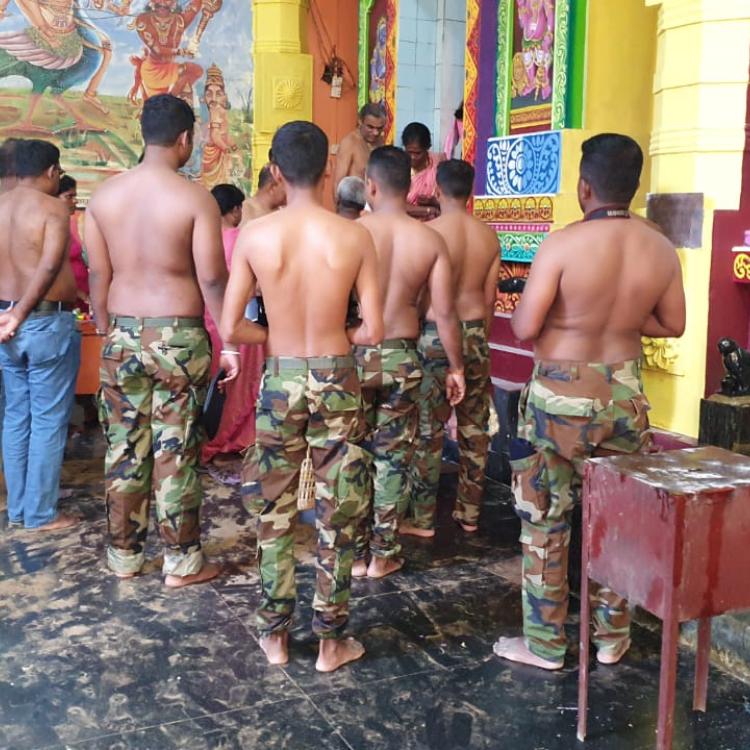
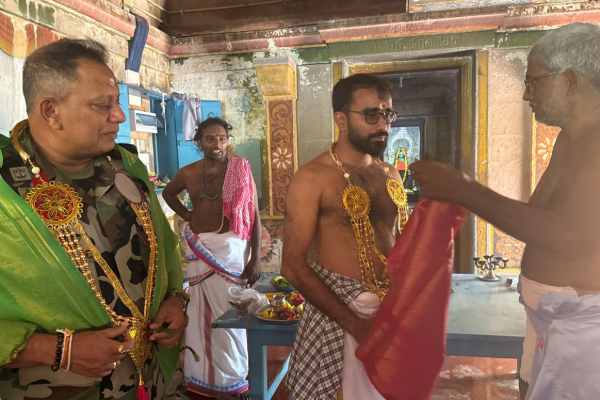
Sri Lankan military officials announced this month that the public may now freely access and worship at the temple. To mark the reopening, a special pooja was held with the participation of Jaffna parliamentarian K. Ilankumaran, military representatives, and a large number of devotees.
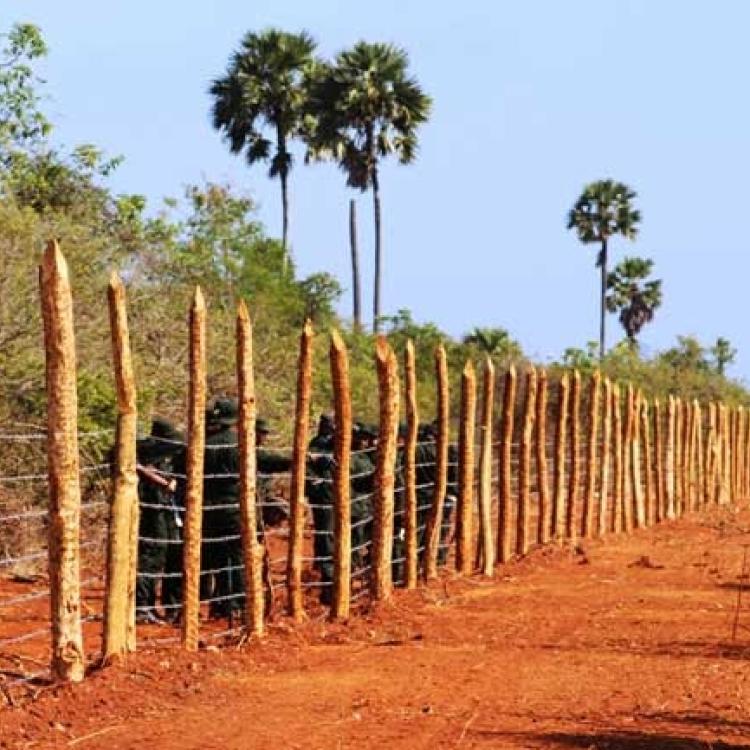
The temple, which dates back generations, had been off-limits to the public since 15 June 1990, when residents were forcibly displaced during the armed conflict. The military subsequently declared the region a “High-Security Zone,” barring civilians from returning to their lands.
During the 2002 ceasefire period, the late Minister T. Maheshwaran secured temporary access to the temple for the Pongal festival through discussions with the Sri Lankan military. However, after peace talks collapsed in 2005, public access was again revoked.
A renewed effort in January 2015 led by Vijayakala Maheshwaran, then Deputy Minister of Women’s Affairs, resulted in permission for poojas on selected religious holidays. In 2016, access was granted for the full duration of the Navaratri festival. Yet security restrictions remained tight, and in 2022, devotees discovered that several ancient temple idols, including a Murugan statue, had been stolen.
On 26 February this year, conditional access was granted to several temples in the region - among them the Raja Rajeswary Amman Temple, Kattuvan Muthumari Amman Temple, and Vasavilan Sivan Temple - allowing poojas to be held on alternate Fridays.
However, residents stress that this limited access is not a substitute for full resettlement.
“For 35 years we have been denied the right to return to our homes,” said one displaced person from Valikamam North. “Even though 16 years have passed since the end of the conflict, our lands continue to remain under Sri Lankan military control, under the pretext of being designated as a High-Security Zone.”
More than 6,000 families from Valikamam North remain displaced to this day, scattered across various parts of the North-East and beyond. Despite the armed conflict’s end in 2009, the Sri Lankan military continues to occupy over 2,700 acres of land in Valikamam North alone.
Though the land is officially claimed for “security” purposes, much of it has been repurposed for commercial and agricultural use. Reports suggest the military has established farms on more than half of the occupied land, and constructed shops, playgrounds, and other profit-generating ventures on another 10 percent. These developments have taken place without any approval from local authorities, including Divisional Secretariats.
Under former president Ranil Wickremesinghe’s administration, a women’s hostel in Thaiyiddy that was scheduled for release was instead converted into a commercial facility by the military. Similar cases of reoccupation and unauthorised construction have been documented in other areas, undermining official claims of land release.
In Kankesanthurai, the military has set up a tourist resort - the Thalasevana guest house - and parts of the surrounding coastline remain under tight military control. Even in areas that have been nominally released, the army retains a significant presence.
The continued occupation has left the displaced without access to homes, livelihoods, or community spaces. Schools, school playgrounds, temples, cemeteries, and farmlands remain inaccessible, deepening the social and economic toll on affected families.
Despite repeated appeals and public demonstrations, the return of land seized under High-Security Zone declarations remains elusive.
While the opening of the Raja Rajeswary Amman Temple marks a symbolic step, displaced Tamils continue to demand the full demilitarisation of their homeland and the right to return to their ancestral lands.