
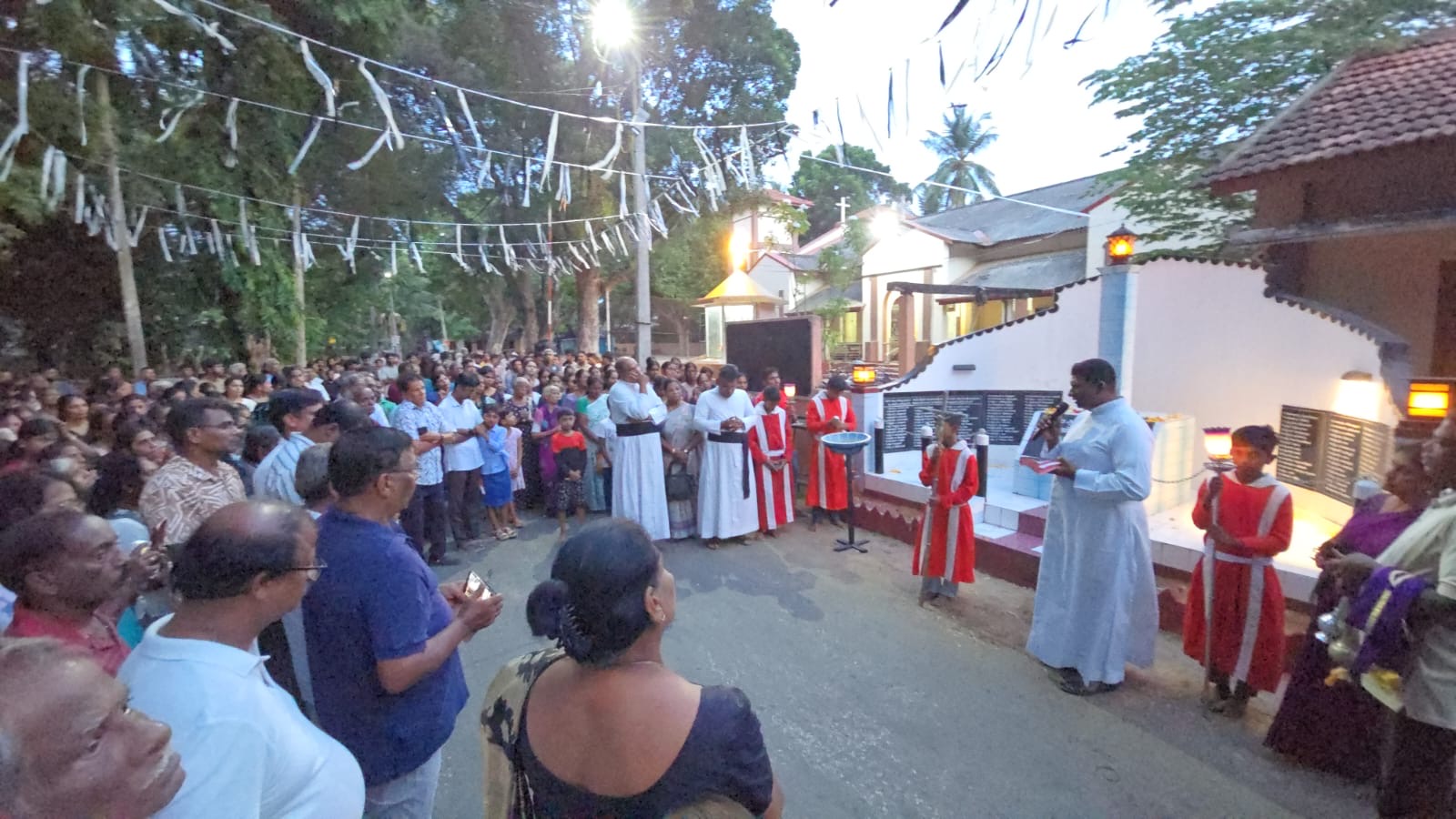
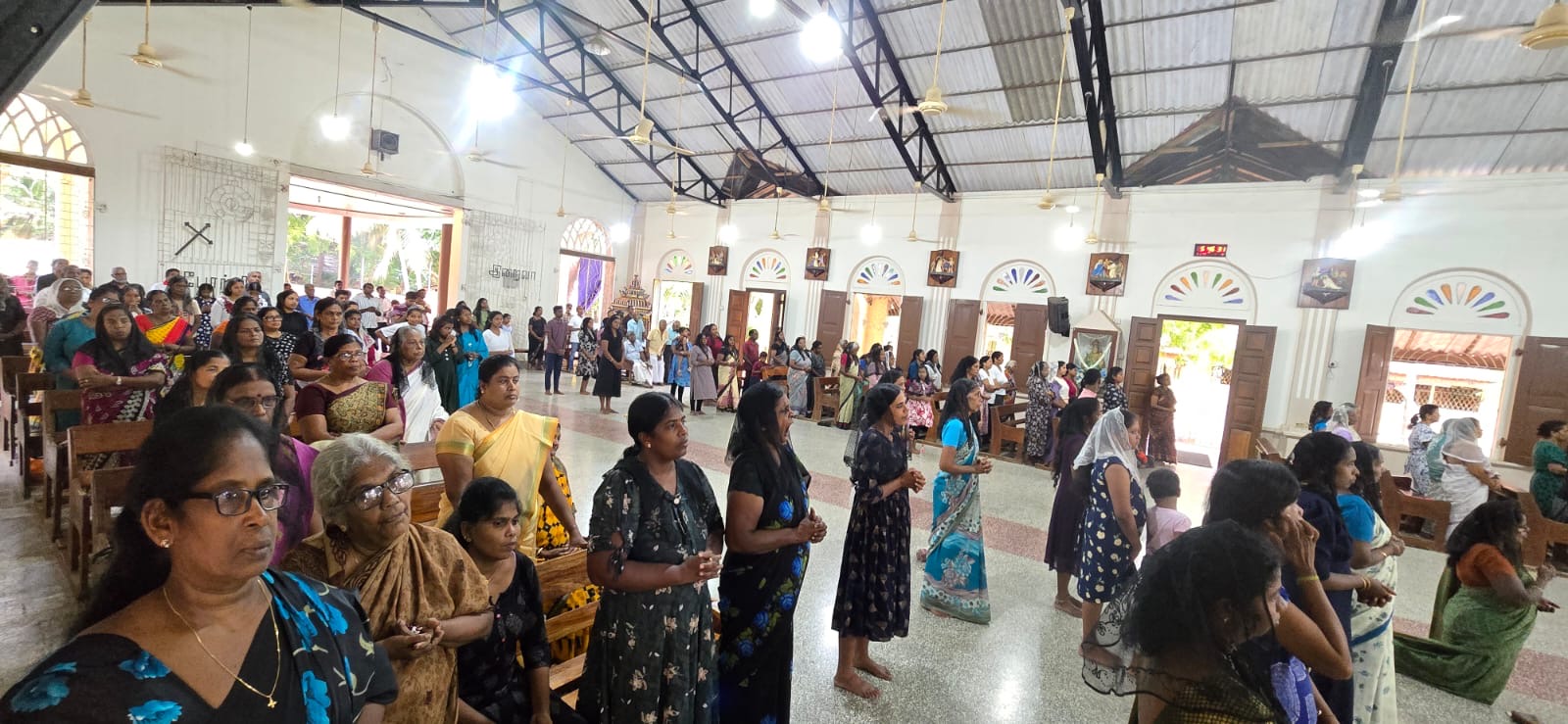
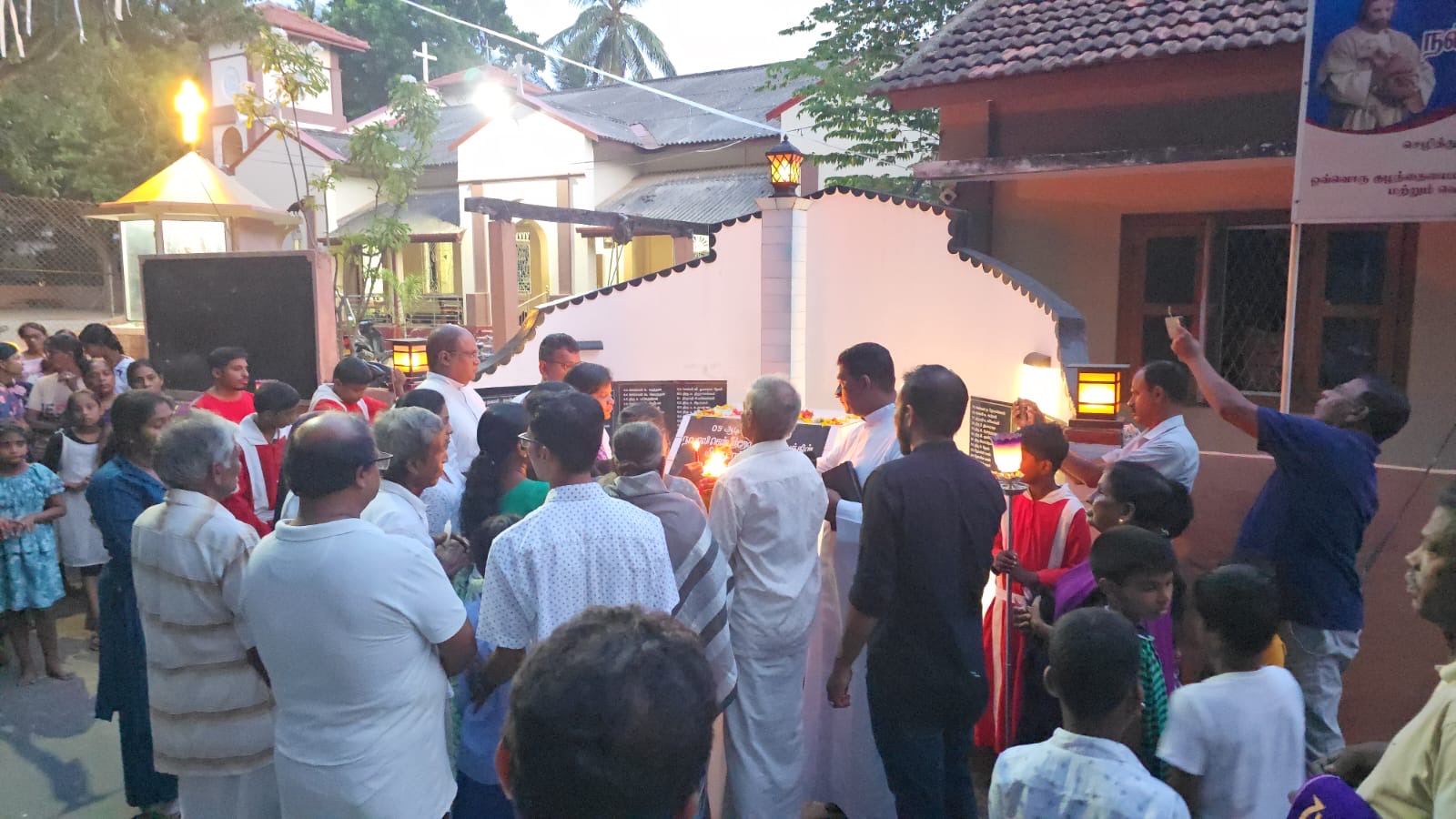
The 31st anniversary of the bombing of St Peter's Church in Navaly, Jaffna, was commemorated on Thursday evening, as relatives of those killed, members of the public and clergy paid tribute to the victims of one of the deadliest attacks on civilians of the entire armed conflict.
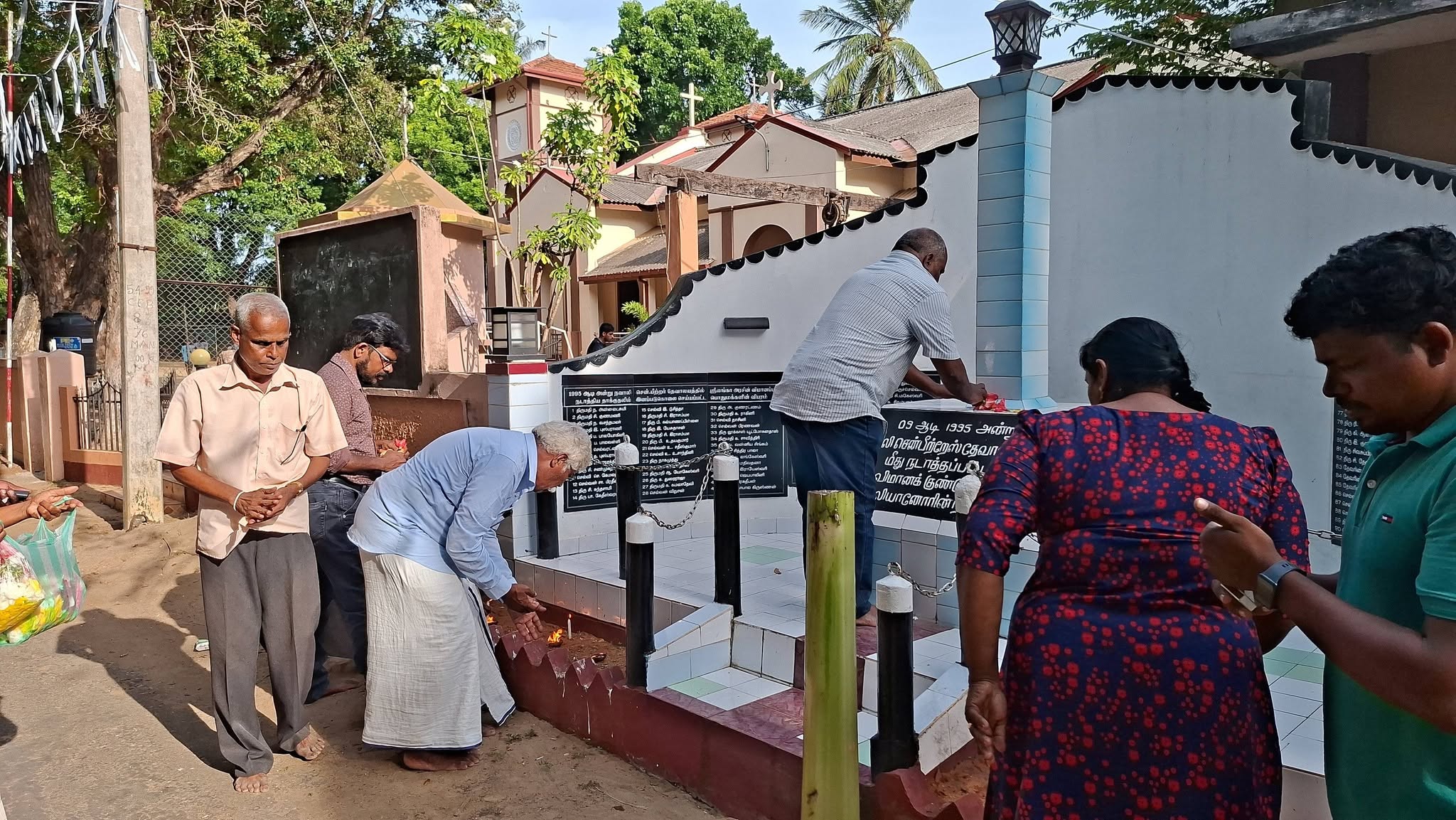
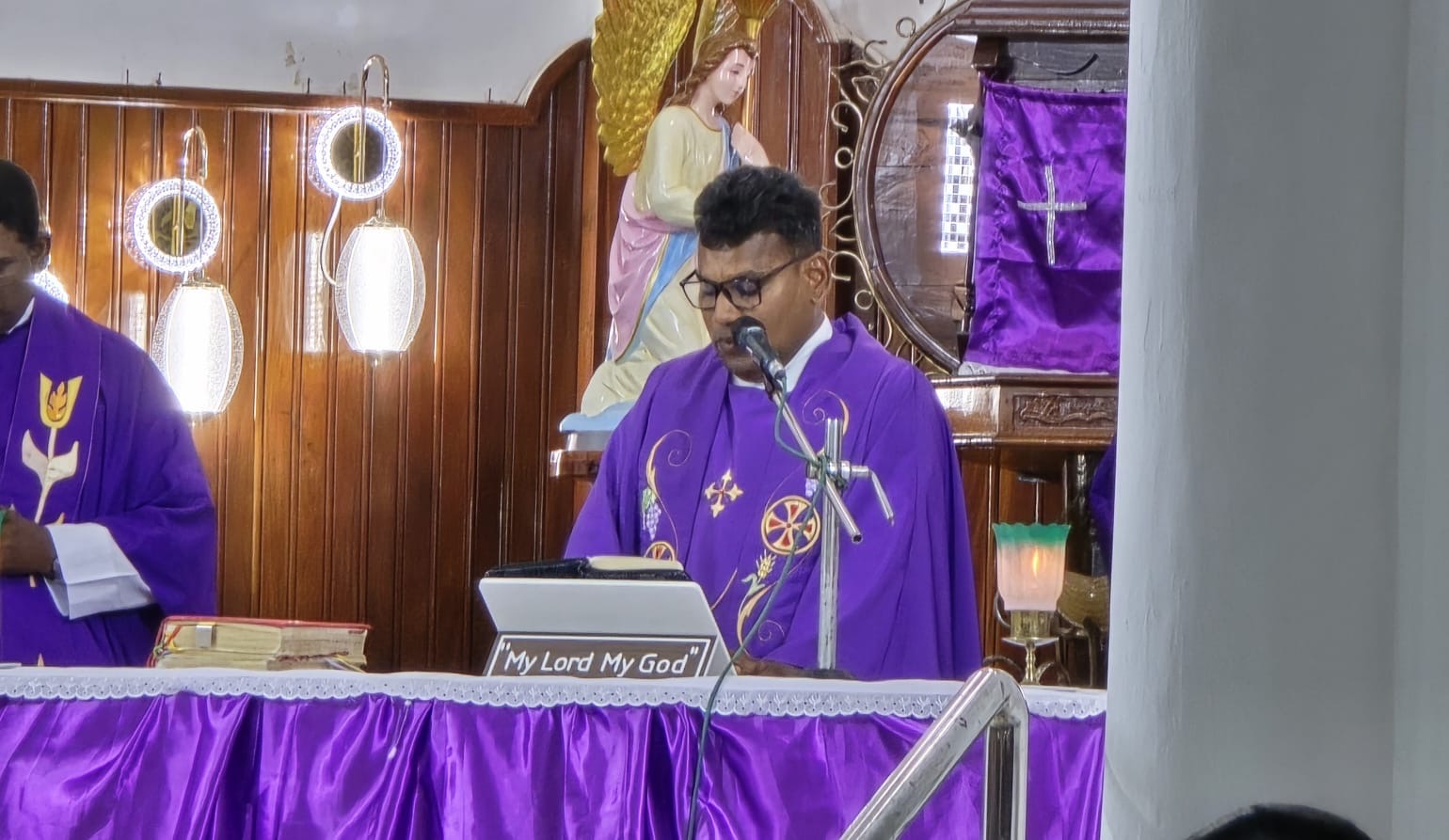
The remembrance was held at St Peter's Church, where the parish priest led religious observances, after which relatives of the dead and members of the public laid flowers and lit candles in memory of the victims.
On 9 July 1995, the Sri Lankan Air Force dropped 13 bombs on St Peter's Church and the nearby Sri Kathirkama Murugan Temple in Navaly, where hundreds of displaced civilians had sought refuge. The attack killed 147 people, among them women and children, and severely wounded more than 350 others.
Earlier that day, the military had launched its "Leap Forward" operation, pushing into Valikamam behind artillery shelling and aerial bombardment. The relentless shelling had driven residents from their homes, and many fled to the church and the neighbouring Hindu temple in search of safety.
By multiple accounts, the military had earlier distributed leaflets urging civilians to shelter in places of worship as a precaution against the fighting, and hundreds duly gathered at St Peter's Church, believing it a place of safety. Three aircraft then appeared over Navaly and dropped their bombs on the church and temple below. Many of those sheltering were killed instantly, their bodies torn apart by the explosions.
The International Committee of the Red Cross (ICRC), one of the few humanitarian organisations then operating in the Tamil areas, helped in the aftermath, but many of the wounded died as nearby hospitals, the Jaffna teaching hospital chief among them, were overwhelmed by the scale of the casualties.
The government and military initially denied responsibility, claiming that the strike had targeted an LTTE ammunition store and that the devastation at the church and temple had come from a secondary blast.
The then head of the ICRC in Sri Lanka, Marco Altherr, publicly contradicted that account, stating that the bombs had fallen directly on the site, his conclusion resting on eyewitness testimony, including from civilians and a priest at a nearby church, that the church had been struck from the air. The ICRC protested the attack, though its protest was reportedly withdrawn after its officials were summoned to the Sri Lankan foreign ministry.
On 11 July, the then president, Chandrika Kumaratunga, expressed sorrow at the loss of life and ordered an investigation. On 18 July 1995 the military confirmed that the church had been badly damaged but said it could not establish the origin of the bombs.
It was not until 2020 that Kumaratunga acknowledged that the church had indeed been bombed by the Sri Lankan Air Force, calling it a mistake and saying she had criticised the air force over it at the time.
Navaly remains one of the clearest instances of the Sri Lankan military striking a civilian space that had been held out as a sanctuary. Tamils were told to shelter in their churches and temples, only for those sanctuaries to be torn open by aerial bombardment, and the attack has come to stand for the wider pattern of violence visited upon Tamil civilians throughout the war.
Yet even with Kumaratunga's belated admission, no Sri Lankan government has officially commemorated the dead of Navaly or accepted institutional responsibility for their killing. More than three decades on no one has been held accountable.