
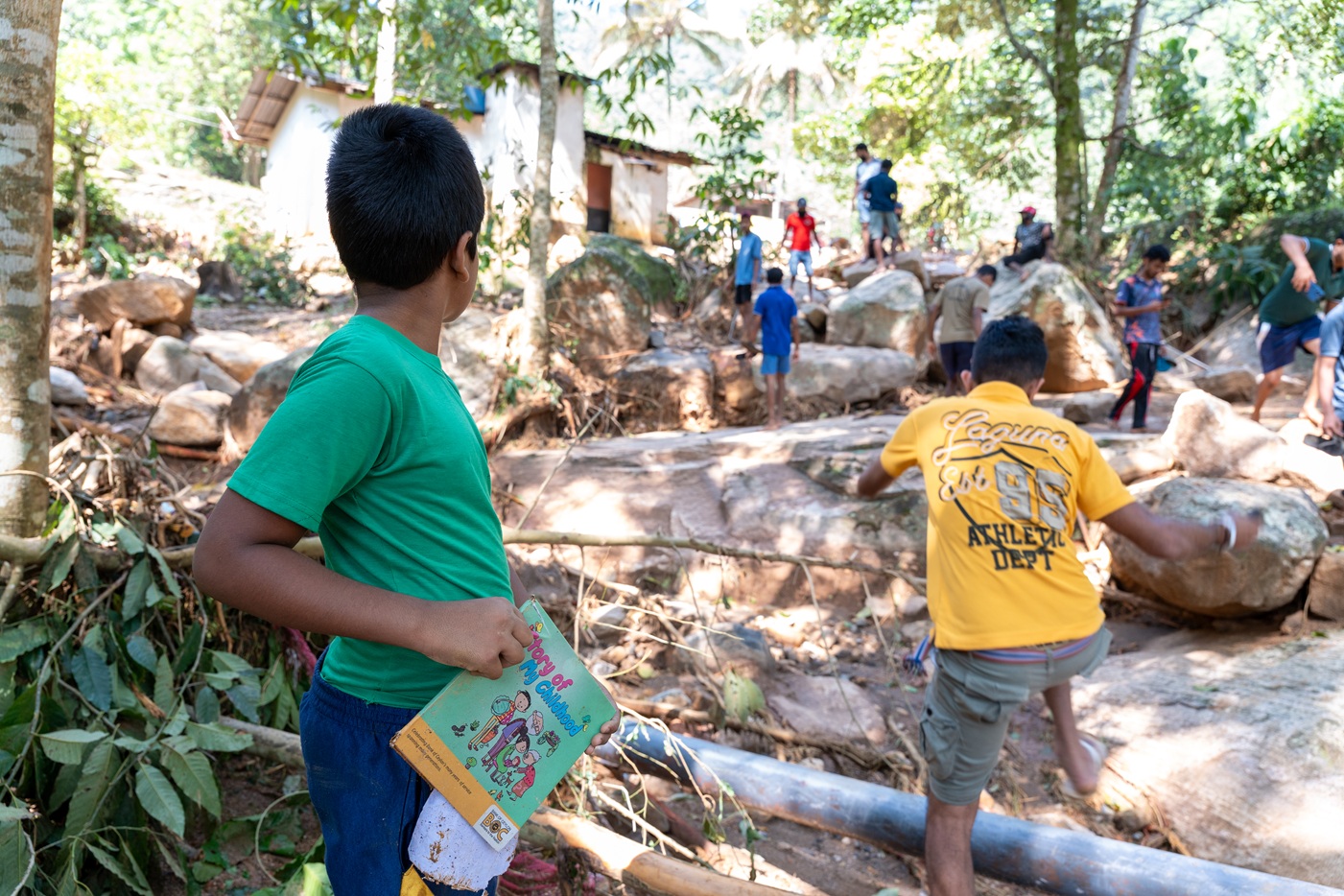
Photograph: UNICEF
UNICEF has raised the alarm over a rapidly worsening humanitarian crisis for children across Sri Lanka, as Cyclone Ditwah leaves more than 275,000 children facing an escalating humanitarian crisis.
The storm made landfall on the island’s eastern coast early on 28 November, triggering destructive landslides and inundating towns.
According to initial estimates, more than 275,000 children are among the 1.4 million people affected, though the real figure is expected to be significantly higher due to widespread communication failures and blocked access routes.
“UNICEF remains deeply concerned about the destruction the cyclone has caused to children and the vital services they depend on for their safety and well-being. We stand in solidarity with families who have suffered losses and displacement and extend our deepest condolences to those mourning loved ones,” said Emma Brigham, UNICEF Representative in Sri Lanka.
She added that “children urgently need help”, warning that it is now a “race against time to reach the most vulnerable families who direly require lifesaving services”. Although the cyclone has passed, she noted that “the consequences have not”.
The damage to homes, schools, health facilities, water systems and transport infrastructure has displaced thousands and sharply increased the risks of disease outbreaks, malnutrition and unsafe living conditions. UNICEF also highlighted the severe emotional distress facing children whose families have been forced to flee or have lost everything.
These impacts fall hardest on the country’s most vulnerable communities, many of whom were already struggling after years of economic crisis. A recent World Bank report found that national poverty has more than doubled since 2019, rising from 11.3 per cent to 24.5 per cent. For millions of families, basic necessities have become increasingly unaffordable, leaving little resilience to withstand a disaster of this scale.
Read more from UNCIEF here.